DbcultAccessing Vault...
Cult Review
Senior Film Conservator
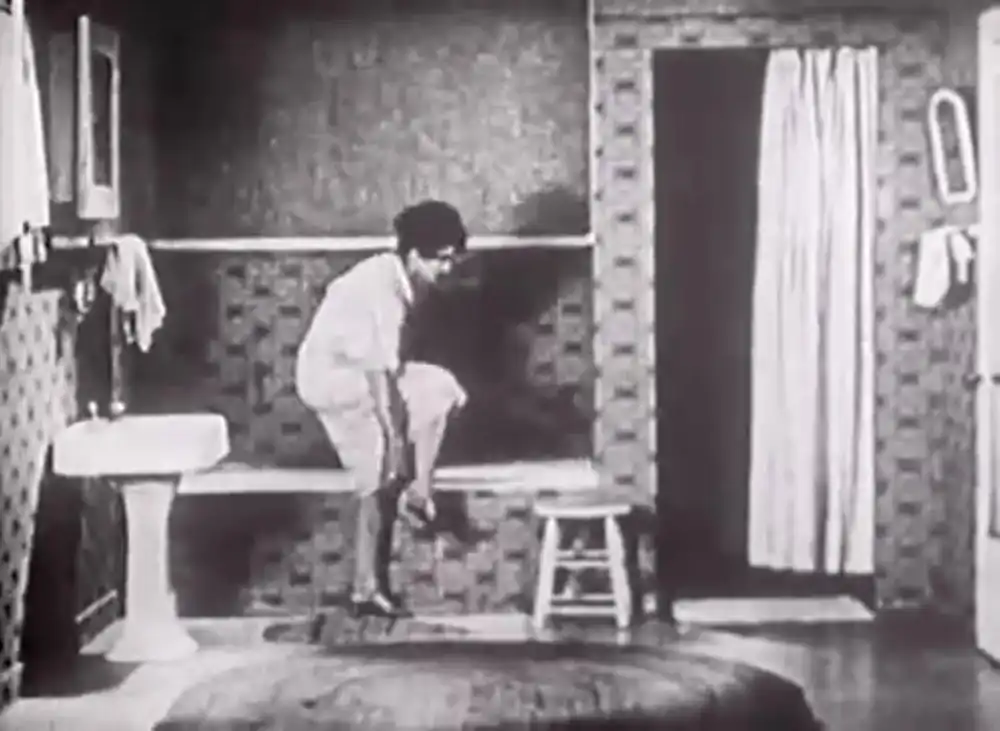
In the nascent years of cinematic storytelling, when the silent screen reigned supreme, certain narratives possessed an almost mythical power, capturing the profound human drama through gesture, expression, and the evocative sweep of the camera. Among these, Henry Arthur Jones's 1915 adaptation of his own stage play, 'The Dancing Girl', stands as a poignant testament to the era's fascination with moral dichotomy, personal liberation, and the inexorable clash between rigid tradition and burgeoning modernity. This film, a masterwork of its time, invites us into a world where the austere silence of a Quaker community is shattered by the vibrant, often scandalous, cacophony of London's theatrical stage. It is a journey of profound transformation, of a soul daring to redefine itself against the crushing weight of ancestral expectation.
The narrative begins on an isolated island, a sanctuary of Quaker rectitude, where Drusilla Ives (portrayed with an arresting blend of innocence and nascent defiance by Minna Gale) adheres to a life dictated by severe principles. Her existence is one of quietude, of plain dress and plainer speech, under the watchful, unyielding gaze of her father and the steadfast devotion of her fiancé, John Christison. Yet, beneath this placid surface, a restless spirit yearns. This yearning finds its catalyst in a summons to London, where Drusilla is to serve the Duke of Guisenberry (Eugene Ormonde), the very Lord whose lineage holds sway over her village. It is a transition from one form of servitude to another, yet it inadvertently unlocks a portal to self-discovery.
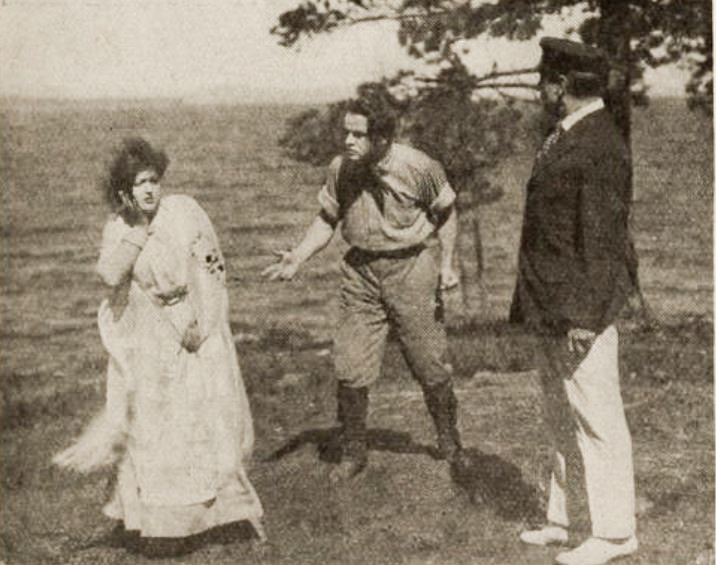
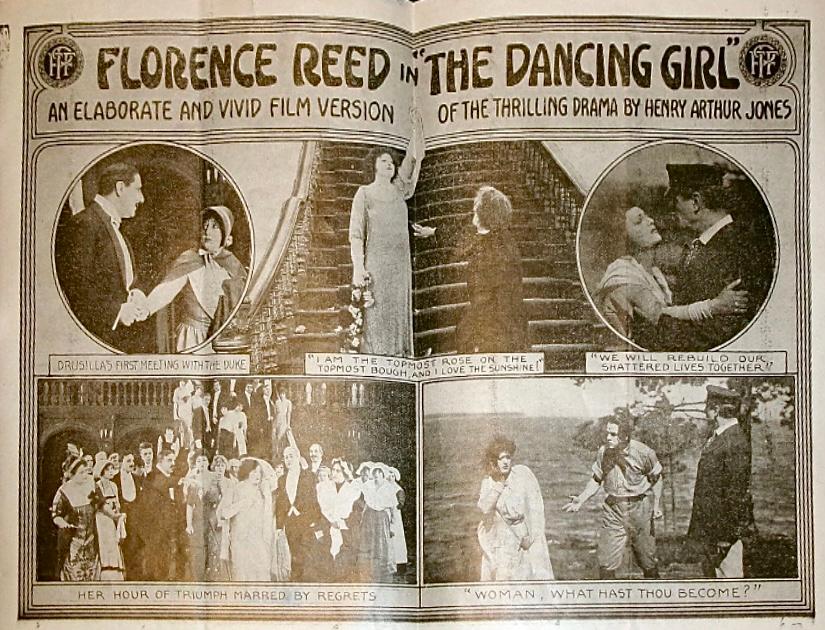
London, with its bustling thoroughfares, its glittering gaslights, and its intoxicating nightlife, acts upon Drusilla like a potent elixir. The city's vibrant energy, so antithetical to her upbringing, begins to chip away at her ingrained inhibitions. It is here that the Duke, a figure of worldly charm and perhaps a touch of moral laxity, observes her innate grace and an untapped talent for dance. Recognizing a spark of artistry, he becomes her improbable mentor, guiding her transformation from the demure Quaker girl to the dazzling Diana Valrose, the city's most celebrated dancer. This metamorphosis is not merely superficial; it is an internal combustion, a shedding of an old skin to reveal a vibrant, audacious new identity. The stage becomes her pulpit, her movements a sermon of self-expression, captivating audiences and carving out a new destiny for herself. Minna Gale’s nuanced performance here is crucial, conveying the internal struggle and eventual triumph of Drusilla’s spirit through subtle gestures and powerful shifts in demeanor, a true feat in the silent era.
However, such radical self-reinvention rarely comes without consequence, particularly when one’s origins are so deeply rooted in a rigid moral code. News of Diana Valrose's fame, and more damningly, her profession, inevitably reaches the isolated island. The reaction is swift, brutal, and utterly unforgiving. Her father, a patriarch steeped in unyielding dogma, pronounces a chilling curse upon her, effectively disowning her soul. John Christison (William Russell), her erstwhile fiancé, rather than seeking understanding or reconciliation, cruelly compounds her isolation by marrying her sister, Faith (Florence Reed). This act of familial betrayal and moral condemnation underscores the profound chasm that has opened between Drusilla's past and present, highlighting the film's central exploration of societal judgment versus individual freedom. The emotional weight of these scenes, conveyed without a single spoken word, relies entirely on the powerful performances and the director's ability to frame the stark contrast between the two worlds.
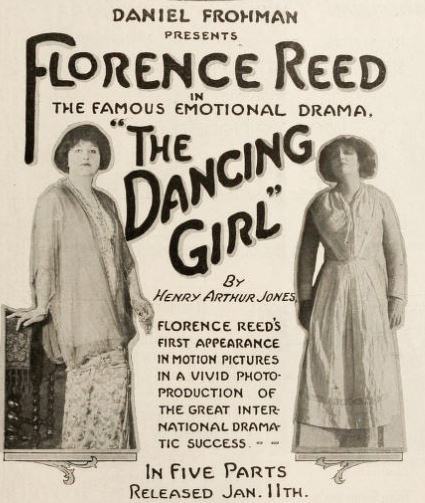
The screenplay, penned by Henry Arthur Jones himself, retains the theatricality and moral gravitas of its stage origins, yet it translates remarkably well to the cinematic medium. Jones, known for his social dramas, imbues 'The Dancing Girl' with a sophisticated understanding of human psychology, particularly the pressures of societal expectation and the intoxicating allure of personal agency. The film manages to explore these complex themes through visual storytelling, a testament to the power of early cinema to convey profound narratives without dialogue.
Visually, the film draws a stark, compelling contrast between the two worlds Drusilla inhabits. The Quaker island is depicted with an almost ascetic simplicity, bathed in natural light, emphasizing its isolation and moral purity. Conversely, London’s dance halls and lavish interiors explode with intricate sets and costumes, often employing dramatic lighting to highlight the spectacle and perceived decadence. This visual juxtaposition is not merely aesthetic; it is deeply thematic, underscoring the film's central conflict between sacred and profane, tradition and innovation. The performances, particularly Minna Gale's, are central to this visual narrative. Her transformation, from the tightly buttoned Quaker attire to the flowing, expressive costumes of a dancer, is a visual metaphor for her emotional and spiritual liberation.
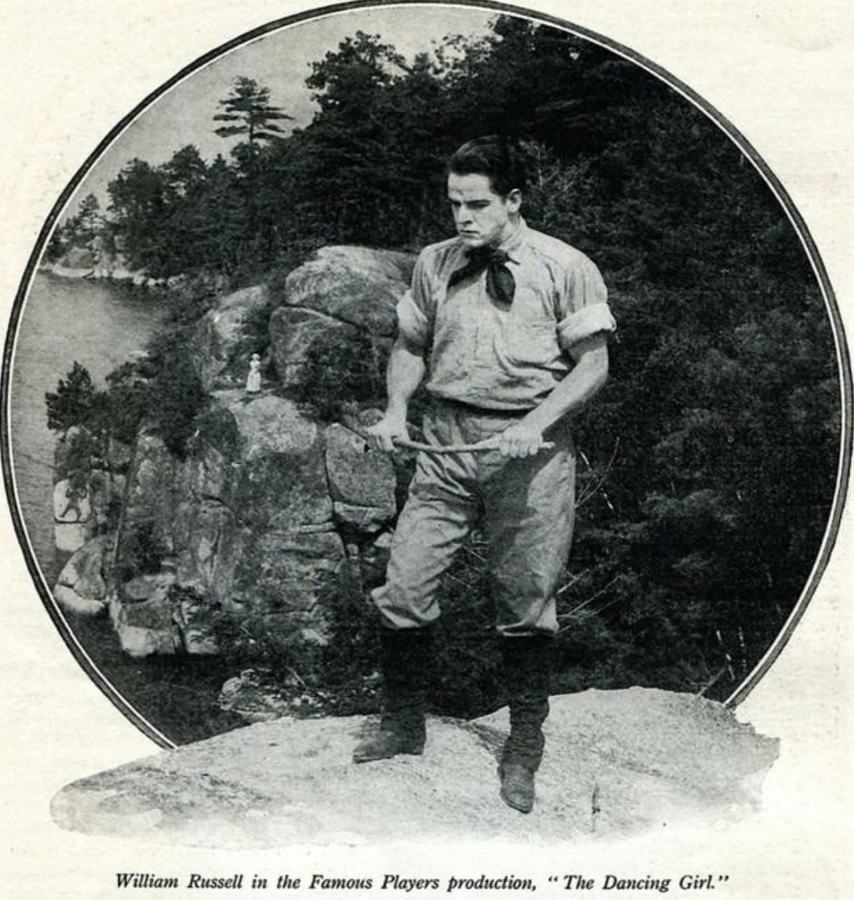
The supporting cast also delivers memorable performances. Eugene Ormonde as the Duke of Guisenberry is charmingly ambiguous, a character who embodies the sophisticated allure of London society while also acting as an unwitting catalyst for Drusilla’s freedom. William Russell’s John Christison, on the other hand, perfectly encapsulates the rigid, unforgiving morality of the Quaker community, his betrayal serving as a sharp counterpoint to Drusilla’s daring. Malcolm Williams and Fuller Mellish, as the stern Quaker elders, further solidify the oppressive atmosphere from which Drusilla escapes.
At its core, 'The Dancing Girl' is a profound meditation on choice and consequence. It challenges the audience to consider whether an individual's spiritual salvation is inextricably linked to adherence to communal dogma, or if genuine faith can exist outside prescribed boundaries. Drusilla's journey is not merely one of professional success; it is a quest for self-actualization, a fierce assertion of her right to define her own identity and morality. This struggle resonates across time, making the film's themes as relevant today as they were over a century ago. The film subtly asks: Is the 'curse' truly from God, or merely the bitter judgment of a society unable to comprehend, let alone tolerate, deviation from its norms?
While silent films like The Life and Passion of Jesus Christ offered explicit religious narratives, 'The Dancing Girl' delves into the more complex, often painful, intersection of personal spirituality and organized religion. It doesn't shy away from depicting the hypocrisy that can fester within devout communities when confronted with perceived transgression. The film also shares a thematic thread with other early cinematic explorations of urban life and its transformative power. Just as films like Mysteries of Paris delved into the multifaceted tapestry of a sprawling metropolis, 'The Dancing Girl' uses London as a crucible for character development, a place where identities are forged and fractured. The contrast between the rural idyll and the urban jungle is a recurring motif in early cinema, seen in various forms from romantic comedies to social dramas, and this film masterfully leverages it to highlight Drusilla's internal and external conflicts.
The film's direction, while typical of the era's stage-to-screen adaptations, uses effective mise-en-scène and intertitles to guide the audience through the emotional landscape. The pacing is deliberate, allowing the audience to absorb the visual cues and the weighty implications of each character's actions. The emotional arc of Drusilla is particularly well-handled, evolving from tentative curiosity to bold self-assertion, and finally to a poignant understanding of the sacrifices her choices entail. The film avoids simplistic moralizing, instead presenting a nuanced portrait of a woman caught between two irreconcilable worlds.
While films such as A Child of the Prairie might romanticize rural innocence, 'The Dancing Girl' offers a more complex view, suggesting that even in seemingly idyllic settings, societal pressures can be stifling. It positions the city not just as a place of moral peril, but also as a potential haven for individuality and artistic expression. The film’s exploration of a woman's journey to define herself in a restrictive world echoes sentiments found in later, more explicit feminist narratives, making it a surprisingly progressive work for its time. It is a powerful reminder that the fight for personal autonomy is a timeless struggle.
In conclusion, 'The Dancing Girl' is more than just a historical artifact; it is a vibrant, emotionally resonant drama that continues to speak to contemporary audiences about the perennial themes of identity, freedom, and the courage required to forge one’s own path. Its stark contrasts, compelling performances, and insightful narrative make it a valuable piece of early cinematic history, deserving of renewed appreciation. It is a film that dances not just on screen, but in the heart of anyone who has ever dared to defy expectation and embrace their true self, regardless of the curses or condemnations that may follow.

IMDb —
1929
Community
Log in to comment.