DbcultAccessing Vault...
Cult Review
Senior Film Conservator
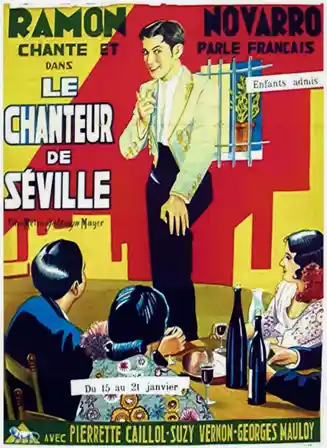
Okay, so Le chanteur de Séville from 1930. This one's definitely not for everyone, let's just get that out there. If you’re into the quirks of early sound films, or if Ramon Novarro is your guy, you might find something interesting here, especially how he directs himself. But if you're hoping for snappy dialogue or modern pacing, you'll probably find yourself checking your watch, wondering why a nun is singing with such passion.
It’s a peculiar piece of history, really. The whole reason this French version exists, with Novarro starring and directing, is because studios back then were apparently terrified of subtitles. Or dubbing techniques were just too primitive. So, instead of one movie for everyone, we got different language versions shot almost simultaneously. Imagine that effort! It’s wild.
The story itself is fairly simple: a student nun, played by Suzy Vernon, is in a convent right next to a bustling café. Novarro’s character, the singer, performs there. And, well, you can guess what happens next. Forbidden love, duty, all that good stuff.
Novarro, he really puts his heart into it. You can tell he’s trying to do something special, even within the limits of early sound technology. The camera doesn't move a whole lot, which is typical for the era. Lots of static shots, just like everyone standing around.
The sound quality, though. 😬 It's a bit of a trip. The dialogue sometimes feels a little distant, a little tinny. And the music, Novarro has a fantastic voice, truly. But the recording often struggles to capture its full richness; it sounds like it’s coming from another room. Which, I suppose, for the nun listening through the wall, is accurate.
There's a scene where Suzy Vernon’s nun is just listening, *longingly*, through the wall to Novarro’s singing. It goes on for what feels like an eternity. You see her internal struggle just playing out on her face. It’s almost comical how drawn out it is, but then you feel for her, stuck in that quiet life with all that passion just next door.
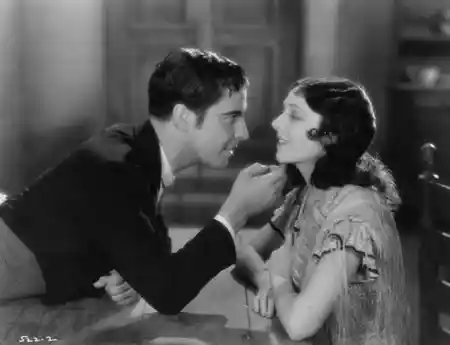
Her performance as the nun is quite something. She doesn't have many lines, but her eyes do so much work. You really get a sense of her longing, her inner conflict. It's very expressive, in that sort of silent-film-era way.
The contrast between the silent, solemn convent and the lively, noisy café is stark. One moment you're in hushed tones, the next it’s all clamor and singing. It really makes you appreciate the sound design, even if it’s a little rough around the edges.
For me, the film gets noticeably better once the singer starts interacting more directly with the nun. The tension builds a bit. Before that, it's a lot of setup, and the pacing can feel glacially slow.
It’s not a film I'd recommend for a casual movie night. No, not at all. This is for the cinephiles, the ones who dig into film history, who want to see a major star navigating the tricky transition to talkies. It's a historical artifact, more than a thrilling watch. But it’s a *fascinating* artifact.
You can almost feel the movie trying to convince you this forbidden romance matters. And in its own clunky, charming way, it sort of does. Even if you spend half the time thinking about the technical challenges they must have faced.
Ultimately, Le chanteur de Séville is a curio. It’s a testament to Novarro’s star power and the sheer will of early Hollywood to conquer sound. Is it perfect? Oh, absolutely not. But it’s got a certain soul. And a lot of singing. If you're into that, give it a shot. Just be prepared for a very different kind of movie watching experience. 🎶
IMDb 8.2
1916
Community
Log in to comment.