DbcultAccessing Vault...
8.2/10
Senior Film Conservator
A definitive 8.2/10 rating for a film that redefined the boundaries of cult cinema. Pigen fra Palls remains a cornerstone of transgressive art.
Step back in time to an era where cinematic narratives unfolded in eloquent silence, where emotions were writ large across expressive faces, and grand tales were told without a single spoken word. Today, we cast our critical gaze upon Pigen fra Palls, a Danish cinematic offering from 1917, penned by the visionary Eduard Schnedler-Sørensen. This isn't merely a film; it’s a vibrant tapestry woven with threads of socio-economic strife, audacious heroism, and a burgeoning romance that dares to blossom amidst the ashes of rebellion and the tumult of the high seas. As a film critic with a penchant for the profound and the historically significant, I find myself continually drawn to the silent era, a period often underestimated, yet one that laid the foundational stones for much of what we cherish in modern storytelling.
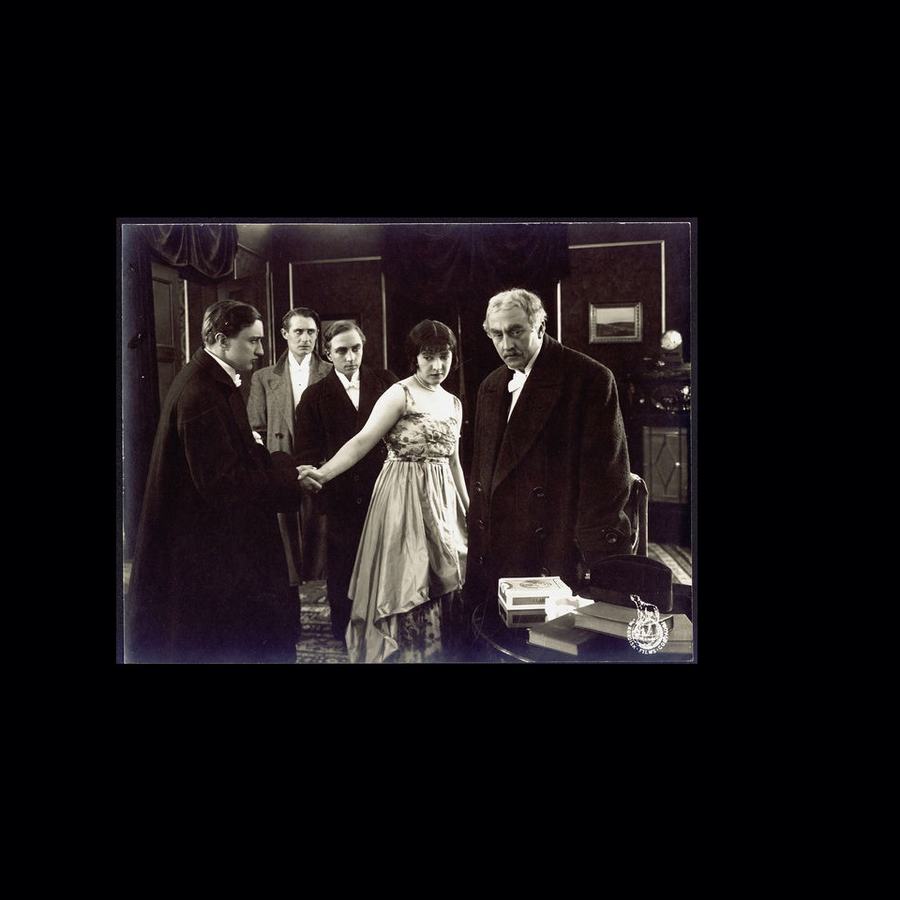
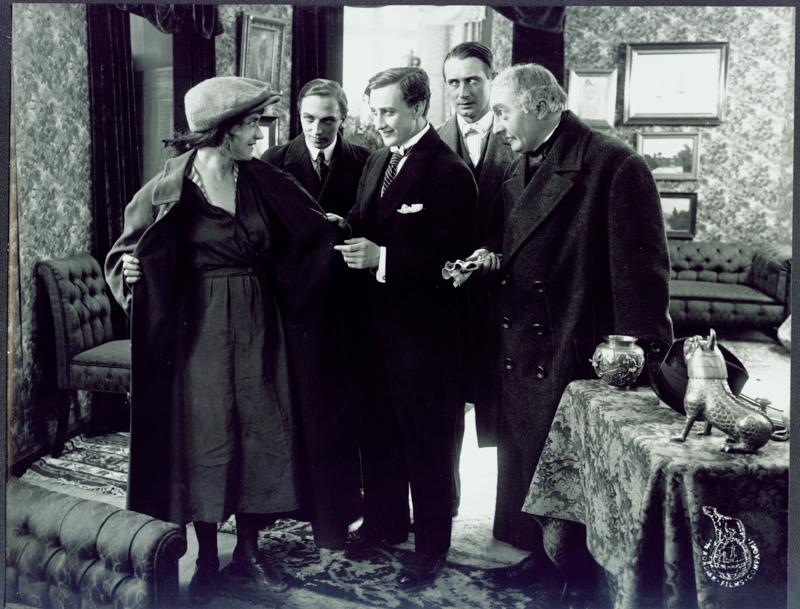
The narrative plunges us into the bleak, unyielding existence within the fishing community of Whitley, a setting that immediately evokes a sense of struggle against both nature's indifference and human avarice. Here, we encounter Elly, portrayed with a poignant vulnerability by Agnes Lorentzen, a young woman whose life is far from her own. She is the foster daughter, or perhaps more accurately, the indentured ward, of Brown, a character embodied by Emil Helsengreen with a chilling portrayal of unbridled greed. Brown isn't just a merchant; he's an economic tyrant, a figure whose very presence casts a long, oppressive shadow over the impoverished populace. His decision to arbitrarily inflate the cost of gasoline – a lifeblood for the fishing fleet – isn't just a business transaction; it’s an act of calculated cruelty, a deliberate tightening of the noose around the necks of an already struggling community. This immediately sets a stage for conflict, echoing the timeless struggles of the common man against the powerful, a theme explored with equal fervor in epics like Spartacus, albeit with a different scale of rebellion, or the more intimate yet equally potent class struggles depicted in Oliver Twist.
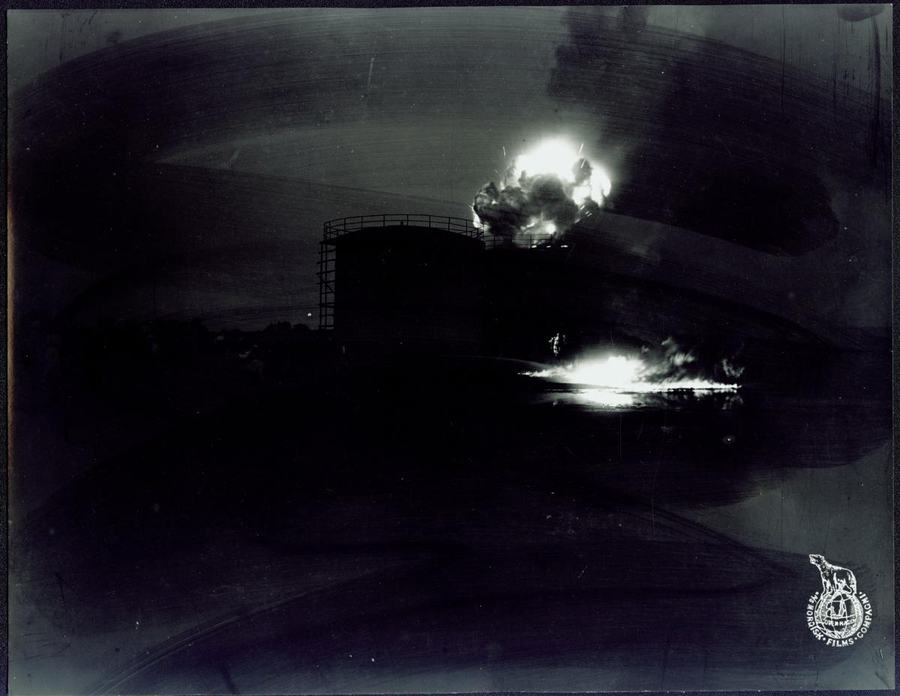
The film masterfully builds tension, showcasing the simmering discontent that eventually boils over into open revolt. The fishermen, stripped of their livelihoods and pushed to the brink of destitution, find their collective voice in a desperate cry for justice. This isn't a mere protest; it's a visceral, raw uprising, a testament to the human spirit's breaking point when faced with insurmountable oppression. The portrayal of this collective anger is one of the film's triumphs, demonstrating how silent cinema could convey profound social commentary without the need for dialogue. The escalating events culminate in a truly spectacular and terrifying gasoline fire, a cinematic set piece that must have been breathtaking for audiences of the era. The flames, rendered with a realism that still resonates, become a character in themselves – a destructive force born of human desperation and greed, consuming all in its path. Brown's demise in this inferno feels less like a tragic accident and more like an act of poetic justice, a dramatic punctuation mark on his tyrannical reign. The visual storytelling here, using the elemental power of fire, is incredibly effective, creating a sense of overwhelming chaos and consequence.
Amidst this fiery maelstrom, Elly, the innocent caught in the crossfire of adult malevolence, becomes a victim once more. Her capture by pirates introduces another layer of peril, shifting the narrative from socio-economic drama to high-stakes adventure. This transition, while abrupt, serves to heighten the sense of danger and amplify the need for a hero. It’s a classic damsel-in-distress trope, certainly, but executed with a certain silent film panache that makes it feel less cliché and more an essential cog in the dramatic machinery. The sudden appearance of these maritime outlaws adds a thrilling, almost swashbuckling element, reminiscent of adventure serials popular at the time, or even the grand narratives of rescue found in tales like Ivanhoe, where protagonists often face multiple, successive threats.
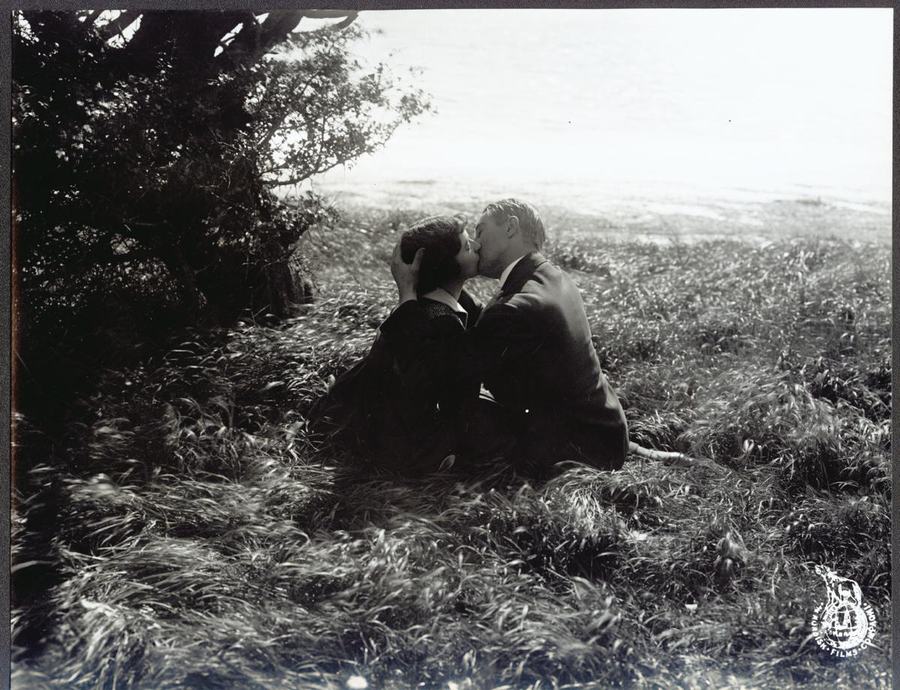
Enter John Elton, played with a compelling blend of strength and quiet devotion by Alf Blütecher. John is not just a hero; he is the hero, the embodiment of courage and moral rectitude that the story desperately requires. His heroic actions are twofold: first, he bravely confronts and extinguishes the raging gasoline fire, a feat of engineering and sheer nerve that saves the town from utter devastation. This act alone would secure his place as a local legend. But his heroism doesn't stop there. With impeccable timing and an unyielding resolve, he then embarks on a daring rescue mission to save Elly from her pirate captors. The sequence of Elly's liberation must have been a nail-biting spectacle for contemporary audiences, a testament to the power of visual storytelling and physical performance in the silent era. John's motivation is not solely altruistic; we learn he has harbored a long-standing admiration, perhaps even love, for Elly, adding a deeply personal and romantic dimension to his valor. This intertwining of duty and affection elevates his character beyond a mere archetype, making his actions resonate with genuine emotional depth.
The chemistry between Blütecher and Lorentzen, though conveyed through gestures, glances, and proximity, is palpable. Their unspoken connection is a testament to the actors' abilities to communicate complex emotions without dialogue, a hallmark of great silent film performances. The narrative arc, moving from social injustice to personal peril and ultimately to heroic rescue, is a classic structure, yet Pigen fra Palls executes it with a freshness that belies its age. The film’s pacing, a crucial element in silent cinema, is expertly managed, oscillating between moments of quiet despair, explosive action, and tender longing. It keeps the audience engaged, constantly wondering what fresh horror or hopeful turn awaits our protagonists. One might draw parallels to the relentless pursuit of justice and rescue seen in films like The Darkening Trail, where a protagonist's unwavering dedication drives the plot forward through numerous obstacles.
Beyond the thrilling plot, Pigen fra Palls is rich with thematic undertones. The most prominent, of course, is the stark contrast between rapacious capitalism and the resilience of the working class. Brown represents the unchecked power of wealth, a force that exploits and dehumanizes. His actions directly lead to the community's suffering and ultimately, his own downfall. This film, therefore, can be viewed as a powerful, albeit fictionalized, commentary on the socio-economic anxieties of the early 20th century, a period marked by significant labor unrest and class struggle across Europe. It champions the underdog, implicitly siding with the fishermen whose revolt, though destructive, is portrayed as a desperate act of self-preservation. This theme resonates strongly with films like Il fornaretto di Venezia, which also explores themes of social injustice and the vulnerability of the common person against systemic power.
Another compelling theme is the transformative power of crisis. The fire, while devastating, acts as a crucible, forging new paths and revealing true character. It destroys the old order (Brown's tyranny) and paves the way for a potential new beginning for Elly and John. Elly's journey, from an oppressed foster daughter to a rescued survivor, speaks to themes of liberation and agency, albeit one gained through external intervention. Her vulnerability in the face of both Brown's cruelty and the pirates' menace highlights the precarious position of women in society during that era, making John's rescue all the more impactful as a symbol of protection and hope. The film doesn't shy away from depicting the harsh realities, making the eventual triumph of love and justice feel earned.
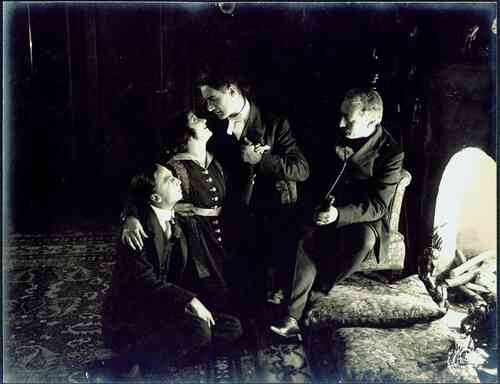
The cast, including Alf Blütecher, Emil Helsengreen, Frederik Jacobsen, Ove Kühl, Peter Nielsen, Arne Weel, Agnes Lorentzen, and Karen Caspersen, delivers performances that are quintessentially silent-era: expressive, often theatrical, yet deeply effective in conveying emotion. Emil Helsengreen's Brown is suitably villainous, a scowling, imposing figure whose every gesture broadcasts his malevolent intent. Agnes Lorentzen as Elly is heartbreakingly sympathetic, her wide eyes and subtle movements communicating a life of hardship and a burgeoning hope. Alf Blütecher's John Elton is the epitome of the silent film hero – stoic, brave, and ultimately, tender. The supporting cast, though perhaps given less screen time, contributes significantly to the atmosphere and the sense of a living, breathing community. Their reactions to Brown's decrees and their participation in the revolt lend authenticity to the unfolding drama.
Eduard Schnedler-Sørensen's direction is noteworthy for its clear storytelling and effective use of visual spectacle. The fire sequence, as mentioned, is a standout, but equally impressive are the more intimate moments, where close-ups and careful blocking convey internal states and relationships. The cinematography, while constrained by the technology of the time, captures the rugged beauty of the coastal setting and the starkness of the fishing town, creating a compelling backdrop for the human drama. The film's ability to maintain narrative coherence and emotional resonance without the crutch of spoken dialogue is a testament to Schnedler-Sørensen's skill as a storyteller. This meticulous attention to visual narrative can be seen in other silent dramas of the period, such as The Fatal Card, where every shot and gesture is loaded with meaning to propel the plot and emotional stakes.
The film concludes with a poignant question, a classic silent film device that leaves the audience contemplating the future of our protagonists. Will Elly and John, after enduring such profound trauma and triumph, finally find a peaceful life together? This open-endedness, rather than being unsatisfying, adds a layer of realism and invites personal reflection. It suggests that while immediate dangers may be overcome, the path to lasting peace is often a journey in itself, fraught with its own challenges. The implication is that their love, forged in the crucible of shared adversity, has the potential to overcome anything. It's a hopeful note, a belief in the power of human connection to heal and build anew, even after widespread destruction.
In an era where films often explored grand moral dilemmas and the consequences of human actions, Pigen fra Palls stands as a compelling example. It doesn't shy away from the darker aspects of human nature – greed, oppression, violence – but it ultimately champions the virtues of courage, selflessness, and love. The film's dramatic intensity and emotional depth make it a valuable piece of cinematic history, offering insights into both the storytelling conventions of its time and the universal themes that continue to resonate with audiences today. It reminds us that the struggle for justice and the pursuit of happiness are timeless endeavors, and that even in the absence of spoken dialogue, a powerful story can speak volumes.
For those interested in the social dramas of the silent era, comparing this film to others that tackle similar themes of injustice and redemption can be particularly enlightening. While The Tyranny of the Mad Czar offers a more explicit political critique, and A Mother's Confession delves into personal moral quandaries, Pigen fra Palls deftly intertwines both societal critique and individual romantic destiny. It's a film that asks us to consider the price of progress, the cost of exploitation, and the enduring strength of the human spirit when faced with overwhelming odds. Its legacy lies not just in its dramatic spectacle, but in its heartfelt depiction of a community's fight for dignity and two individuals' journey towards a hard-won peace.
The film's exploration of good versus evil, embodied by Brown and John Elton respectively, is stark but effective. There's little nuance in Brown's villainy, which is typical for the period, but it serves its purpose in making John's heroism shine brighter. Elly, as the central figure around whom these forces swirl, provides the emotional anchor, her plight driving much of the audience's empathy. The resolution, while leaving some questions open, undeniably points towards a hopeful future, a characteristic often found in silent films aiming to uplift audiences after intense dramatic journeys. The cinematography during the fire sequence, in particular, must have been revolutionary for its time, leveraging practical effects to convey a sense of genuine danger and destruction. It's a masterclass in how to use visual storytelling to maximum effect without relying on dialogue, a skill that many contemporary filmmakers could still learn from. The stark contrasts, the raw emotion, and the epic scope of the events make Pigen fra Palls a compelling watch for anyone interested in the foundational works of cinema and the timeless power of silent storytelling.
Ultimately, Pigen fra Palls is more than just a historical artifact; it's a vibrant, emotionally charged drama that speaks to universal themes of justice, courage, and love. Its legacy endures as a testament to the artistry and innovation of early Danish cinema, and its story continues to resonate, reminding us that even a century later, the silent screen can still roar with passion and purpose. It's a film that deserves to be rediscovered and appreciated, not just for its place in history, but for its intrinsic power as a piece of dramatic storytelling. A true gem from a bygone era, proving that sometimes, silence truly is golden.
IMDb —
1920
Community
Log in to comment.