DbcultAccessing Vault...
Cult Review
Senior Film Conservator
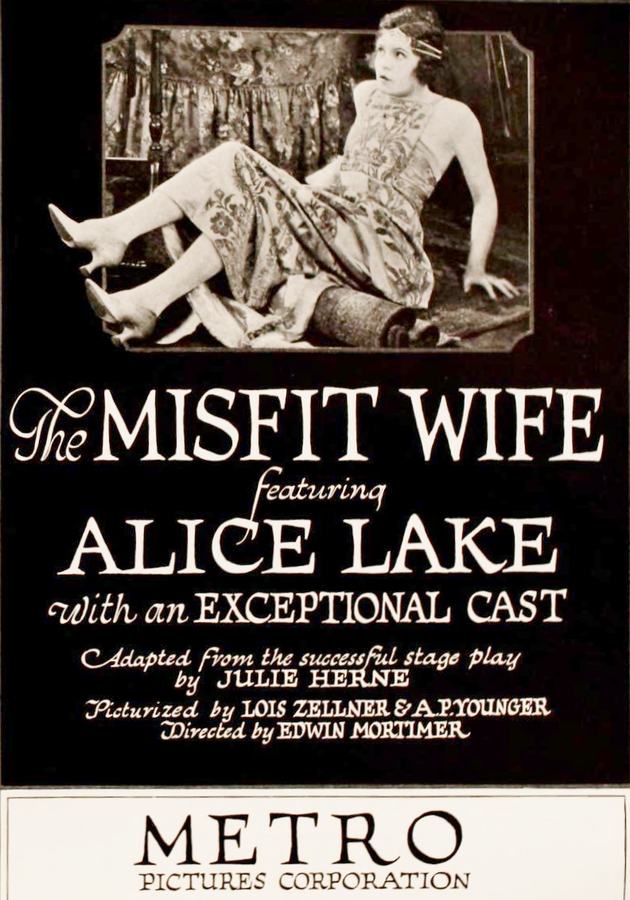
Picture a nitrate reel crackling to life inside a velvet-draped nickelodeon: the iris opens on a manicurist’s stool that might as well be a confessional. Katie Malloy—brought to incandescent life by Helen Pillsbury—files the jagged edges of strangers while harvesting their secrets between coats of carnation-pink lacquer. The camera adores her pragmatic wrists; each flick of the wrist is a tiny homily on the dignity of labor. Enter Peter Crandall, a rake whose pupils dilate not at roulette but at the scent of honest soap. Graham Pettie plays him like a man discovering gravity only after he has already fallen.
The film’s first miracle is tonal: director Andrew Percival Younger refuses to let melodrama ossify into caricature. When the bullet—fired by a spurned paramour who mistook courtship for ownership—tears through Peter’s shoulder, the moment is staged in chiaroscuro: smoke curling like moral uncertainty, Katie’s gasp swallowed by the piano’s thunderous minor chord. Blood on white linen becomes a Rothko before Rothko—scarlet blooming into existential blankness. Marriage, hastily proposed from a sickbed, feels less a romantic crescendo than a tourniquet applied to a hemorrhaging life.
Cut to New York, a city rendered through amber-tinted inserts of Lower Broadway at dusk, where the El train screeches like a dowager discovering a rip in her propriety. The Crandall mansion—part mausoleum, part stock exchange—oozes mahogany and disdain. Frederick Vroom’s patriarch has the profile of a Roman coin and the empathy of a ledger. He hires attorneys the way other men order cigars, brandishing Latin phrases like dueling pistols. The annulment subplot could have ossified into drawing-room attrition, yet the screenplay (a tripartite brainchild of Julie Herne, Lois Zellner, and Younger) injects proto-feminist nitroglycerin: Katie refuses to be erased, but she also refuses to shriek. Her resistance is quieter than snowfall and twice as slippery.
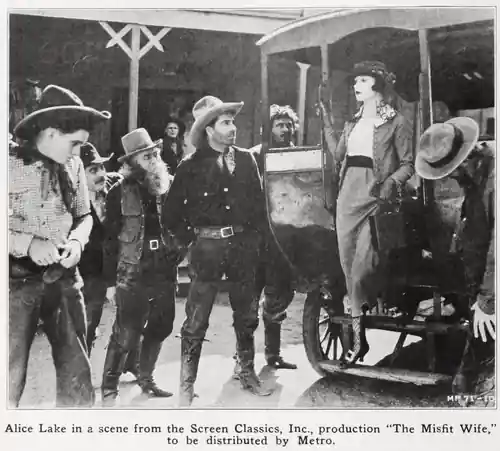
Enter Henry Gilsey—Forrest Stanley at his most serpentinely charming—tasked with polishing Katie’s consonants and curbing her contrapuntal shoulders. The makeover montage, accompanied by a fox-trot on the theatre organ, riffs on Shaw’s Pygmalion without the snobbery. Henry teaches her to pronounce "formidable" while Edith, his wife (a luminescent Alice Lake), slinks off to rendezvous with a sleek mustache attached to Edward Martindel. Adultery here is not bodice-ripping titillation but a transaction of ennui: silk stockings exchanged for whispered reassurances that time is not evaporating.
Katie’s discovery of the affair is staged in a corridor paneled with mirrors—an inspired visual synecdoche for a house beset by duplicity. She sees Edith reflected into infinity, each iteration more desperate than the last. Without hesitation she waltzes into scandal, claiming the extramarital letter as her own. The family’s outrage is instantaneous; whispers skid across parquet like marbles spilled from a child’s pouch. Yet Pillsbury’s face—captured in aching close-up—registers not martyrdom but a kind of vocational satisfaction: she is, once again, the manicurist filing away someone else’s jagged hazard.
Peter’s return from Southern speculation furnishes the narrative its volta. He reads the incriminating parchment, smells his wife’s familiar violet water on the envelope, and intuits the geometry of sacrifice. Graham Pettie lets silence do the heavy lifting: two tears, a tremor of the jaw, then a rueful half-smile that feels like sunrise on winter-beaten earth. The climactic drawing-room confrontation is shot from a low angle, rendering Katie statuesque against a tapestry of peacocks—symbolism that could have clanked, yet the sincerity of performances oils every gear.
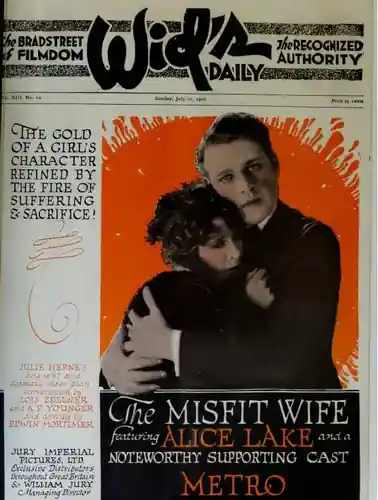
Cinematographer William Steele employs handheld pans during the final embrace, a rarity in 1920 that imparts documentary immediacy. The camera sways as though caught in the same exhalation that finally vacates the Crandall bosom. Iris out on Katie—no longer misfit, no longer wife merely, but custodian of a lineage she has ethically rewired.
Comparative glances toward contemporaries illuminate its singularity. Out of the Shadow traffics in Gothic dread; The Hero of the Hour dilutes redemption into slapstick tonic. Blue Blood and Red assays class transgression yet lacks the granular empathy that makes Katie’s journey feel lived-in rather than diagrammed. Even Her Own Way, with its flapper bravado, treats feminism as a jaunty accessory; The Misfit Wife stitches it into marrow.
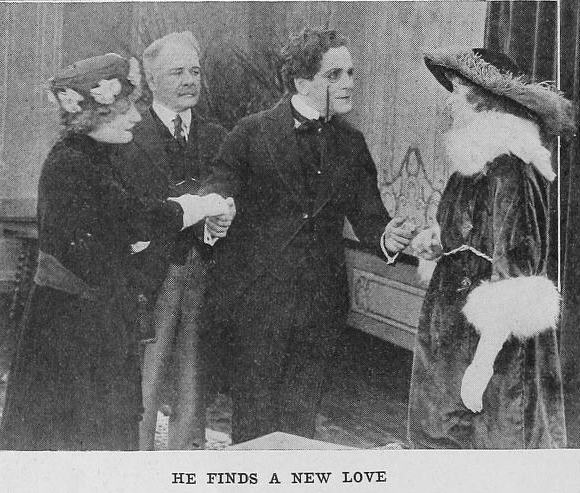
Performances scale heights infrequent in early features. Helen Pillsbury’s micro-gestures—the way her thumb unconsciously caresses the curve of a wineglass while listening, as though evaluating its sincerity—bespeak a Method intensity years before the term ossified. Graham Pettie sidesteps the rake-redeemed cliché by letting terror leak through his swagger; when he clasps Katie’s hand in the final frame, the tremor reads not as weakness but as the aftershock of grace.
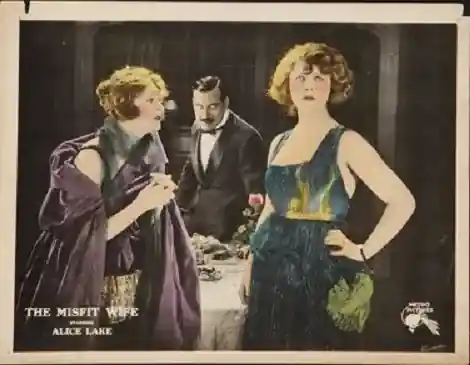
The screenplay’s linguistic bite survives the intertitles: "You filed my nails, Katie; now file my name until it fits your tongue"—Peter’s proposal is both sensual and sacramental. Lois Zellner’s contributions reportedly sharpened the women’s dialogue; one can sense a female hand sanding the edges of potential patronage.
Musical accompaniment, alas, exists only in contemporary cue sheets, but surviving descriptions suggest a motif for Katie based on Debussy’s "Clair de Lune"—its aqueous arpeggios mirroring her fluid morality. Theatre organists were encouraged to segue into ragtime whenever Edith slinks onscreen, a contrapuntal joke that renders adultery a syncopated shrug.
Technically, the picture employs double exposure during Katie’s corridor epiphany: her mirrored selves fade into a single solid silhouette—a visual thesis on the consolidation of identity through ethical choice. Such wizardry predates similar flourishes in Madame de Thebes by a full two years.
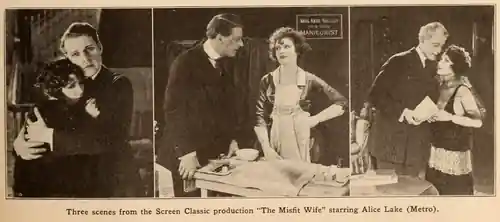
Yet the film’s most radical maneuver is tonal equipoise: it neither vilifies high society nor sanctifies the working girl. Wealth is not original sin; poverty confers no halo. When the Crandalls finally clasp Katie to their ermine bosom, the embrace feels earned because she has refuted their metric of worth—birth, liquidity—replacing it with a ledger of kindness kept in invisible ink.
Some historians lump The Misfit Wife with the tsunami of social-climb weepers that followed A Romance of the Redwoods, yet that is like filing Van Gogh beside paint-by-numbers. The picture’s emotional veracity, its refusal to coerce tears, places it closer in spirit to the German kammerspielfilm Rose Bernd, though shot through with American optimism as indefatigable as spring rain on Manhattan schist.
Restoration status remains woeful. Only two incomplete 35mm prints survive—one at MoMA, plagued by vinegar syndrome; another in a private Parisian vault, rumored to possess French intertitles that rechristen Katie as "Catherine la rebelle." Digital reconstruction languishes for want of funds, a cultural negligence akin to allowing a Sargent portrait to molder in a garage. Cinephiles must content themselves with bootlegged 8mm abridgments on YouTube, their pixelated ghosts still capable of raising gooseflesh.
In the current cultural moment—where marriage is endlessly dissected in TikTok micro-theories—The Misfit Wife whispers across a century that the most radical dowry one can bring to any union is unvarnished accountability. Katie’s sacrifice is not of the mawkish, self-annihilating brand sold by Victorian tract; it is a calculated wager that love, like nail beds, grows healthier when trimmed of deceit.
So, should you ferret out a rare archival screening, sprint. Pack tissues not for syrupy catharsis but for the singular privilege of witnessing cinematic time-travel: a woman who refuses to know her place remapping the geography of belonging. The Misfit Wife is more than a rediscovered curio; it is a mirror held up to every modern negotiation of class, gender, and the quiet, ferocious courage required to let integrity outrank pedigree. When the lights rise and the theatre organ exhales its final chord, you may find your own nails half-mooned into your palms—a small, involuntary homage to the woman who taught us that even in gilded cages, the most revolutionary act is simply to file away the bars.
IMDb —
1916
Community
Log in to comment.