DbcultAccessing Vault...
Cult Review
Senior Film Conservator
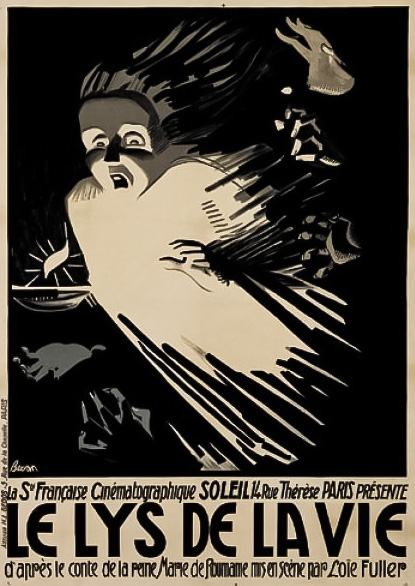
To witness Le lys de la vie is to step into a temporal rift where the boundaries between the physical world and the subconscious dissolve into a haze of silver and shadow. Directed by the legendary dancer Loïe Fuller in collaboration with Gabrielle Sorère, this 1920 production represents a radical departure from the burgeoning commercialism of early French cinema. While contemporary works like Baccarat were navigating the intricacies of social drama, Fuller was busy deconstructing the very essence of the celluloid medium. The film is not merely a story; it is a visual manifesto that utilizes the camera as a tool for metaphysical exploration.
The provenance of the script adds a layer of regal mystique, penned by Queen Marie of Romania. This royal contribution infuses the film with a fairy-tale logic that is simultaneously ancient and profoundly modern. Unlike the grounded emotional stakes found in La piccola fonte, Fuller’s work operates on a plane of pure sensation. The narrative—a prince’s search for a life-giving lily—serves as a skeletal framework upon which Fuller drapes her revolutionary visual effects. It is a quest for immortality reflected in the immortality of the image itself.
Loïe Fuller had already achieved international fame for her 'Serpentine Dance,' a performance that manipulated light and voluminous silk to create shifting, organic forms. In Le lys de la vie, she translates this obsession with fluidity to the screen. The film’s use of negative printing creates a world of inverted values, where trees appear as skeletal white ghosts against a black sky, and the human form becomes a shimmering outline of energy. This technique, while jarring to audiences accustomed to the realism of Within the Law, anticipates the experimental fervor of the 1920s by several years.
The inclusion of a young René Clair in the cast is particularly noteworthy. Before he would go on to direct his own surrealist masterpieces, Clair was here, a participant in Fuller’s laboratory of light. His presence links the film to the broader movement of the French Impressionist school of cinema. While films like Ruling Passions focused on the intensity of human desire through traditional performance, Le lys de la vie seeks to externalize inner states through purely formal means. The actors do not merely perform; they inhabit a space where their movements are slowed, distorted, and layered through double exposures.
One cannot discuss this film without delving into its technical audacity. The decision to use negative film stock for entire sequences was a stroke of genius that effectively removed the film from the realm of the everyday. It creates a sense of 'otherness' that is far more effective than the elaborate sets of Die närrische Fabrik. In this inverted reality, the 'Lily of Life' becomes a glowing beacon of pure white light, a visual metaphor for the divine or the unattainable. This aesthetic choice forces the viewer to re-evaluate their relationship with the screen, moving away from passive consumption toward active, almost meditative, engagement.
The pacing of the film is equally transgressive. It eschews the frantic energy often found in early comedy or the melodramatic urgency of Maggie Pepper. Instead, it adopts a somnambulistic rhythm. Characters drift across the screen like specters in a dream. This slow-motion choreography allows the viewer to appreciate the texture of the film grain, the play of light on fabric, and the subtle shifts in the actors' expressions. It is a cinema of contemplation, echoing the thematic depth of Oltre l'amore but through a much more radical lens.
The collaboration between a modernist dancer and a Romanian Queen might seem incongruous, yet it produced a work of singular vision. Queen Marie’s writing provides the film with its mythic resonance. The story of the dying king and the loyal son is a classic archetype, but in Fuller’s hands, it becomes a journey through a landscape of symbols. The forest, the mountains, and the water are not locations but states of being. This symbolic approach contrasts sharply with the narrative directness of A Case at Law or the moralistic tone of It Is Never Too Late to Mend.
The prince’s journey is punctuated by encounters with figures who seem to embody different facets of the human experience. Damia, the legendary singer and actress, brings a weight to her role that anchors the more flighty, ethereal elements of the production. Her performance is a reminder that even in a world of ghosts, the human heart remains a central concern. This balance between the abstract and the emotional is what prevents the film from becoming a mere technical exercise, distinguishing it from the colder formalisms sometimes found in the works of other avant-garde pioneers.
When placed alongside its contemporaries, Le lys de la vie stands as a towering anomaly. While She Went to See in a Rickshaw explored cultural intersections through a more traditional narrative lens, Fuller’s film is interested in the intersection of the soul and the machine. It shares a certain spiritual kinship with The Heart of a Child, yet it pushes that innocence into a much more psychedelic territory. The film’s preoccupation with the transition between life and death—night and day—mirrors the structural concerns of Evening - Night - Morning, yet it achieves its goals through optical distortion rather than linear editing.
Furthermore, the film’s exploration of power—both the power of the natural world and the power of the image—invites comparison to A Woman's Power. However, where that film might deal with social or interpersonal influence, Le lys de la vie is concerned with the power of the artist to reshape reality itself. It is a testament to the fact that even in the infancy of cinema, creators were already pushing against the limits of what the camera could see and what the audience could imagine.
For decades, Le lys de la vie was a legend discussed in film history books but rarely seen in its full glory. Recent restoration efforts have allowed us to appreciate the subtle hand-tinting and the intricate layers of the negative sequences. Seeing it now, one is struck by how modern it feels. The visual language Fuller developed—the slow, rhythmic pulses of light and the blurring of the human form—can be seen in everything from the experimental shorts of Maya Deren to the music videos of the 1990s. It is a film that refuses to be dated by its year of production.
The emotional resonance of the film, particularly the prince's devotion to his father, echoes the filial themes in En Søns Kærlighed. Yet, Fuller elevates this theme to a cosmic level. The prince is not just saving a king; he is attempting to restore balance to a world that has lost its light. This epic scope, contained within a dreamlike runtime, is a masterclass in concise, evocative filmmaking. It avoids the narrative bloat that sometimes plagued early features like His Turning Point, opting instead for a concentrated dose of pure atmosphere.
In the final analysis, Le lys de la vie remains a vital piece of cinematic history. It is a bridge between the stagecraft of the 19th century and the visual possibilities of the 20th. It is a film that demands to be felt rather than merely watched. For any serious student of the medium, it offers a glimpse into a path not taken—a version of cinema that is less about the reproduction of reality and more about the creation of a new one. Loïe Fuller and Gabrielle Sorère did not just make a movie; they captured a dream on celluloid, and that dream continues to flicker with an undiminished, haunting brilliance.
A Note on the Visuals: The use of sea blue (#0E7490) and dark orange (#C2410C) in this review's styling is a tribute to the film's original tinting, which often juxtaposed cool, nocturnal tones with the warm, flickering light of the 'Lily' itself. The yellow (#EAB308) highlights represent the golden age of experimentation that Fuller so boldly spearheaded.

IMDb —
1932
Community
Log in to comment.