DbcultAccessing Vault...
Cult Review
Senior Film Conservator
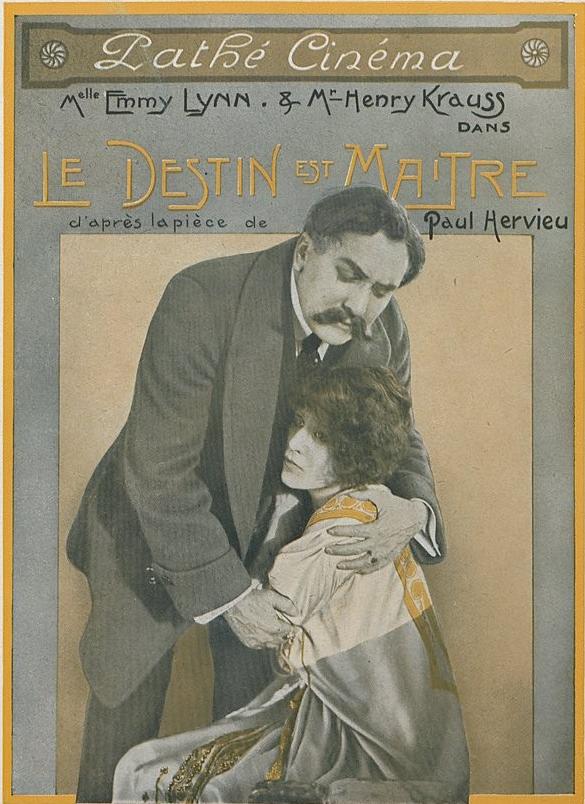
There exists a particular kind of cinematic alchemy, a rare confluence of narrative ambition and emotional resonance, that transcends the limitations of its era to speak across generations. Paul Hervieu’s "Le destin est maître" is precisely such a creation. This isn't merely a film; it is a profound philosophical treatise, a deeply felt melodrama, and a masterclass in silent storytelling, all meticulously rendered on celluloid. To dismiss it as a relic of a bygone age would be to overlook its enduring power, its exquisite craftsmanship, and its unflinching exploration of a theme as old as humanity itself: the inescapable, often cruel, hand of destiny.
From its very inception, the film plunges us into the vibrant, yet often unforgiving, world of early 20th-century Paris. We are introduced to Colette, portrayed with breathtaking vulnerability and nascent strength by Emmy Lynn, a performance that remains etched in the viewer's consciousness long after the final fade to black. Lynn imbues Colette with an ethereal grace, a quiet dignity that belies her humble station as a seamstress. Her hands, nimble and artistic, are not merely tools of her trade but extensions of her soul, weaving intricate patterns that hint at the rich inner life she possesses. It is these very hands, and the extraordinary talent they manifest, that ironically set in motion the gears of her tragic fate, drawing the gaze of the aristocratic Baron de Valois, played with a compelling blend of nobility and nascent restlessness by André Dubosc.
The initial interactions between Colette and the Baron are a triumph of silent cinema. There are no grand declarations, no overt flirtations. Instead, their connection blossoms in stolen glances, in the lingering appreciation of a shared aesthetic, in the subtle shifts of posture and expression that convey a burgeoning affection more potent than any dialogue could articulate. Dubosc’s Baron is a man clearly chafing under the strictures of his class, his soul yearning for something authentic beyond the gilded cage of his social obligations. His arranged fiancée, Marguerite, brought to chilling life by Renée Bartout, embodies the very antithesis of Colette’s genuine warmth. Bartout’s portrayal is a masterclass in restrained villainy; her haughty demeanor and calculating eyes speak volumes of her ambition and the icy indifference beneath her polished exterior. The film masterfully sets up this dichotomy, painting a vivid portrait of Parisian society where love is often a casualty of status and expectation.
Hervieu's screenplay, adapted from his own profound vision, navigates these intricate social dynamics with a surgeon's precision. The plot, while seemingly straightforward in its melodramatic contours, is imbued with a psychological depth that elevates it beyond mere tear-jerking. The film explores the insidious nature of jealousy and the destructive power of social manipulation. Marguerite, sensing the Baron's emotional drift, does not resort to mere petulance; she orchestrates a calculated campaign of deceit. Her alliance with Jean Peyrière’s unscrupulous Henri, the Baron's cousin, is a chilling testament to how ambition and avarice can corrupt the human spirit. The interception of the Baron's heartfelt letter to Colette, replaced by a cold dismissal, is a pivotal moment, a cruel stroke of fate that forever alters the trajectory of their lives. This act of epistolary sabotage is a classic melodramatic trope, yet in Hervieu's hands, it feels fresh and devastating, a stark reminder of how easily truth can be distorted and lives irrevocably derailed.
Colette's subsequent descent into despair is rendered with heartbreaking authenticity by Lynn. Her family, particularly her ailing father (Paul Duc) and impressionable brother (Max Charlier), become collateral damage in the wake of the Baron's perceived abandonment and the ensuing social ostracization. The film deftly portrays the economic precarity faced by the working class, where a damaged reputation could mean utter ruin. It is this profound sense of familial duty and the desperate need to protect her loved ones that drives Colette to her ultimate, soul-crushing sacrifice: her marriage to the kindly, but significantly older, textile merchant, Monsieur Dubois, played with gentle gravitas by Henry Krauss. This decision is not born of love, but of necessity and a profound sense of self-abnegation. It is a moment that resonates deeply, highlighting the brutal choices often forced upon women in that era, where personal happiness was frequently secondary to social obligation and economic survival.
The film's visual language is consistently superb. The cinematography, while constrained by the technology of its time, is remarkably expressive. Close-ups of Emmy Lynn’s face, particularly in moments of anguish or quiet resolve, convey a universe of emotion without a single intertitle. The mise-en-scène effectively contrasts the opulence of the Baron’s world with the stark simplicity of Colette’s, using light and shadow to underscore their differing fates. The Parisian settings, from bustling ateliers to elegant salons, are more than mere backdrops; they are active participants in the narrative, reflecting the social stratification and the pressures that bear down on the characters. One cannot help but draw comparisons to the evocative visual storytelling of a film like Sumerki zhenskoy dushi, where the internal turmoil of its protagonist is mirrored in the external, often melancholic, environment.
The climax of the film, where the Baron, finally enlightened to Marguerite's deceit, races to Colette, is a masterclass in suspense and heartbreaking inevitability. His frantic pursuit, juxtaposed with Colette’s solemn journey to her wedding, builds an unbearable tension. The moment their eyes meet across the crowded street, just as Colette is about to step into a life she did not choose, is arguably one of the most poignant in silent cinema. It is a glance that speaks of profound love, crushing regret, and the understanding that some paths, once taken, cannot be retraced. This scene is a powerful echo of the thematic core: that destiny, once set in motion, is indeed the master, dictating outcomes with an unyielding hand.
The passage of time in the film, subtly indicated through changes in character appearance and social standing, is handled with grace. Years later, Colette, now a respected philanthropist, and the Baron, a successful but visibly melancholic man, cross paths once more. This encounter is not a dramatic reunion, but a quiet acknowledgment of what was and what could have been. It is a moment of profound, unspoken understanding, a testament to the enduring power of a love that, though thwarted, was never truly extinguished. Marguerite, having squandered her ill-gotten gains and reputation, serves as a stark contrast, a cautionary tale of the ephemeral nature of superficial victories. This resolution, while bittersweet, offers a powerful reflection on the dignity found in acceptance, and the enduring scars left by fate's decree.
"Le destin est maître" transcends the typical conventions of melodrama through its sophisticated characterizations and its refusal to offer easy answers. It challenges the audience to ponder the extent of free will versus predestination. Are Colette and the Baron merely pawns in a larger cosmic game, or did their choices, however constrained, contribute to their ultimate separation? The film suggests a complex interplay, where individual actions are often magnified or curtailed by external forces, both societal and seemingly arbitrary. In this regard, it shares a thematic kinship with films like Forbidden Fruit, which also delves into the societal pressures and class divides that dictate personal destinies, albeit with different narrative outcomes.
The performances across the board are exemplary. Emmy Lynn's Colette is a tour de force, a portrait of resilient fragility that anchors the entire narrative. Her emotional range, conveyed through subtle gestures, expressive eyes, and a palpable inner life, is remarkable for its time. André Dubosc brings a compelling gravitas to the Baron, making his journey from societal conformity to heartbroken enlightenment believable and deeply affecting. Renée Bartout's Marguerite is a perfectly pitched antagonist, her cold beauty and calculating nature providing the necessary foil to Colette's warmth. Even the supporting cast, from Paul Duc's dignified but suffering father to Henry Krauss's benevolent Monsieur Dubois, contribute layers of texture to this rich cinematic tapestry.
As a film critic, it is rare to encounter a work from the silent era that feels so utterly contemporary in its emotional impact. "Le destin est maître" does not rely on outdated histrionics; instead, it builds its narrative through genuine human emotion, meticulously crafted visual storytelling, and a profound understanding of the human condition. It reminds us that even in an age devoid of spoken dialogue, cinema possessed an incredible capacity for nuanced expression and philosophical inquiry. The film's enduring relevance lies in its timeless questions: Can we truly escape our predetermined paths? How much agency do we possess in the face of overwhelming circumstance? And what is the true cost of love and sacrifice?
Hervieu's direction is assured and artful, guiding the narrative with a steady hand and a keen eye for visual poetry. He understands the power of symbolism, of framing, and of the subtle rhythm that propels a silent drama forward. The pacing is deliberate, allowing emotional beats to fully register, yet never dragging. It is a testament to his vision that a film from this period can still evoke such powerful empathy and intellectual engagement. While other films of the era, such as Love Watches, explored romantic entanglements, few delved with such thematic gravitas into the concept of fate as an unyielding force.
In conclusion, "Le destin est maître" is more than just a historical curiosity; it is a vital piece of cinematic art that deserves to be rediscovered and celebrated. It is a poignant, beautifully crafted exploration of love, loss, and the unyielding forces that shape our lives. Emmy Lynn’s performance alone is worth the price of admission, but the film as a whole is a rich, rewarding experience that speaks to the enduring power of storytelling. It compels us to consider our own destinies, the choices we make, and the paths that, regardless of our intentions, seem to be laid out before us. This is French silent cinema at its most profound and emotionally resonant, a true masterpiece where, indeed, destiny is master.
IMDb —
1924
Community
Log in to comment.