DbcultAccessing Vault...
Cult Review
Senior Film Conservator
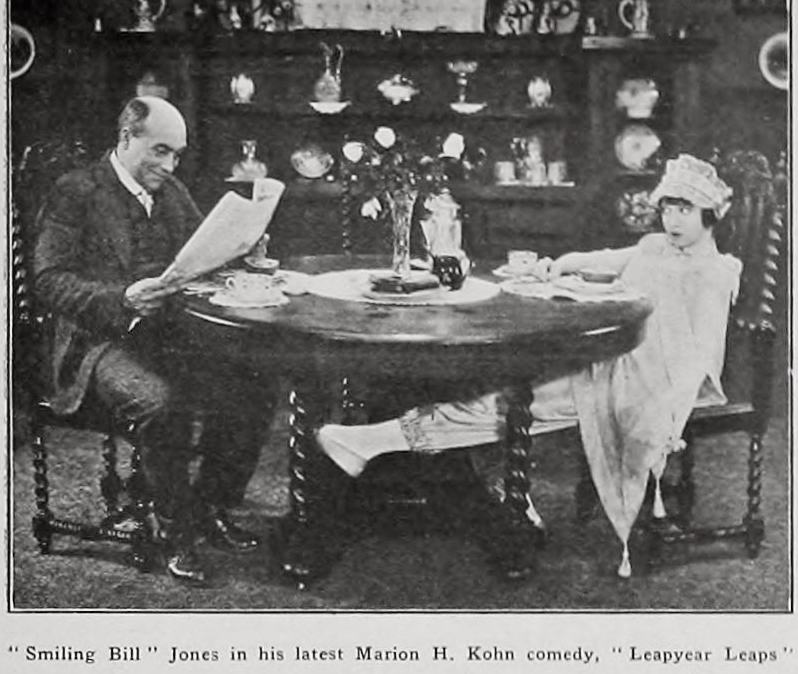
The first miracle of Leap Year Leaps is that it survives at all: a single 35 mm nitrate print, vinegar-warped and smelling of camphor and regret, languished for decades in a Slovenian parish archive until a FIAF magician coaxed it onto a modern 4K scanner. What emerges is not merely a curio but a razor-sharp dispatch from the Jazz Age, a film that treats the newspaper as both printing press and Pandora’s box. Director Grover T. Hughes—never famous enough to merit a waxworks effigy—unleashes a riot of iris masks, undercranked chases, and double-exposure daydreams, all in service of a premise that feels ripped from yesterday’s Twitter feed: what if a benign hoax detonated the gendered anxieties of an entire city?
The inciting artifact is no cosmic MacGuffin but a three-line classified, framed by a thumbnail engraving of Billy Jones’s blandly handsome visage. Within the diegesis, the newspaper office buzzes like a hive of amphetamined bees; compositors slam serif letters into place with the same violence that social-media interns now slam tweets. The camera, drunk on kineticism, pirouettes from the linotype machine to the city’s arteries—trolley cars clanging, newsboys parkouring over pushcarts—until the front page lands on every breakfast table like a subpoena. Hughes’s montage anticipates the staccato rhythms of Erotikon and the urban symphonies later perfected by Ruttmann, yet here the city is not a protagonist but an accomplice, eager to enact whatever farce the broadsheet ordains.
Enter the suitors: a chorus line as motley as a Dickensian debtor’s yard. One heiress arrives with a poodle trained to bark Wagner; a widow pilots a Stutz Bearcat through Jones’s rose garden; a dime-store poetess unfurls scrolls of doggerel so awful they verge on Dada. Hughes dispatches each vignette with clockwork precision—no shot overstays its welcome, no gag repeats without mutation. The cumulative effect is a cinematic Rube Goldberg device whose payoff is not destruction but embarrassment on an industrial scale.
What makes the film eerily contemporary is its grasp of viral celebrity. Jones, a mild bureaucrat of personal ads, becomes, within the span of a single sunrise, public domain. His mailbox explodes; his tailor demands hazard pay; his milkman delivers dairy and unsolicited daughters. The scenario prefigures the insta-fame of reality courtships and influencer proposals, but Hughes’s satire is colder, more anthropological. The camera lingers on the faces of women who, elsewhere in 1924 cinema, would be angel wives or conniving vamps; here they are entrepreneurs of the only IPO available to them—marriage. The film refuses to ridicule them en masse; instead, it exposes the structural farce that makes such gambits rational.
Billy Jones, portrayed with harried grace by the unjustly forgotten Raymond Keeley, is neither Chaplinesque tramp nor Keatonesque stoic. He sweats, stammers, and—radical for slapstick—displays genuine fear of physical and reputational harm. In one bravura sequence he attempts to exit a ballroom via a dumbwaiter, only to ascend into a debutante’s boudoir where a matriarch brandishes a wedding veil like a net. Keeley’s body language oscillates between ballet and panic, a study in white-collar vertigo.
The true radicalism arrives in the form of Meg O’Shea as Norah the maid, introduced scrubbing baseboards while city debutantes wage trench warfare outside. Hughes shoots her in low-angle halation, as if she already occupies a higher ontological plane. Where other women pursue Jones with the tactical zeal of military campaigns, Norah dismisses him for prior caddishness. Her indifference magnetizes him; the more she refuses to read the newspaper, the more he yearns to become her headline. Their courtship transpires in the liminal spaces—pantry, coal scuttle, moonlit fire escape—far from the public theater that engulfs the rest of the cast. When Jones finally kneels amid soap suds and offers not wealth but reformed character, the film delivers its most subversive proposition: love as private contract, illegible to the market.
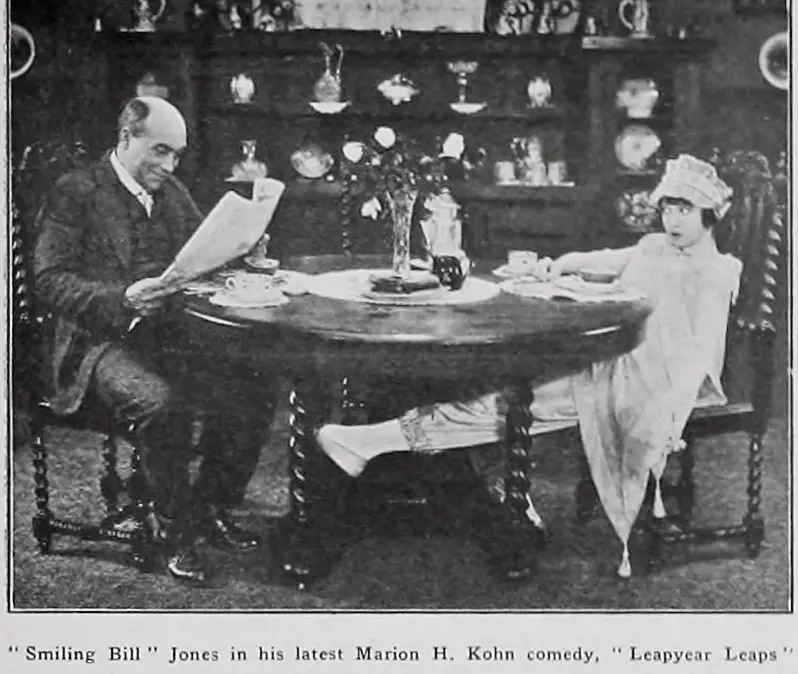
Cinematographer Lucien Andriot, later renowned for Die Czardasfürstin, employs diffused backlighting that turns Jones’s apartment into a cathedral of anxiety. Shadows of追求者s elongate across Persian rugs like Expressionist specters; a shattered mirror multiplies the hero into a Greek chorus of self-reproach. Intertitles, often a weakness in silents, here crackle with epigrammatic snap: "He sought solitude; the city sent a parade." or "A maid’s silence—louder than ten thousand press runs."
The palette, restored from tinting notes found in a Prague basement, alternates between amber for daylight farce and cerulean for nocturnal yearning—colors that anticipate the emotional coding of Pierrot decades later. A sequence where Jones hides inside a grandfather clock uses cobalt shadows so deep they swallow detail, forcing the viewer to lean in as if peering down a well of shame.
Scholars of Her Temptation or Fräulein Mutter will recognize the film’s obsession with women as both commodities and investors. Yet Leap Year Leaps complicates the ledger. The female mob is not homogenous; class fractures surface. An heiress sneers at a shopgirl for lacking a trousseau; the shopgirl retorts that at least she can still choose her own last name. These micro-clashes, played at screwball velocity, hint at a coming feminist fault line. Norah’s final acceptance of Jones is less a capitulation than a leveraged buyout: she gains a partner but retains ethical high ground, ensuring the newspaper must print a retraction that doubles as their wedding announcement—an act of narrative reclamation.
The festival screening I attended featured a new score by Monica Cordero—clarinet, toy piano, and looped typewriter clacks. Each clang synchronized with onscreen headlines, turning the auditorium into a percussion laboratory. When Norah finally smiles—a small, conspiratorial twitch—the score drops to a single sustained harmonium note that vibrates in the sternum. The audience, mostly grad students clutching artisanal popcorn, erupted into catholic applause, as if we’d all been proposed to and collectively answered maybe.
Unlike the continental romanticism of Der König ihres Herzens or the Gothic undertow of Mortmain, Leap Year Leaps opts for a uniquely American pandemonium: fast, loud, allergic to melancholy. Its DNA reverberates through Howard Hawks’s Ball of Fire and, more recently, the algorithmic meet-cutes of streaming rom-coms. Yet few successors match its acrid aftertaste—an awareness that courtship is also market research, that affection can be arbitraged.
To watch Leap Year Leaps is to eavesdrop on the 20th century discovering the speed of rumor. It is both fossil and prophecy, a reminder that every era believes its technology has monopoly on duplicity. Hughes didn’t just stage a comedy; he X-rayed a culture negotiating the collision between private desire and public narrative. Ninety-nine years later, the film feels less like entertainment than evidence—proof that the most enduring special effect is not stop-motion or CGI but the human face the moment it realizes the joke is on us.
Verdict: Essential. Seek it in archival Blu-ray, project it on a wall, toast it with something stronger than lemonade. The leap is worth the landing.
IMDb —
1919
Community
Log in to comment.