DbcultAccessing Vault...
Cult Review
Senior Film Conservator
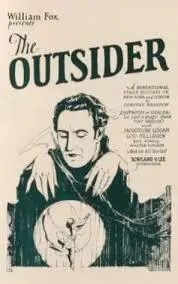
Is 1926's 'The Outsider' still worth watching in the modern age? Short answer: yes, but only if you possess a genuine appetite for the theatrical melodrama and slow-burn pacing of the silent era.
This film is specifically for historians of silent cinema and fans of early 20th-century 'miracle' narratives. It is definitely not for those who require fast-paced action or modern sensibilities regarding cultural representation.
1) This film works because it leverages the expressive physicality of Jacqueline Logan to convey a sense of internal longing that dialogue would likely have ruined.
2) This film fails because its depiction of Hungarian Gypsy culture is rooted in 1920s stereotypes that often feel more like a stage play than a lived reality.
3) You should watch it if you are interested in seeing a young Walter Pidgeon or if you want to see how silent film explored the boundary between science and faith.
If you are looking for a masterpiece on par with the heavyweights of 1926, such as Hands Up!, you might find 'The Outsider' a bit too grounded in its own melodrama. However, for the patient viewer, the film offers a fascinating look at the 'miracle cure' trope. It captures a specific moment in time when the Western world was deeply fascinated by Eastern mysticism. It works. But it’s flawed. The tension between Leontine and Ragatzy provides enough friction to keep the narrative moving, even when the plot beats feel predictable.
The film opens with a stark contrast. We see Leontine Sturdee (Jacqueline Logan) in her natural habitat: the polished, cold floors of an English dance studio. The cinematography here is static, emphasizing the rigidity of her social standing. When she travels to Hungary, the camera doesn't necessarily become more mobile, but the compositions become more cluttered and organic. This shift in visual language effectively communicates the 'outsider' status of both the protagonist and the healer she seeks.
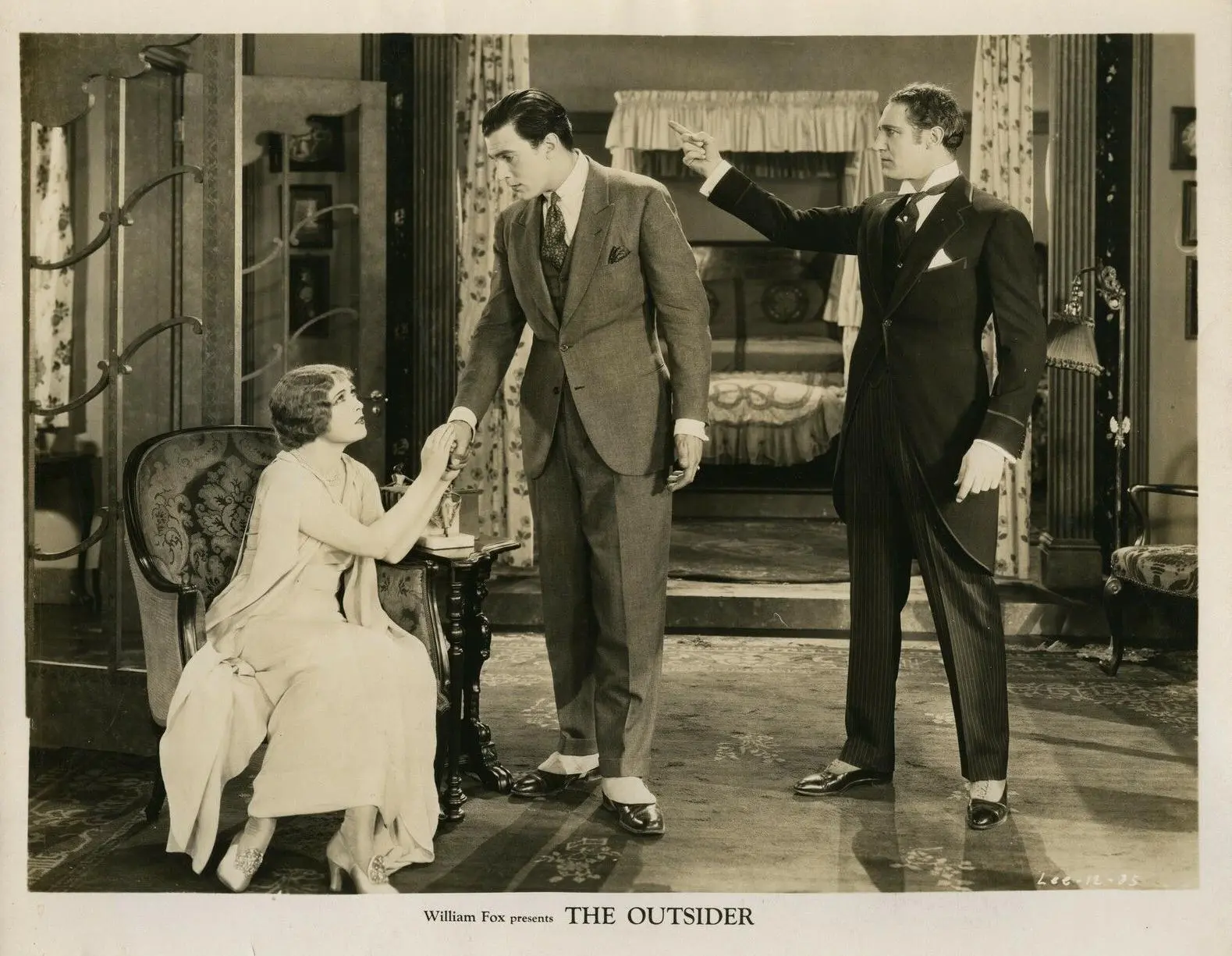
Jacqueline Logan delivers a performance that is remarkably restrained for the period. While many of her contemporaries were still leaning into the overwrought gestures of the stage, Logan uses her eyes and her posture to signal Leontine's vulnerability. There is a specific scene in the Gypsy camp where she watches a native dance; the way her hands twitch—as if her body remembers a rhythm her social standing forbids—is a highlight of the film's subtle character work.
Lou Tellegen as Ragatzy is a polarizing presence. He plays the mystic with a heavy-handed intensity that occasionally borders on the comical. Yet, this works in the context of the film’s themes. Is he a genius or a charlatan? The film plays with this ambiguity for much of its runtime. Unlike the more comedic approach found in Sally of the Sawdust, 'The Outsider' takes its mysticism seriously, which was a bold choice for a mid-20s production.
The chemistry between Logan and Tellegen is the engine of the film. Their scenes together are often framed in tight two-shots, forcing the audience to focus on the power dynamic. Ragatzy isn't just trying to heal Leontine's body; he is trying to break her aristocratic pride. This psychological warfare is far more interesting than the physical 'cures' themselves.
The direction by the production team (often attributed to the studio's guiding hand) is competent but uninspired. The pacing is like a slow-moving cart on a muddy road—it gets where it needs to go, but you feel every bump. There are moments where the film lingers too long on transitional scenes, a common issue in films of this era compared to more tightly edited works like Where Are My Children?.
However, the use of lighting in the camp scenes deserves mention. The shadows are deep, and the flicker of campfires provides a rhythmic quality to the frame that mirrors the 'native' dances Leontine is there to study. It creates an atmosphere of 'otherness' that, while dated, is cinematically effective. The contrast with the flat, bright lighting of the English scenes is a clear, if simple, directorial choice.
Seeing a young Walter Pidgeon in this film is a treat for cinephiles. He plays a supporting role, but his screen presence is already evident. He provides the grounded, 'rational' foil to Ragatzy’s mysticism. His performance is a reminder of the transition period in Hollywood acting, where the leading man was moving away from the 'Latin Lover' archetype toward a more rugged, dependable persona.
Pidgeon's character represents the audience's skepticism. Every time Ragatzy performs a 'miracle,' the camera cuts to Pidgeon’s face, which is usually a mask of doubt. This creates a triad of perspectives: Ragatzy’s belief, Pidgeon’s doubt, and Leontine’s desperate hope. This triangular conflict is what prevents the film from becoming a simple, one-dimensional melodrama.
Cons:
The cinematography of 'The Outsider' is a product of its time—functional and occasionally beautiful. The use of tinting in surviving prints (if applicable) adds a layer of emotional resonance. Blue for the cold English nights, amber for the Hungarian campfires. This color coding was a common tool, but here it feels particularly vital to the storytelling.
"The film is a testament to the power of the face in silent cinema. When the script fails, the eyes of the actors take over."
The tone is consistently somber. There is very little levity here, unlike contemporary films like Hands Up! which balanced drama with wit. 'The Outsider' wants you to feel the weight of Leontine’s condition. It wants you to feel the stakes of her journey. While this can make for a heavy viewing experience, it also gives the film a gravitas that many other 1926 programmers lacked.
To understand 'The Outsider,' one must look at what else was happening in 1926. This was the year of grand spectacles and the height of silent film technique. While this film doesn't have the scale of a Griffith production or the comedic genius of a Keaton, it occupies a middle ground of high-quality studio drama. It shares some thematic DNA with The Northern Code in its exploration of characters in unfamiliar, 'wild' environments.
The film also reflects the era's fascination with the 'foreign.' Following the success of films like 'The Sheik,' Hollywood was eager to place its stars in exotic locations. Hungary, with its supposed mystics and vibrant dances, served as the perfect backdrop for a story about an Englishwoman finding herself. It’s a colonialist gaze, certainly, but it’s one that defined the decade’s output.
The narrative arc of Leontine is one of the film's strongest points. She begins as a woman who is defined by her physical ability—a dancer. When that is threatened, her entire identity collapses. Her journey to Hungary is not just a search for a cure, but a search for a new way to exist. This internal struggle is what makes the film more than just a simple 'miracle' story. It is a story of identity and the fear of losing what makes us who we are.
The ending, while perhaps too convenient for modern tastes, is emotionally satisfying within the logic of the film. It reinforces the idea that belief is a powerful force, even if the methods are unorthodox. It’s a punchy conclusion to a long, meditative journey.
'The Outsider' (1926) is a fascinating, if occasionally frustrating, relic of silent cinema. It succeeds on the strength of Jacqueline Logan’s performance and its atmospheric tension, even while it stumbles over the cultural tropes of its time. It isn't a masterpiece, but it is a compelling drama that offers a unique window into the 1920s psyche. For the serious film student, it is a necessary watch. For the casual viewer, it is a curious artifact that requires a bit of patience to truly appreciate.
IMDb 6.6
1925
Community
Log in to comment.