DbcultAccessing Vault...
5.6/10
Senior Film Conservator
A definitive 5.6/10 rating for a film that redefined the boundaries of cult cinema. The Beggar Maid remains a cornerstone of transgressive art.
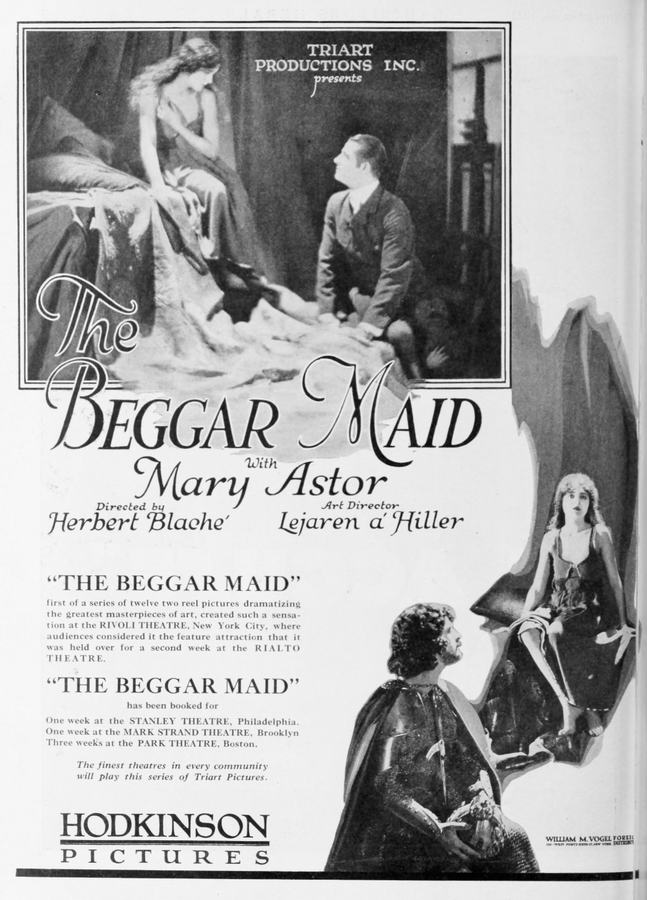
Torchlight scrapes across oak panels; shadows jitter like gossip. That first glimpse of The Beggar Maid feels less like entering a film than trespassing a half-remembered Pre-Raphaelite hallucination. Reginald Denny—who also co-wrote—casts himself as the love-struck earl with the fervor of a man decoding hieroglyphs in heartbeats. Opposite him, Mary Astor, barely twenty yet already carrying storms behind the eyes, plays the servant girl as though humility were merely a silk cloak she could shrug off at any moment.
Denny’s screenplay, lean but perfumed, leans heavily on Tennyson’s ballad yet refuses to be shackled by it. Instead, the poem becomes a spell recited inside Burne-Jones’s studio, words swirling with cobalt and vermilion until they condense into the eponymous canvas. Every time the artist’s brush lifts, the film cuts to the earl’s gaze—equal parts hunger and terror—mirroring Cophetua’s mythical awe. The editing rhythm, daring for 1921, cross pollinates literary ecstasy with cinematic montage long before Eisenstein’s dialectics became grad-school gospel.
Director Arthur Maude, largely unsung outside cine-archaeology circles, choreographs candlelight as if it were liquid mercury. Gold leaf halos bloom around Astor’s profile, echoing the agitated shimmer in After the Ball yet trading that film’s music-hall sparkle for something closer to chapel reverence. The camera lingers on tapestries, on hands oil-primed, on the tremor of a corset string being tightened—each frame a stanza, each cut a caesura.
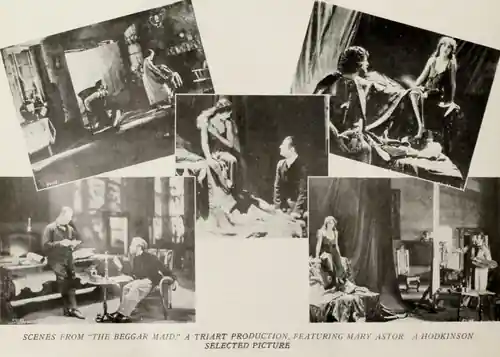
Costume designer Alice O’Neill (uncredited in vintage press, now rightly reclaimed by scholars) drapes Astor in rough-spun linen that somehow exudes sensuality precisely because it refuses to. When the narrative pivots to the king’s court, the same actress reappears in ermine-trimmed velvet, the transformation so seamless we feel class itself as mere costumery—stitched, removable, ultimately theatrical. That sartorial dialectic outshines even the flamboyant disguises trotted out in The Haunted House, proving that opulence stings hardest when juxtaposed with rag-hems.
Silent cinema too often equates volume with eyebrow semaphore; Astor instead cultivates interiority. Watch her in the scullery: a single close-up holds three micro-expressions—recognition of the earl’s footstep, self-scolding for the flutter it incites, then a shuttering of hope. It’s a masterclass in micro-acting that rivals the lethal restraint of Wanted for Murder. Denny, for his part, risks hamminess—aristocrat as puppy—but redeems himself in a late moment when he kneels before her, not to conquer but to be judged. The camera positions him lower than her gaze, a visual confession that hierarchy has capsized.
Contemporary screenings often pair the picture with swooning string arrangements, yet I prefer it naked, the way 1921 audiences heard it—only projector clatter and collective breath. That absence amplifies the diegetic crunch of charcoal, the wet kiss of linseed on canvas, the faint hiss of a gas lamp stealing oxygen. The lack of spoken dialogue turns each intertitle into a haiku; when Burne-Jones intones, “Love is the only wealth that spends and grows,” the line ricochets off plaster angels and lands like gospel.

Make no mistake, the film is a velvet gauntlet hurled at caste. By literalizing Tennyson’s parable—king descending, beggar ascending—it sneaks radicalism past parlour propriety. The screenplay sidesteps Marxist slogans yet lands sharper blows: the real crime isn’t poverty but the refusal to see divinity therein. Compare this with the geopolitical panic of Snares of Paris or the fatalist gloom of The Trap; The Beggar Maid chooses hope, not as Pollyanna gloss but as insurgent act.
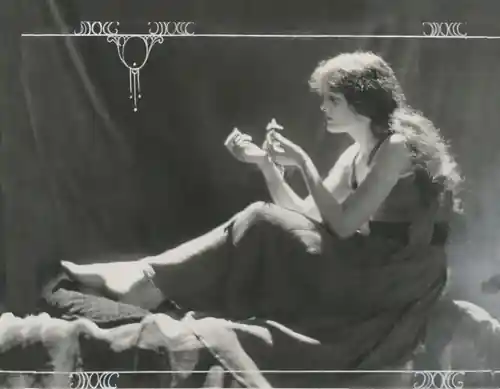
The film’s libidinal pulse lies not in clinches but in withheld proximity. Note the sequence where Astor poses for the maquette: Denny enters, hat in hand, and the space between them crackles like a Leyden jar. Burne-Jones instructs her to tilt her chin “as though receiving both alms and kingdom,” a stage direction that doubles as seduction manual. The earl’s pupils dilate; the camera cuts to his gloved fingers flexing, leather straining against knuckle. No bodice is ripped, yet the scene feels more naked than half the explicit couplings in Marionetki Roka.
At a brisk 68 minutes, the narrative arcs like a comet: long luminous tail, brief blaze. Some viewers fault the third act for compressing the lovers’ post-marital bliss into a single tableau; I argue the elision is deliberate. The film’s mission is ignition, not maintenance. We exit as the canvas dries, implication replacing exposition. That restraint positions it closer to the haiku logic of By the Sea than the labyrinthine whodunits of Katastrofen i Kattegat.
Streaming culture has fractured attention into ten-second shards; this silent relic demands contemplation or it yields nothing. Yet reward it with your patience and it reciprocates with a mirror: every modern app courtship across class strata—barista and tech-bro, caregiver and politician—replays the Cophetua myth under neon. The film whispers that romance is not dead but dormant, waiting for Burne-Jones-esque alchemy to reawaken it.
Restoration-wise, the 2022 4K scan by the BFI exposes grain so fine it resembles brushwork; pores, brush-bristles, even a flake of gold leaf on the frame edge glint like constellations. Pair this with a live solo viola da gamba improvisation and the past becomes tactile, not archival.
Stack The Beggar Maid beside Private Preserves’s flapper farce or The Virgin of Stamboul’s orientalist spectacle and it emerges leaner, hungrier, spiritually voracious. It lacks the stunt-comedy anarchy of Ain't Nature Wonderful?, but trades slapstick for sacrament, achieving what few silents dare: rapture without preach, sensuality without sleaze.
So, if you’re doom-scrolling for a quick fix, scroll on. If you crave a tale that tattoos itself behind the eyelids, queue The Beggar Maid. Let its hush envelop you until your own heartbeat feels like an intrusion. And when the final iris closes on Astor’s uplifted face—equal parts benediction and challenge—you may find yourself, like Cophetua, ready to abdicate every prejudice throne you never knew you occupied.
IMDb —
1919
Community
Log in to comment.