DbcultAccessing Vault...
5.3/10
Senior Film Conservator
A definitive 5.3/10 rating for a film that redefined the boundaries of cult cinema. Leblebici Horhor remains a cornerstone of transgressive art.
When Muhsin Ertuğrul, Tekfor Nalyan, and Dikran Cuhaciyan converged to craft Leblebici Horhor, they were not merely assembling a narrative; they were excavating a cultural stratum that had long simmered beneath the surface of early Turkish cinema. Released in the tumultuous interwar period, the film occupies a liminal space where Ottoman vestiges intersect with nascent republican ideals, rendering every frame a palimpsest of sociopolitical undercurrents.
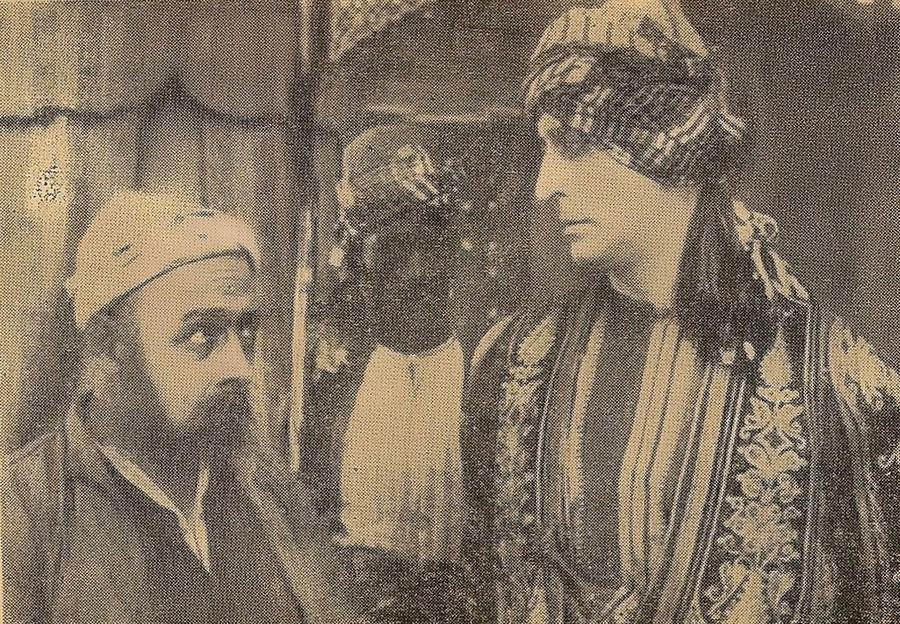
The casting choices amplify this dialectic. Elena Artinova, whose luminous presence commands attention, embodies Fadime with a delicate yet resolute poise, while Hazim Körmükçü’s portrayal of Hursit Bey radiates a restless charisma that mirrors the restless zeitgeist of a nation in flux. Supporting actors such as Ali Rıza and Refik Kemal Arduman provide textured counterpoints, each performance a brushstroke that enriches the tableau.
At its core, the plot unfurls with a deceptively simple premise: a love that defies patriarchal interdiction. Yet the film’s architecture is anything but linear. The inciting incident—a serendipitous encounter during Hursit Bey’s journey—acts as a catalyst that propels the narrative into a series of escalating confrontations. The clandestine meetings between the lovers, rendered with a chiaroscuro aesthetic, evoke an intimacy that feels both immediate and timeless.
Horhor Aga, portrayed with a stern gravitas by Sururi, serves as the embodiment of entrenched authority. His opposition is not merely personal; it is emblematic of a broader cultural resistance to change. The tension between individual desire and communal expectation is accentuated through meticulously staged set pieces, where the starkness of the Aga’s courtyard juxtaposes against the soft, lantern‑lit alcoves where Hursit and Fadime exchange vows.
The film’s pivotal moment—Hursit Bey’s audacious abduction of Fadime—transcends melodramatic spectacle. It is choreographed with a kinetic energy that mirrors the internal tumult of the protagonists. The nocturnal chase, shot in low‑key lighting, employs a palette of shadows that underscores the moral ambiguity of the act. While some contemporaneous critics dismissed the scene as sensationalist, a modern reading reveals a nuanced commentary on agency: Fadime’s consent, though veiled, hints at a subversive reclamation of autonomy.
In this vein, the screenplay’s dialogue oscillates between lyrical poetry and stark realism, a duality that reinforces the film’s thematic complexity. When Hursit whispers, "Love is a compass that points beyond the walls of tradition," the line reverberates not merely as romantic hyperbole but as a manifesto for personal sovereignty.
Visually, Leblebici Horhor is a study in contrasts. The director’s use of deep focus allows background details—a tapestry of Ottoman motifs, a distant minaret—to remain discernible, enriching the mise‑en‑scene. The cinematographer’s deliberate employment of the sea‑blue hue (#0E7490) in moments of introspection creates a visual metaphor for the vast, uncharted emotional waters the characters navigate.
Moreover, the film’s editing rhythm reflects the emotional cadence of its narrative. Rapid cuts during the kidnapping sequence heighten tension, while lingering takes in the aftermath invite contemplation. The intercutting of close‑ups on Fadime’s eyes with wide shots of the desolate landscape externalizes her inner conflict, a technique reminiscent of the visual poetry found in L'Arlésienne (see L'Arlésienne).
The auditory dimension is equally deliberate. Traditional Turkish instruments punctuate scenes of cultural ritual, while a subtle, recurring motif in minor key underscores the looming dread of Horhor Aga’s retribution. This leitmotif, reminiscent of the haunting strains in The Wolf (The Wolf), serves as an aural reminder of the inexorable forces arrayed against the lovers.
Leblebici Horhor navigates several interwoven themes: the clash between tradition and modernity, the agency of women within patriarchal structures, and the transformative potency of love. When juxtaposed with Fascination (Fascination), which also interrogates female autonomy, Leblebici Horhor offers a more overt critique of patriarchal power, positioning Fadime as an active participant rather than a passive object.
Similarly, the film’s exploration of subterfuge and rebellion echoes the narrative strategies employed in Detective Craig’s Coup (Detective Craig’s Coup). Both stories employ clandestine operations as metaphors for broader societal upheavals, though Leblebici Horhor grounds its subversion in emotional rather than procedural realms.
Elena Artinova’s portrayal of Fadime is a masterclass in restrained intensity. She conveys longing through a lingering glance, defiance through a clenched jaw, and tenderness through the subtlest of gestures. Hazim Körmükçü’s Hursit Bey balances swagger with vulnerability; his occasional missteps humanize a character that could otherwise drift into archetypal heroism.
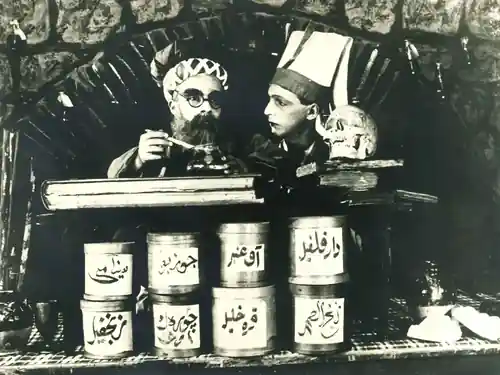
Supporting performances merit particular attention. Vasfi Riza Zobu’s Horhor Aga oscillates between tyrannical rigidity and fleeting moments of paternal concern, suggesting an internal conflict that adds layers to an otherwise monolithic antagonist. The ensemble’s chemistry, especially in ensemble scenes where cultural rituals unfold, feels authentic, reinforcing the film’s ethnographic credibility.
Decades after its premiere, Leblebici Horhor continues to inform scholarly discourse on early Turkish cinema. Its treatment of gender dynamics anticipates later feminist readings of regional film, while its visual language prefigures the stylized realism that would dominate mid‑century Turkish auteurs.
Modern audiences may find parallels between the film’s central conflict and ongoing debates about individual rights versus communal expectations in contemporary societies. The narrative’s insistence that love can, and should, transcend prescribed boundaries resonates with current dialogues surrounding personal freedom.
For those interested in tracing the film’s intertextual lineage, connections emerge with The War of the Tongs (The War of the Tongs) in terms of power struggles, and with By Right of Possession (By Right of Possession) regarding the moral complexities of ownership—both of land and of hearts.
Leblebici Horhor stands as a testament to the potency of cinema as both art and social commentary. Its deft intertwining of romance, rebellion, and cultural texture renders it a work of enduring significance. The film’s aesthetic choices—dark orange accents (#C2410C) that punctuate moments of passion, the warm glow of yellow (#EAB308) that illuminates intimate exchanges, and the cool sea‑blue (#0E7490) that underscores melancholy—coalesce into a visual symphony that remains compelling.
In sum, the film offers a rich tapestry for scholars, cinephiles, and casual viewers alike, inviting repeated viewings and ongoing analysis. Its relevance persists, echoing across decades as a reminder that the pursuit of love, when pitted against entrenched authority, remains a timeless narrative of human resilience.
IMDb —
1916
Community
Log in to comment.