DbcultAccessing Vault...
Cult Review
Senior Film Conservator
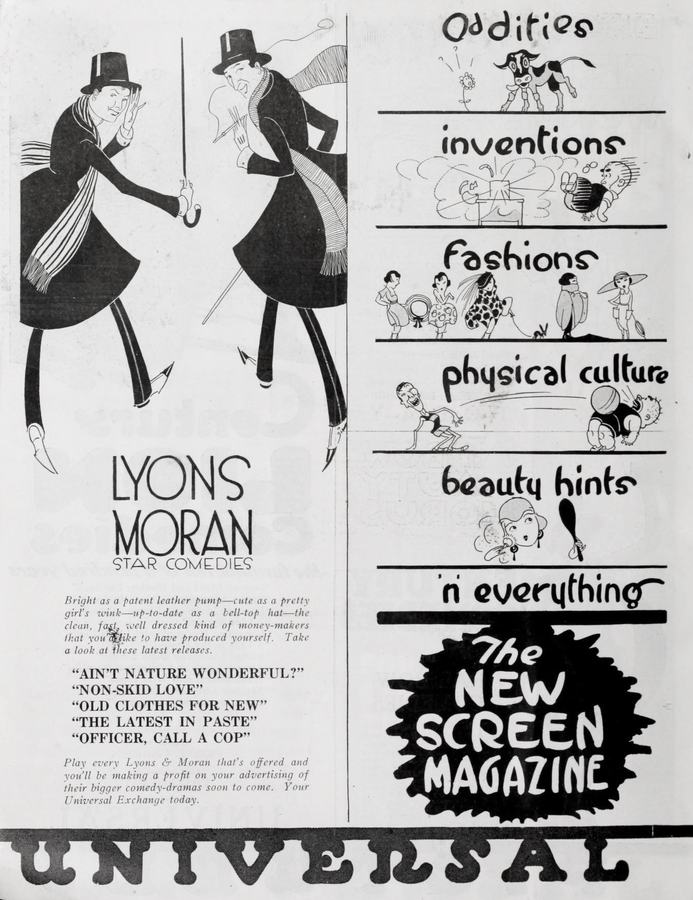
The first thing that punches you in the ribcage is the color of chaos—amber nitrate blooming like bruised peaches across the 16mm print—while brassy intertitles scream "OFFICER, CALL A COP!" as if the words themselves might sprout batons and start directing traffic. Fred Gamble, rubber-kneed and pigeon-toed, ambles into frame beneath a marquee advertising The Screaming Shadow, an in-joke that doubles as prophecy: this picture will indeed fling a silhouette of panic across the walls of genre.
Directors-writers Lyons and Moran refuse the polite curve of narrative; instead they hurl bricks of vignette, each brick painted like a Felix cartoon. One instant Gamble is sniffing a suspicious perfumed handkerchief; the next he’s catapulted into a suffragette march where banners read "Votes for Women—And Better Prisons!" The camera undercranks, legs become eggbeaters, parasols twirl like dervishes, and the soundtrack—if you’re lucky enough to catch a live Wurlitzer accompaniment—drops into a barrel-crawl rag that feels drunk on its own syncopation.
There’s a diamond, of course, but it’s a McGuffin carved from soap; it slips fingers faster than the sprocket holes slip the gate. The real loot is identity itself. Lyons impersonates a detective, Moran impersonates Lyons, Gamble impersonates a competent officer, and Charlotte Merriam—wide-eyed yet fox-sly—impersonates a distressed heiress while pocketing every wristwatch in the county. The scenario folds inward until cop and robber share the same pair of borrowed trousers, splitting seams in symmetrical humiliation.
Compare this shapeshifting to Prostitution, where social masks calcify into doom, or The Unpardonable Sin where identity is a scar. Here, identity is a whoopee-cushion—sit on it and the room laughs till it hiccups.
Watch the geography of the frame: foreground left, a horse trough; mid-ground center, a barber’s striped pole; background right, a bakery window advertising "Hot Pies 5¢." Gamble vaults the trough, pole spins like a helicopter blade, and a flying pie eclipses the iris, landing frosting-first on the town whistle. Cue municipal eruption: fire brigade, constabulary, and a passing brass band collide at 45-degree angles, forming a living kaleidoscope. This is Eisenstein before Eisenstein, montage as custard.
Color symbolism sneaks in via tinting: night sequences dipped in cyanide-blue make faces glow like drowned sailors, while interiors pulse pumpkin-orange, hinting at prison jumpsuits yet to come. The cumulative effect is a silent film that tricks you into remembering it in color, a synesthetic prank.
Elsie Jane Wilson, billed fourth but operating as anarchic muse, hijacks the judicial bench. When she bangs the gavel, confetti explodes—apparently the courthouse doubles as a dance hall on weekends. Her verdicts are sung via intertitle in limerick form: "For stealing a kiss, thirty days in the abyss!" The gender inversion isn’t mere role-reversal; it’s legislative Dada, a sly wink toward Impossible Susan and Why Not Marry, where matrimonial law already wobbles like gelatin.
Modern viewers often forget that silent cinema was never mute: it chattered via orchestra, nickelodeon upright piano, or—if the theater were broke—a lone kazoo. Officer, Call a Cop, however, demands cacophony. The chase through the sheet-music store literalizes it: pages of "Stars and Stripes Forever" become paper airplanes gliding down the screen, each plane a note you swear you can hear. The gag peaks when Gamble slips on a xylophone, striking a glissando that syncs perfectly with the projectionist’s improvised whistle—serendipity so pure it feels choreographed.
By reel’s end, every character has been arrested by another version of himself—a mise en abyme worthy of El eco del abismo. The paddy wagon, overstuffed like a burrito, lurches toward the horizon while the camera lingers on a lone cap lying in the dust. The cap’s badge number? 404 — error not found. The cosmos of authority has blue-screened before our eyes.
The 2023 4K restoration by Eye Filmmuseum mines two surviving reels from Amsterdam and one from a Montana barn. The Dutch print tints were matched chemically to the original Pathé stencil hues, yielding a flame-gradient sunset that makes the sea-blue night shots feel sub-zero by comparison. Meanwhile, the Montanan reel supplied the missing intertitle "Officer, call a cop—my mother-in-law is loose again!"—a line so brassy it could headline a vaudeville revue.
Released the same year Pinto spoofed western mythos and Pique Dame hymned tragic opera, Officer, Call a Cop triangulated the American appetite for institutional send-ups. The Teapot Dome scandal loomed; Prohibition agents were already comic villains. Audiences craved a film that laughed at badges, and this one laughed so hard it swallowed its own tongue.
Trace the DNA and you’ll find its chromosomes in The Naked Gun, in Police Academy, even in the MCU’s Ant-Man—shrinking protagonists who mock the very insignia they sport. Yet none replicate the film’s tactile abandon: the way dust motes swirl through the gate like flecks of gold, the way undercranking renders human anxiety as kinetic origami.
Officer, Call a Cop is not merely a curio for archivists; it is a hand-grenade of perception. It argues—via pratfall—that identity is a revolving door powered by hubris. Watch it at midnight with a rowdy crowd and you’ll swear the screen exhales ether; watch it alone at dawn and you’ll hear the echo of your own laughter ricochet like distant sirens. Either way, once the lights come up, you’ll check your pulse—and your wallet—because in this city, even the audience is an accomplice.
(Links within the review point to related silent-era titles for deeper rabbit-hole spelunking.)
IMDb 6.4
1935
Community
Log in to comment.