DbcultAccessing Vault...
7.8/10
Senior Film Conservator
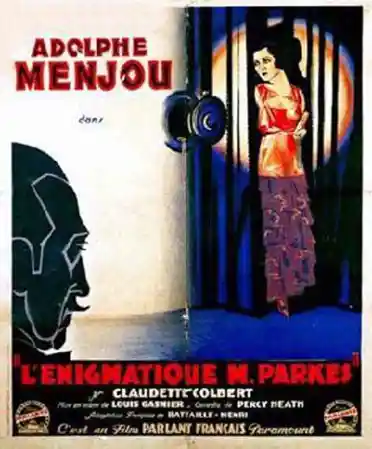
A definitive 7.8/10 rating for a film that redefined the boundaries of cult cinema. L'énigmatique Monsieur Parkes remains a cornerstone of transgressive art.
“L'énigmatique Monsieur Parkes” feels like stepping into a time capsule, a French echo of a Hollywood film called “Slightly Scarlet.” If you're into the nitty-gritty of early talkies, or just curious about how studios did international versions back in the day, this is absolutely worth checking out. But honestly, if you need things to move quickly or expect modern storytelling, you might find yourself checking your watch. 🕰️
This is Paramount's clever move from 1930, shooting a whole separate version on the exact same sets with some shared actors. It's a fascinating peek behind the curtain, seeing the same rooms but with different voices filling them up. Almost like a parallel universe, just slightly off.
The story, such as it is, involves a mysterious Monsieur Parkes. He's played by Adolphe Menjou, who brings this very specific kind of slickness to the role. You can almost feel him *trying* to look debonair even when he's just sitting there.
Then there's Claudette Colbert, who really shines, even in French. Her expressions are so clear, even if you don't catch every word, you get the vibe. There's a moment, a close-up when she realizes something bad is about to happen, and her eyes just *widen* ever so slightly. That felt real.
The pacing is… deliberate. Conversations often stretch out, with pauses that today would feel like an eternity. Sometimes it works, building tension, but other times you just want someone to finish their sentence.
Jacques Jou-Jerville has a role too, though it felt a bit underdeveloped. He pops in and out, adding to the general air of intrigue. But his character doesn't quite get the space to grow.
One thing that caught my eye: the set design. It's 1930s opulence, but with a surprising amount of detail. There's a specific lamp in one drawing-room scene that looks like something straight out of a Parisian antique shop. It lingers for a beat, just enough to notice. ✨
The dialogue itself, even translated, has a certain old-world charm. People speak in full, almost theatrical sentences. Not quite how we chat now, but it's part of the experience.
There are these long takes, too, where the camera just sits there, watching the actors move through a scene. No quick cuts, no frantic editing. It really forces you to pay attention to the blocking and how they use the space. It felt a little *stiff* sometimes, though.
And the sound! Early sound films always have this unique quality. The voices sometimes sound a little distant, or slightly echo-y. You can almost hear the microphones trying their best to pick everything up.
Emile Chautard is another face you recognize, adding to the ensemble. His presence just adds a layer of quiet authority. He doesn't do much, but when he's on screen, you *feel* it.
It's interesting to think about the logistics. Same sets, different language, different takes. Did they shoot the English version, then immediately switch to French? How did that even work? Must've been a whirlwind on set.
The plot itself, involving some sort of shady dealings, isn't groundbreaking. But it's less about the "what happens next" and more about the *style* of it all. It’s a very particular kind of mystery.
There’s a scene where Adolphe Menjou's Parkes has a very intense, almost quiet confrontation. He doesn't raise his voice, but the *threat* is clear in his posture. That was a really strong moment.
Overall, it's a piece of film history. Not something for everyone, definitely. But for those who appreciate the journey of cinema, and don't mind a slower burn, it's quite something. It's less a blockbuster and more like a carefully preserved artifact. 📽️
Did I mention the clothes? Oh, the clothes! Everyone is so impeccably dressed. Even in a moment of panic, the suits and gowns are just *perfect*. It's a detail that stands out, for sure.
It makes you wonder about the other version, Slightly Scarlet. How different could it really be, given the same sets? You almost want to watch them back-to-back.
One final thought: the closing shot. It just kind of… ends. Not a grand, sweeping statement. More like a curtain gently falling. Very 1930s.
IMDb —
1923
Community
Log in to comment.