DbcultAccessing Vault...
5.8/10
Senior Film Conservator
A definitive 5.8/10 rating for a film that redefined the boundaries of cult cinema. The Heart of the Blue Ridge remains a cornerstone of transgressive art.
Silents never scream; they tremble. In The Heart of the Blue Ridge, that tremor is a bruised violet quaking under the fingernails of Appalachia, a 1915 one-reeler that feels older than celluloid—etched, perhaps, on shale by lantern and jackknife. Forgotten by chronicles yet resurrected by nitrate necromancers, the picture distills moonlight, gunpowder, and courtship into a shot-glass of folklore you swig until it bites.
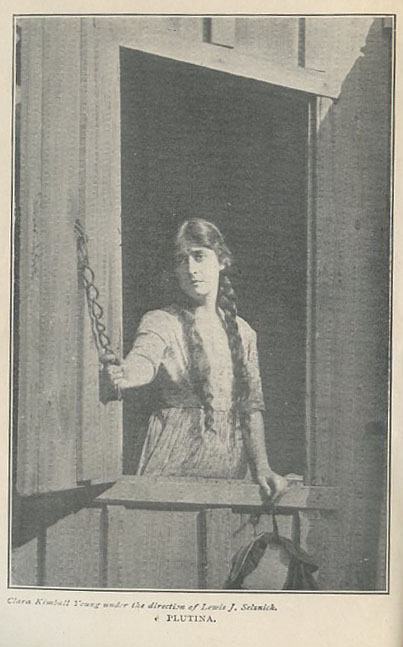
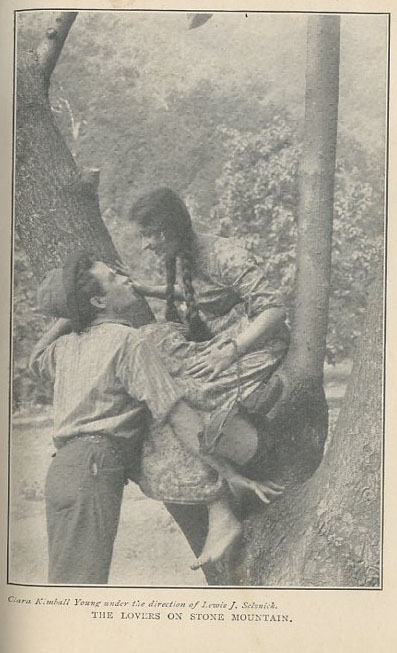
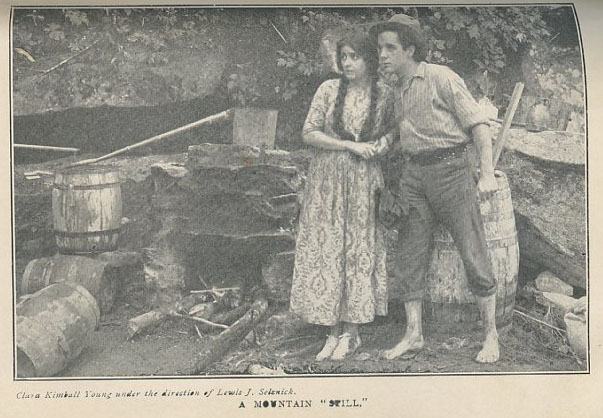
Forget loglines; think runes. Waldron Baily’s scenario is a palimpsest where Pre-Raphaelite sentiment collides with Hatfield-McCoy carnality. Plutina—played by Clara Kimball Young with eyes like wet chestnuts—doesn’t simply reject Dan; she annihilates an archetype, the mountain machismo distilled in corn-liquor and buckskin. Zeke, performed by Chester Barnett with the diffident glow of a daguerreotype poet, is no mere farmer; he is the New South’s compromise between Jeffersonian virtue and bureaucratic assimilation, a man who tames soil by day and reads timber reports by kerosene.
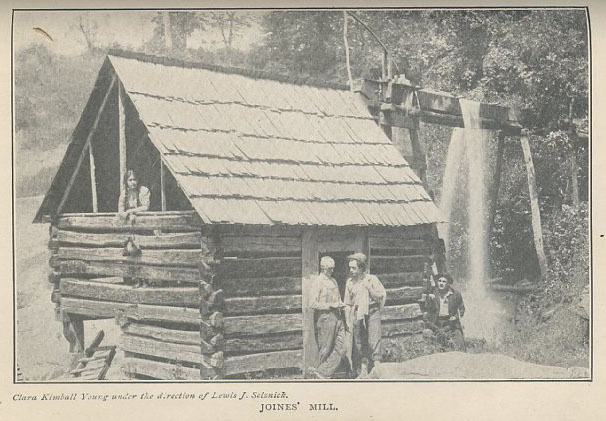
The trained bear—yes, there is a bear—functions as the film’s primal chorus, a furry Tiresias whose death cleaves childhood from Plutina’s ribcage. When Dan’s bullet fells the animal, the moment is staged in chiaroscuro: snowfield foreground, black forest backdrop, a single muzzle flash that could be a star giving up. Intertitles do not verbalize grief; instead the film cuts to Plutina’s hands sinking into the fur as if testing the temperature of a newly foreign country. The audience, denied close-ups by 1915 orthodoxy, leans forward anyway, inventing pores, freckles, salt tears.
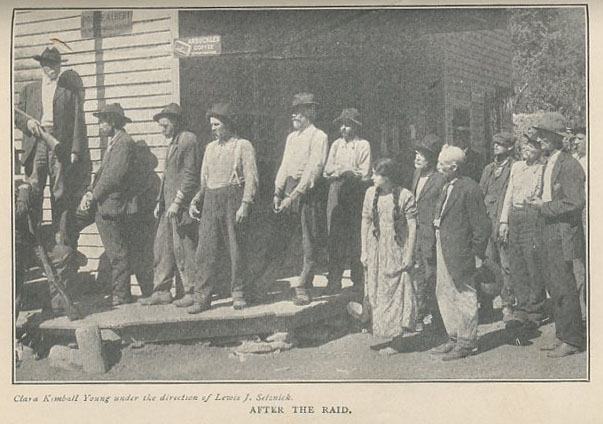
Dan Hodges—Edwin L. Hollywood chewing scenery like it’s plug tobacco—embodies a paradox: the archaic predator armed with modern revolver. He is the entropy that the revenue service, that harbinger of federal modernity, has come to cauterize. Yet the picture refuses to celebrate the taxman; the officer spends half his screen time fevered in a widow’s bed, a body politic too perforated to police. Thus the moral binary blurs: bootlegger versus revenuer becomes forest versus Washington, custom versus statute, all transposed onto the skin of a girl who wants neither.
Plutina’s agency flickers like a carbide lamp. She refuses Dan, chooses Zeke, yet must be rescued from a cliff. Feminist critique might brand her a damsel; cultural contextualists will argue her final leap is not suicide but strategic vertigo, a gambit that calls Zeke’s honor to the precipice. The camera—likely hand-cranked by a jittery Kentuckian—lingers on her boots grinding gravel, pebbles trickling into abyss. The tension is less “will she jump?” than “will the frame itself survive?”
Surviving prints suffer vinegar syndrome, yet the decay adds a halo. Scratches resemble lightning bugs; emulsion bubbles mimic mountain mist. One reel jumps, excising the bear’s training montage, so viewers must imagine a cub learning pirouettes from a moonshiner—an apocrypha more potent than footage. The tinting—amber for interiors, viridian for exteriors—follows a schema so arbitrary it achieves poetry: bureaucrat’s office bathed in hell-copper, wedding finale soaked in bruise-blue.
Compare it to The Explosion of Fort B 2 whose pyrotechnics flaunt technology, or to Young Romance with its yachts and champagne courtships. Blue Ridge is the anti-urban palate cleanser, a film that smells of damp flannel rather than Chanel No. 5.
Clara Kimball Young, already a persona in 1915, modulates between tableau poise and proto-naturalistic micro-gestures: a thumb rubbing sap from a pine needle, the catch of breath when Dan’s shadow eclipses the cabin door. Chester Barnett underplays, letting the landscape speak through him; when he clasps Plutina’s hand atop a stump, the act feels like grafting two species of birch. Edwin L. Hollywood, meanwhile, swaggers so hard his hat brim could slice bacon. His Dan is what happens when Shakespeare’s Richard III consumes too much maize liquor and discovers American individualism.
Robert Cummings—as the revenuer—has maybe forty seconds of screen life, yet his death-rattle close-up prefigures the noir trope of bureaucratic martyrdom. His eyes, milky with sepsis, seem to accuse the camera itself for the sin of watching.
The final cave confrontation is staged like a subterranean Oberammergau. Torchlight carves stalactites into cathedral vaults; Plutina’s white dress—perhaps an absurd choice for kidnapping—becomes a mobile tabernacle. Dan’s revolver clicks empty, symbolizing the exhaustion of frontier firepower. Zeke’s fists, calloused from hoeing, mete out agrarian justice. When Dan topples, the film cuts to a dummy plummeting—an effect so crude it achieves Bunuelian savagery. We know it’s a dummy; the artifice exposes the moral mechanism: villains must fall, not because of statute, but because narrative gravity demands ballast.
Yet the coda withholds catharsis. Instead of a kiss, Zeke and Plutina board a train whose billowing steam erases their silhouettes. The government job awaits: stewardship of land that was never the government’s to give. The ending is not union but annexation, a bittersweet reminder that every marriage in 1915 America is also a merger with the machine of state.
Most extant screenings retrofit Appalachian fiddle tunes. Resist. Watch it mute, let the projector’s purr become the score. You’ll hear the nonexistent bear growl, the echo of Dan’s body hitting scree, the long exhalation of a nation learning to fear its own exceptionalism.
No sequel, no remake, no Criterion spine. Only echoes: in The Voice in the Fog where cliff and mist again conspire, in The Despoiler where revenge rots into myth. The bear reincarnates as Tillie’s Punctured Romance’s circus animals, the cave resurfaces in German Wer ist der Täter?—proof that Appalachia and the Black Forest share the same narrative mitochondria.
Academics hunting proto-feminist parables will prize Plutina’s refusal; genre historians will note the scaffolding of the hillbilly thriller that will later smear itself across Deliverance and Wrong Turn. Economists may read the film as an allegory of extraction capitalism: timber, moonshine, women—all resources fought over, none truly owned.
Great films thrust their hands through time and squeeze your ventricles. Mediocre ones become footnotes. The Heart of the Blue Ridge does neither; it becomes a bruise, a brownish bloom just above the knee, which you discover weeks later and cannot remember acquiring. That is its genius: to wound invisibly, to haunt without permission, to remind you that every cliff is a choice, every train a treaty, every bear a part of yourself you will someday lose.
Rating: 4.5 out of 5 mason jars—one shattered in the name of progress.
IMDb —
1928
Community
Log in to comment.