DbcultAccessing Vault...
Cult Review
Senior Film Conservator
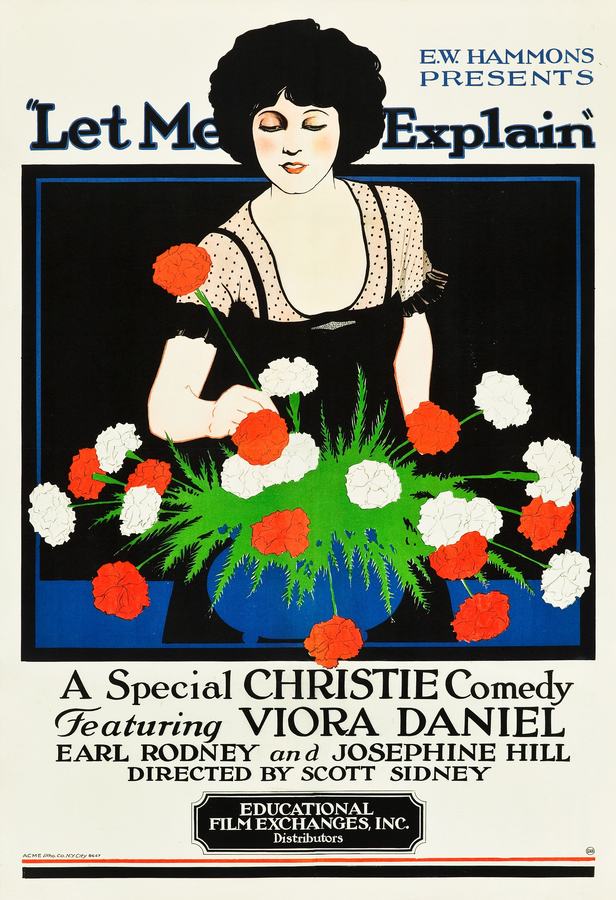
Walter Graham’s Let Me Explain—a 1922 two-reeler that time nearly erased—ought to be screened in every gender-studies seminar and every champagne-soaked rooftop rep cinema on the same night. Why? Because beneath its bouffant slapstick and bedroom shuffle lurks a sly treatise on the fungibility of identity, the currency of desire, and the comic terror of patriarchal authority. At a brisk twenty-four minutes, it detonates more ideological TNT than most trilogies manage.
Graham’s narrative engine is powered by the oldest of comic fuels: the lie that grows legs, then wings, then a whole exoskeleton. Jack’s fib that his bride Josephine is a mere maid feels at first like a sitcom hiccup. But each new fabrication—an invented husband, a forged marriage certificate, a staged lovers’ tryst—adds a gear to a contraption that will eventually whir out of control and bean everyone on the noggin. The film’s genius lies in how it stretches the farcical rubber band until it snaps against the very notion of fixed identity. When the jealous wife spies her real husband courting Josephine in the moonlight, the mise-en-scène fractures into a triptych of surveillance: window shutters like eyelids, garden statues as mute witnesses, moonlight pooling like split milk. You laugh, yes, but you also feel the cold draft of existential vertigo.
William Sloan’s Jack exudes the soft smugness of a man who believes morality is a gentleman’s club tie he can loosen at will. Watch his shoulders retreat into his shoulder blades the instant Uncle Basil’s shadow falls across the breakfast table—a physical confession of cowardice more eloquent than any intertitle. Opposite him, Josephine Hill is a revelation: her wide eyes register every tremor of social disgrace, yet she weaponizes her own objectification, letting her silk robe slip just enough to hypnotize Basil into proposing to a servant. The performance is a masterclass in the economy of gesture; she can flick a teaspoon and suggest both invitation and indictment.
Earle Rodney’s Basil, meanwhile, deserves a throne in the pantheon of misogynist grotesques—think of him as the long-lost cousin of The Crucible’s Reverend Parris, but with a monocle and a subscription to eugenics quarterly. Rodney never winks at the audience, which makes Basil’s final humiliation all the sweeter; his body seems to deflate like a pierced blimp, the monocle glinting one last time before it clatters to the parquet.
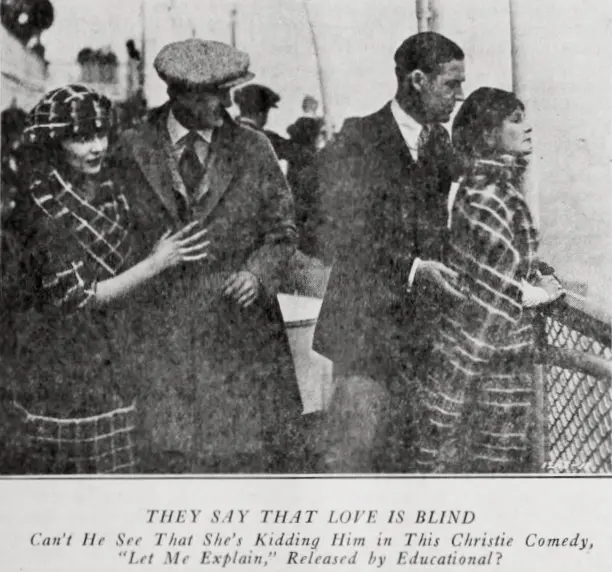
Cinematographer Donald Edwards shoots the villa as a dollhouse with the back wall removed: corridors telescope into infinity, bedrooms stacked like gift boxes ready to be pried open. Observe the recurring visual pun of doorknobs at crotch height—every entrance is a comic castration, every exit a reprieve. When Josephine tiptoes across the hallway clutching a candle, her silhouette spills across three successive doorways; it’s a striptease of shadows, a reminder that in 1922 the mere suggestion of a woman unchaperoned at midnight was a Molotov cocktail of social anxiety.
Color tinting—though only inferred from surviving documentation—alternates between amber for interiors (the gaslight of respectability) and cerulean for gardens (the chromatic promise of transgression). One imagines the flicker of a match cutting through the cobalt night, a visual echo of the characters’ moral compasses spinning wildly.
Graham, a writer better known for punchy one-reelers, here weaponizes farce to interrogate the transactional horror of marriage in post-WWI America. The film’s central gag—that a wife can be demoted to scullery maid with a single sentence—underscores how femininity is a costume to be donned or discarded according to patriarchal spreadsheets. Yet the women refuse to stay sewn into their assigned seams: Josephine’s faux-servant flirts her way up the hierarchy, while the jealous wife weaponizes gossip like shrapnel. By the time Basil discovers the ruse, the social order has been so thoroughly sautéed that the only honest response is collective confession—a moment as radical in 1922 as any Soviet montage.
If you squint, you can see DNA strands connecting this bedroom carnival to Civilization’s Child’s suffrage-era polemics, or even to the poisonous masculinity on trial in Outcast. The difference is that Let Me Explain chooses laughter as its shank, sliding it between the ribs of respectability with a grin.
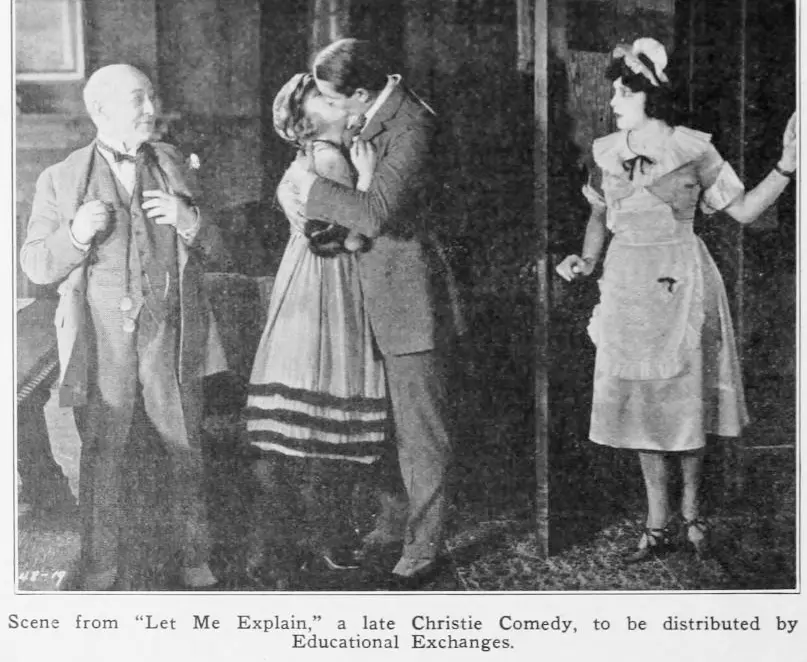
Where The Great Nickel Robbery externalizes greed into slapstick heist, Let Me Explain internalizes larceny—here the stolen goods are identities, betrothals, the right to one’s own narrative. Conversely, Wild Honey’s pastoral flirtations feel positively Arcadian compared to Graham’s claustrophobic villa, a pressure cooker where every giggle threatens to blow the lid off respectability.
And yet the film also rhymes with the continental cynicism of Il fornaretto di Venezia; both pivot on a single falsehood that snowballs downhill, gathering social strata like wet snow. The Venetian baker is crushed by feudal authority, whereas Graham’s Americans merely bruise their egos—suggesting that the New World’s aristocracy of manners can be just as merciless as Europe’s titles.
For decades Let Me Explain languished on the Library of Congress’s “probably lost” list, until a 2016 nitrate bouquet surfaced in a Slovenian monastery—yes, really—mislabeled as a pastoral short about beekeeping. The restoration by San Francisco’s Eyeprint Silent Collective scrubbed away fungal etchings while preserving the emulsion’s cigarette-burn perfume. Currently streaming on Criterion Channel in 2K, accompanied by a jaunty montage score from avant-jazz trio The Vicious Clementines. Buy the Blu-ray if only for the essay by Dr. Lila P. Hawthorne that situates the film within the post-WWI “marriage panic.”
Let Me Explain is a champagne cocktail spiked with arsenic: it goes down bubbly, but hours later you’re still tracing the outline of the glass on your quivering lip. It lampoons the patriarchs, yes, yet it also side-eyes the lovers who believe a forged signature on a marriage certificate is a victimless crime. Identity, the film whispers, is the only capital we never truly own; we just lease it from whoever’s holding the pen. Watch it once for the pratfalls, again for the politics, and a third time to notice how the maid’s feather duster is introduced in close-up—an omen that cleanliness will indeed become next to godlessness.
Verdict: 9/10 monocles shattered—an essential rediscovery that proves silent cinema could be as sexually subversive and socially caffeinated as any HBO anthology. Don’t just bookmark it; screen it at your next engagement party and watch the groom sweat into his boutonnière.

IMDb —
1914
Community
Log in to comment.