DbcultAccessing Vault...
6.8/10
Senior Film Conservator
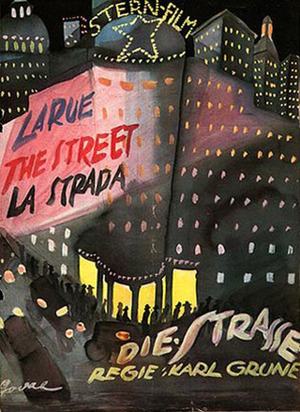
A definitive 6.8/10 rating for a film that redefined the boundaries of cult cinema. The Street remains a cornerstone of transgressive art.
In the annals of silent cinema, Karl Grune's 1923 masterpiece, 'The Street' (Der Straße), stands as a towering testament to the expressive power of film beyond mere dialogue. It isn't just a movie; it's a visceral experience, a psychological journey into the heart of urban alienation and the intoxicating, yet perilous, pull of the unknown. Released during the burgeoning era of German Expressionism, a movement profoundly shaped by the socio-political anxieties of post-World War I Weimar Germany, this film transcends a simple narrative, becoming instead a sprawling canvas for human longing and societal critique. It delves into the psyche of a nameless protagonist, a middle-aged man whose life has ossified into a monotonous routine, mirroring perhaps the collective ennui felt by a generation grappling with disillusionment. His existence is a carefully curated tableau of domesticity, but beneath its placid surface, a tempest of unfulfilled desire rages, threatening to shatter the fragile peace of his ordered world. This isn't merely a story of a man seeking escape; it's a profound exploration of the human condition itself, set against a cityscape that is as much a character as any of its inhabitants.
The film's genius lies in its dual narrative threads, which, like convergent rivers, flow towards an inevitable, dramatic confluence. We are first introduced to the 'Man' (portrayed with remarkable subtlety by Leonhard Haskel), whose days are a repetitive cycle of work, meals, and the silent, almost spectral presence of his wife (Lucie Höflich). The camera lingers on his face, a mask of quiet desperation, as he gazes out of his window, his eyes tracing the vibrant, chaotic pulse of the street below. This street, with its dazzling lights and shadowy alleys, represents everything his life is not: spontaneity, danger, excitement, and perhaps, a fleeting glimpse of genuine connection. It's a siren song, a vibrant antithesis to the stifling comfort of his bourgeois home. This yearning for a departure from the mundane is a universal theme, one that resonates deeply even today, much like the characters in Forget Me Not or The Yankee Way might yearn for a different path, though their circumstances are entirely distinct.
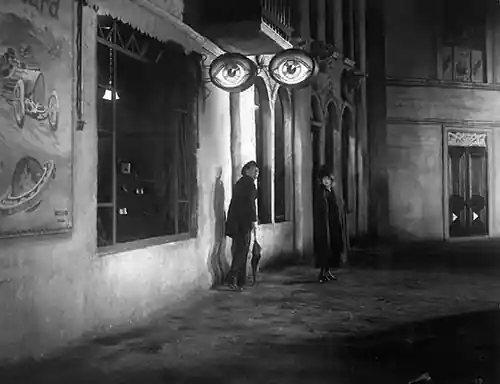
Grune and his fellow writers, Julius Urgiss and Carl Mayer, craft an environment that is less a backdrop and more an active participant in the unfolding drama. The city itself is a masterpiece of expressionistic design—a labyrinth of distorted perspectives, looming shadows, and disorienting angles. It’s an architectural nightmare, a visual manifestation of the inner turmoil and moral decay lurking beneath its glittering facade. The street is not merely a place; it is a living, breathing entity, a character imbued with its own malevolent will, beckoning the Man into its depths. This visual language, a hallmark of German Expressionism, transforms the mundane into the menacing, elevating the narrative from a simple tale of temptation into a profound psychological drama. One cannot help but draw parallels to the stark, almost surreal landscapes painted in other Expressionist works, where the external world mirrors the internal disquiet of its inhabitants.
The second narrative strand introduces us to the poignant duo of the 'Blind Man' (Anton Edthofer) and his watchful young 'Grandson'. Their existence is one of fragile interdependence, a delicate balance maintained amidst the city's indifferent churn. The Grandson acts as the Blind Man's eyes, guiding him through the perilous urban landscape, while the Blind Man relies entirely on the boy's innocent perception. This relationship is a stark contrast to the Man's isolated yearning, highlighting themes of vulnerability and reliance in a world that often seems devoid of empathy. Their bond, forged in necessity, offers a counterpoint to the transactional, often predatory relationships that define the street. It’s a quiet, profound exploration of human connection, an anchor in the chaotic sea that Grune so masterfully depicts. Their plight evokes a sense of shared human fragility, a universal vulnerability that transcends the specificities of time and place, much like the inherent dangers faced by characters in Wolves of the Border, albeit in a dramatically different context.
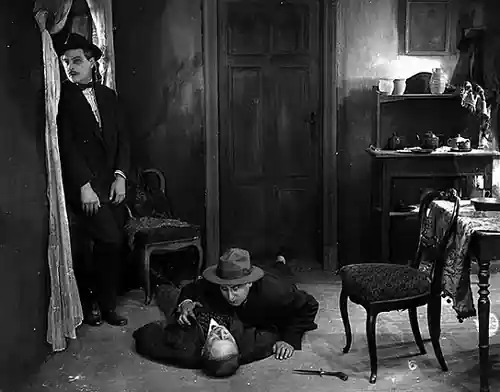
The Man's fateful decision to step out of his comfort zone and into the pulsating embrace of the street marks the true beginning of his descent. He is quickly swept into a world of intoxicating novelties: a glamorous prostitute (Aud Egede-Nissen), the thrill of a gambling den, and the shadowy machinations of a cunning swindler (Eugen Klöpfer). Here, the film's visual style truly shines, with its exaggerated shadows and stark contrasts emphasizing the moral ambiguity of this nocturnal realm. The street promises liberation, but delivers only entanglement, leading our protagonist down a path paved with deceit and ultimately, tragedy. His initial exhilaration slowly gives way to a growing sense of dread, as he finds himself a pawn in a game far beyond his control. This sense of being caught in an intricate web, where the stakes are life and death, could be loosely compared to the intricate plots found in early thrillers like The Voice on the Wire or The Veiled Mystery, where characters grapple with unseen forces and unfolding dangers.
The narrative's brilliance culminates when these two disparate plot lines inevitably converge. The Man, now implicated in a murder he did not commit, finds himself on the run, a fugitive in the very labyrinth he once romanticized. His desperate scramble through the darkened streets leads him directly into the orbit of the Blind Man and his Grandson, setting the stage for a tragic misunderstanding that underscores the arbitrary cruelty of fate. The city, once a symbol of escape, becomes a cage, its every shadow a potential accuser. The climax, a heart-wrenching sequence of mistaken identity and escalating tension, is a masterclass in silent film storytelling, relying entirely on visual cues and the actors' powerful expressions to convey fear, confusion, and despair. Max Schreck, though in a smaller role, adds his inimitable, unsettling presence to the film's ensemble, contributing to the overall sense of foreboding that permeates the street's darkest corners.
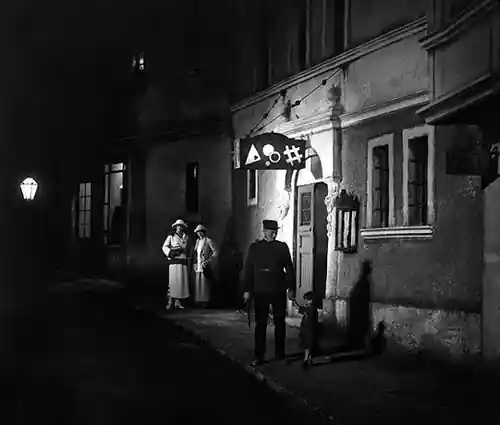
'The Street' is not just a triumph of storytelling; it's a profound meditation on the allure and perils of the modern metropolis. It critiques the superficiality of urban life, where appearances can be deceiving, and anonymity can be both a shield and a curse. The film's expressionistic aesthetic, characterized by its non-naturalistic sets and dramatic lighting, serves to amplify the psychological states of its characters and the oppressive atmosphere of the city. Shadows stretch and contort, buildings lean precariously, and streetlights glare with an almost malevolent intensity, all conspiring to create a palpable sense of unease. This isn't realism; it's a heightened reality, a visual metaphor for a world teetering on the brink of moral collapse. The stark contrast between the Man's drab apartment and the dazzling, yet dangerous, street outside is a recurring visual motif, emphasizing the chasm between expectation and reality.
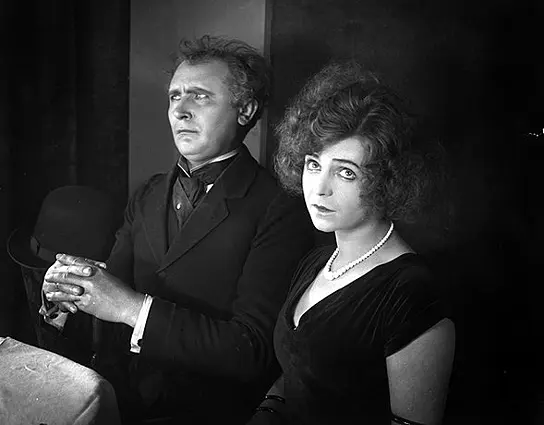
The performances, particularly that of Leonhard Haskel as the Man, are nothing short of captivating. Without the crutch of dialogue, actors in silent films relied heavily on their physicality, facial expressions, and gestural language. Haskel conveys a vast spectrum of emotions—from the initial dull ache of boredom to the thrill of illicit adventure, and finally, the crushing weight of despair and guilt—with remarkable nuance. His eyes, initially glazed with ennui, gradually widen with a desperate curiosity, then narrow with fear, telling a story all their own. Lucie Höflich, as the stoic wife, embodies the quiet strength and enduring loyalty that stands in stark contrast to the Man's fleeting desires. Even the smaller roles, like that of Max Schreck, leave an indelible impression, contributing to the film's rich tapestry of urban characters.
In a broader sense, 'The Street' can be seen as a prophetic commentary on the anxieties of its time. Post-WWI Germany was a society grappling with economic instability, social upheaval, and a profound sense of disillusionment. The film's depiction of a chaotic, morally ambiguous city reflects these societal anxieties, presenting the urban landscape not as a place of progress and opportunity, but as a dangerous crucible where innocence is lost and lives are irrevocably altered. The allure of the street, promising escape, ultimately delivers only a harsher reality, a brutal awakening to the consequences of unchecked desire. This theme of inescapable consequence, of facing the music for one's choices, is a powerful one, echoing the moral dilemmas found in films such as Going Straight or Her Price, where characters must contend with the ripple effects of their decisions.
The film's influence reverberates throughout cinematic history, particularly in the development of film noir. The chiaroscuro lighting, the morally ambiguous characters, the urban setting as a source of both temptation and danger—these elements, so skillfully employed by Grune, would become hallmarks of the noir genre decades later. It’s a foundational text for understanding how cinema can externalize inner psychological states and transform a simple plot into a profound exploration of human nature. The stark visual contrast between the Man's domestic prison and the glittering, yet perilous, freedom of the street is a visual motif that has been endlessly reinterpreted, from the neon-drenched alleys of later thrillers to the claustrophobic interiors of psychological dramas. This desire for escape, for something 'beyond the rainbow' (Beyond the Rainbow), is a timeless human impulse that Grune captures with stark realism.
Ultimately, 'The Street' is a cinematic journey that leaves an indelible mark. It's a reminder of the power of visual storytelling, of how atmosphere, performance, and thematic depth can coalesce to create something truly extraordinary. It challenges the viewer to look beyond the surface, to question the allure of the unknown, and to consider the profound impact of our environments on our inner lives. The film's ending, where the Man, chastened and profoundly changed, returns to the familiar confines of his home, is not a triumphant resolution but a poignant acceptance of his fate. The street has revealed its true, brutal nature, and he has been forced to confront the emptiness of his longing for an idealized, dangerous freedom. The quiet tragedy of his return is perhaps the most powerful statement of all: true escape is not found in the chaotic embrace of the city, but in the acceptance of one's own reality, however mundane.
In a landscape of silent films that often prioritized melodrama or spectacle, 'The Street' distinguished itself by its unwavering focus on psychological realism, albeit conveyed through an expressionistic lens. It invites contemplation on the nature of desire, the illusion of freedom, and the inescapable consequences of our choices. The city, in Grune’s vision, is a mirror, reflecting humanity's darkest impulses and its most profound vulnerabilities. It’s a film that demands to be seen, not just for its historical significance, but for its enduring relevance as a powerful piece of art. Its exploration of urban anonymity and the search for meaning within a sprawling, indifferent metropolis remains as potent today as it was a century ago. It’s a narrative that suggests the unpredictable nature of life, much like the unforeseen circumstances that shape the destiny of characters in The Crystal Gazer, where one event can irrevocably alter the course of existence.
The Man's journey, from the stifling predictability of his domestic sphere to the exhilarating, yet ultimately devastating, chaos of the street, serves as a powerful allegory for the human search for authenticity. He seeks a life less ordinary, a vibrant counterpoint to the quiet humdrum of his existence. Yet, the street, with its promise of liberation, ultimately delivers only a heightened sense of entrapment, culminating in a harrowing encounter with justice and a profound personal reckoning. This narrative arc, of yearning, temptation, fall, and eventual, somber return, is a timeless one, explored across countless mediums. Grune's masterful direction, coupled with the compelling performances of the cast, particularly Leonhard Haskel, transforms this seemingly simple premise into a tour de force of cinematic expression. It’s a film that reminds us that sometimes, the most dangerous journey is the one we take within ourselves, prompted by the tantalizing whispers of a world just beyond our grasp.
The film's ability to evoke such a rich emotional landscape without a single spoken word is a testament to the sheer artistry involved. Every shadow, every distorted angle, every flicker of an actor's eye is meticulously crafted to convey meaning, emotion, and psychological depth. This is pure cinema, a visual symphony that speaks directly to the soul. It forces us to confront our own longings, our own desires for escape, and the potential costs of pursuing them. 'The Street' is more than just a historical artifact; it is a living, breathing work of art that continues to provoke thought and stir the imagination, cementing its place as an indispensable cornerstone of early twentieth-century filmmaking. The allure of the ephemeral, the fleeting joy of a spectacle like Flip's Circus, can often mask a deeper, more profound emptiness, a theme subtly woven into the fabric of Grune's powerful urban drama.
IMDb —
1920
Community
Log in to comment.