DbcultAccessing Vault...
Cult Review
Senior Film Conservator
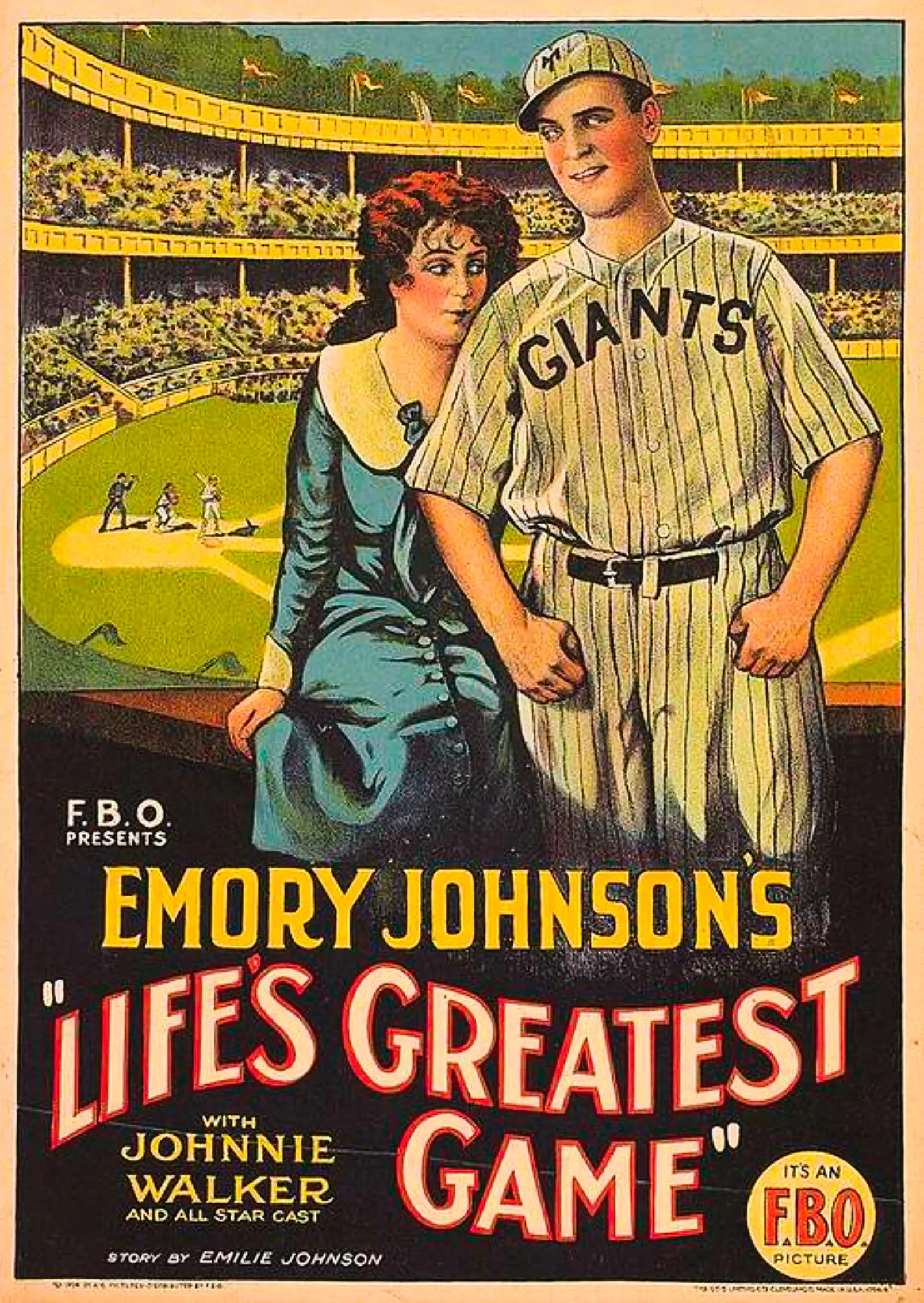
In the annals of silent cinema, where grand narratives often unfolded with a theatrical flourish, "Life's Greatest Game" emerges as a particularly poignant and robust entry. This 1924 drama, penned by the insightful Emilie Johnson, transcends its era, offering a timeless meditation on integrity, familial bonds, and the long, unforgiving shadow of betrayal. It's not merely a baseball film; it's a sweeping epic of human frailty and resilience, set against the backdrop of America's beloved pastime. From the very first frames, the film establishes a palpable tension, immersing the viewer in a world where moral choices carry devastating, generational consequences.
At its core lies Jack Donovan, portrayed with a compelling gravitas by Tom Santschi, a pitcher for the Chicago Cubs whose unyielding principles set the entire tragic chain of events in motion. His refusal to 'throw' a game at the behest of the nefarious gambler Mike Moran (Dick Brandon, embodying villainy with chilling effectiveness) is more than a simple act of defiance; it is a declaration of his very soul. This isn't just about a baseball game; it's about the sanctity of one's character, a theme that resonates deeply even today, recalling the moral dilemmas explored in films like The Price They Pay, where characters grapple with the steep cost of their choices. Moran, a character etched in pure malice, cannot abide such integrity. His retaliation is swift, brutal, and deeply personal, tearing apart the fabric of Donovan's life with an almost surgical precision.
The subsequent tragedy, the supposed loss of Donovan's wife and infant son in a maritime disaster, is a narrative device that, while common in silent-era melodramas, feels particularly gut-wrenching here. The profound grief that engulfs Donovan is almost palpable, a silent scream of despair that Santschi conveys with remarkable subtlety for the period. It's a moment of utter desolation, forcing the audience to confront the arbitrary cruelty of fate. In the wake of this unimaginable loss, Donovan's decision to remain in baseball is a complex one. Is it an escape, a form of penance, or simply the only path left for a man who has lost everything? The film masterfully portrays his evolution over two decades, transforming from a heartbroken athlete into the seasoned, stoic manager of the New York Giants. This journey of professional ascent amidst personal devastation is a testament to the human spirit's capacity for endurance, even when burdened by an unbearable sorrow.
The true genius of Emilie Johnson's script, however, lies in its masterful deployment of dramatic irony. The audience knows what Donovan does not: his family is not dead. His wife and son survived, setting the stage for a reunion fraught with misunderstanding and simmering resentment. Jack Jr., played by Johnnie Walker with a fiery intensity, grows up believing he was abandoned by his father. This misconception fuels a burning desire for vengeance, a quest for retribution against a man he perceives as a callous, uncaring figure. The film expertly builds this narrative tension, allowing the audience to witness Jack Jr.'s misguided animosity grow, while simultaneously empathizing with Donovan Sr.'s unwitting suffering. It’s a tragic dance of fate, where truth is obscured by layers of deceit and tragic circumstance, reminiscent of the complex familial misunderstandings explored in films like The Loves of Letty.
The performances across the board are commendable, especially considering the stylistic constraints of silent film. Tom Santschi, as the elder Donovan, carries the weight of the narrative on his broad shoulders, his expressions conveying a spectrum of emotions from stoic resolve to profound melancholy. Johnnie Walker, as Jack Jr., brings a youthful vigor tempered by a deep-seated anger, making his character's misguided quest for revenge both understandable and heartbreaking. Gertrude Olmstead and Jane Thomas, as the women in Donovan's life, provide the emotional anchors, their silent portrayals speaking volumes about love, loss, and enduring hope. Dick Brandon's Mike Moran remains a chilling presence, a constant reminder of the initial sin that ripples through generations. The direction, while not overtly flashy, is effective, focusing on clear storytelling and allowing the actors' expressions and body language to convey the complex emotional landscape.
The baseball setting is more than just a backdrop; it is an integral part of the film's thematic tapestry. The diamond becomes a metaphor for life itself – a place of triumph and failure, where integrity is tested, and where individual actions have team-wide consequences. Donovan's journey from player to manager highlights the cyclical nature of the sport, and how the game itself can offer both solace and a stage for profound personal drama. Unlike purely athletic endeavors like The Winning Stroke, "Life's Greatest Game" uses the sport as a vehicle for a much larger human story, where the stakes are far higher than a mere championship. The roar of the crowd, imagined through the intertitles and the actors' energetic movements, underscores the public nature of Donovan's trials and tribulations.
The film's exploration of vengeance is particularly nuanced. Jack Jr.'s single-minded pursuit of retribution is not simply presented as a villainous act, but as a misguided attempt to right a perceived wrong. The tragedy lies in the fact that his chosen target is the very man who suffered most from the original injustice. This creates a powerful sense of dramatic tension, as the audience anticipates the inevitable moment of truth, the revelation that will either shatter or heal the broken family. The screenplay navigates these complex emotional waters with remarkable dexterity, avoiding simplistic moralizing in favor of a more humanistic portrayal of flawed characters driven by powerful, albeit mistaken, convictions.
Cinematically, "Life's Greatest Game" exemplifies the strengths of early 20th-century filmmaking. The use of intertitles is skillful, conveying dialogue and crucial plot points without disrupting the visual flow. The camera work, while not as experimental as some of its European contemporaries, is solid and functional, effectively framing the emotional beats of the story. The editing maintains a brisk pace, ensuring that the melodrama never descends into tedium. The film relies heavily on the actors' ability to communicate emotion through gesture, facial expression, and body language, a hallmark of the silent era that is executed here with impressive clarity. One can almost hear the swelling orchestral score that would have accompanied such a production, adding another layer of pathos and grandeur to the unfolding drama.
The themes explored in "Life's Greatest Game" — betrayal, abandonment, the quest for revenge, and ultimately, the potential for forgiveness and reconciliation — are universal and enduring. They speak to the very core of the human experience, making the film's narrative relevant even a century after its release. It’s a powerful reminder that the consequences of one individual's immoral choice can reverberate for decades, shaping destinies and tearing apart families. The film doesn't shy away from the darker aspects of human nature, but it also hints at the redemptive power of truth and understanding. The slow, agonizing process of revelation and the eventual confrontation are handled with a masterful touch, building to a cathartic, if bittersweet, resolution.
The film also offers a fascinating glimpse into the cultural landscape of the 1920s. The pervasive influence of gambling in professional sports, the societal expectations placed upon men, and the resilience of women in the face of adversity are all subtly woven into the narrative. It’s a historical artifact that still breathes with vibrant life, offering insights into the moral compass of an earlier era while telling a story that remains deeply human. The portrayal of family dynamics, particularly the fractured relationship between father and son, is handled with a sensitivity that belies the often-broad strokes of silent film acting. The emotional journey of Jack Jr., from righteous anger to eventual understanding, is particularly well-developed, offering a satisfying arc for the audience.
Comparing it to other silent films of its time, "Life's Greatest Game" stands out for its tight narrative and emotional depth. While films like The Auction Block or The Girl and the Judge might explore societal injustices or romantic entanglements, this film delves into the more personal, internal struggle of a man haunted by a past he doesn't fully comprehend, and a son driven by a ghost of resentment. The blend of sports drama with profound family melodrama makes it a unique and compelling viewing experience, showcasing how seemingly disparate genres could be interwoven to create a cohesive and powerful story. The film's ability to maintain suspense and emotional investment over its runtime is a testament to its well-crafted script and committed performances.
Ultimately, "Life's Greatest Game" is a robust and emotionally resonant silent film that deserves more widespread recognition. It's a testament to the enduring power of storytelling, demonstrating that even without spoken dialogue, a film can convey profound human drama, moral complexity, and the intricate dance of fate. It challenges the audience to consider the long-term repercussions of choices made in haste or anger, and the often-unseen suffering inflicted upon innocent parties. The film's climactic moments, where truth slowly unfurls and understanding begins to dawn, are handled with a delicate touch, avoiding overt sentimentality in favor of genuine emotional impact. This is a film that lingers in the mind, prompting reflection on integrity, forgiveness, and the unbreakable, if sometimes tested, bonds of family. It’s a powerful, often heartbreaking, yet ultimately hopeful journey through the trials and tribulations of life, reminding us that even in the face of immense adversity, the human spirit strives for connection and redemption. A true gem of the silent era, it offers a compelling narrative that holds up remarkably well, proving that the greatest games are often played not on the field, but within the human heart.
IMDb 5.1
1934
Community
Log in to comment.