DbcultAccessing Vault...
4.2/10
Senior Film Conservator
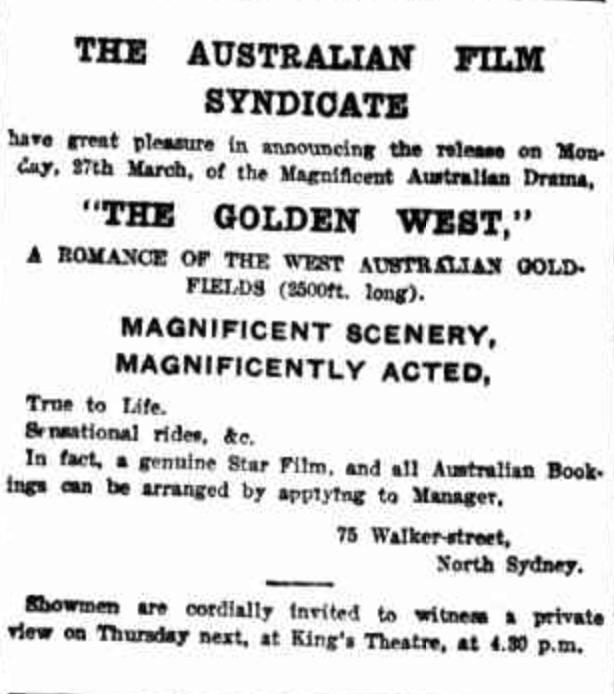
A definitive 4.2/10 rating for a film that redefined the boundaries of cult cinema. The Golden West remains a cornerstone of transgressive art.
Stepping back into the nascent years of cinematic storytelling, we encounter a fascinating artifact of early American narrative, "The Golden West". This particular motion picture, featuring the notable presence of George Young, offers a glimpse into the burgeoning genre of the Western, a genre that would come to define much of Hollywood's golden age. While modern audiences, accustomed to sophisticated narratives and advanced visual effects, might find its simplicity jarring, it is precisely in this unadorned directness that the film's historical and artistic value truly resides. It serves as a vital touchstone, illustrating the foundational grammar of film as it was being invented, one pioneering frame at a time, capturing the very essence of a nation in its formative period.
The narrative thrust of "The Golden West" centers on John "Golden" West, a figure embodying the quintessential pioneer spirit – rugged, driven, and singularly focused on the promise of prosperity. George Young imbues West with a quiet gravitas, his performance, though necessarily broad for the medium's early limitations, communicates a profound sense of purpose and resilience. We follow West as he embarks on an arduous trek through unforgiving landscapes, a visual odyssey underscored by the era's nascent understanding of outdoor photography. The panoramic shots, though static by today's standards, convey the sheer scale and isolation of the frontier, a stark, breathtaking canvas upon which human drama unfolds. The pursuit of gold, that glittering symbol of fortune and freedom, propels West deeper into the wilderness, where nature's indifference is matched only by man's avarice. His initial optimism is tested by the relentless sun, the biting wind, and the sheer emptiness of the vast expanse, elements that become characters in their own right, shaping his resolve.
It's in this harsh environment that West's path converges with that of a resilient frontierswoman, a character whose strength and independence challenge the prevailing gender tropes of the time. She is not merely a damsel in distress but a formidable guardian of her family's claim, a testament to the tenacity required to survive in an era devoid of established law and order. Her presence introduces a crucial moral dimension to the film, pivoting the narrative from a simple quest for material wealth to a more complex struggle for justice, community, and the defense of the vulnerable. The threats are palpable: a band of unscrupulous desperadoes, their motivations driven by pure, unbridled greed, seek to usurp the woman's rightful inheritance through intimidation and violence. This conflict, a classic Western trope, is handled with a raw intensity that speaks to the immediate, life-or-death perils of frontier life, where every encounter could spell disaster.
The film’s portrayal of good versus evil, while perhaps simplistic to modern sensibilities, was groundbreaking for its time. Character motivations are painted in bold strokes, allowing the audience to readily identify with the virtuous protagonists and recoil from the villainous antagonists. This clarity was essential for early cinema, which relied heavily on visual storytelling and clear moral dichotomies to engage its nascent audience, lacking the nuances that dialogue would later provide. The climactic confrontation, a meticulously staged sequence considering the technological constraints, is less about intricate choreography and more about the visceral impact of survival and the triumph of right over might. It’s a testament to the ingenuity of early filmmakers who understood the power of direct action, clear stakes, and emotionally resonant outcomes, even with limited tools.
One cannot discuss "The Golden West" without acknowledging its place within the broader tapestry of early cinema. It stands shoulder to shoulder with other pioneering narrative works, distinguishing itself through its distinctly American thematic concerns. While films like "Life and Passion of Christ" explored religious narratives with an ambitious scope, and "Dante's Inferno" offered grand allegorical spectacles, "The Golden West" grounded its drama in the earthly, tangible struggles of expansion and settlement. It doesn't possess the literary adaptation fidelity of a contemporary "Hamlet" or "Anna Karenina" from the same period. Instead, it carves out its niche by embracing the rugged individualism and nascent mythology of the American West, presenting a narrative that felt uniquely homegrown and deeply relevant to the national psyche.
The performance of George Young is particularly noteworthy, especially considering the constraints of silent film acting. In an era where acting for the camera was still an evolving art form, Young manages to convey depth and inner turmoil without the aid of extensive dialogue or frequent close-ups. His gestures are purposeful, his gaze direct and often weary, embodying the stoicism expected of a frontier hero while hinting at the emotional weight of his journey. He is the quiet, unwavering force around which the narrative orbits, a man whose actions, from his determined prospecting to his decisive defense of the homestead, speak louder than any words could. This contrasts sharply with the more overt, often exaggerated, physical comedy seen in contemporary short films or the grand, almost operatic gestures of early European dramatic cinema. Young's performance here is a subtle precursor to the iconic, understated cowboy heroes who would later dominate the genre, setting a benchmark for authenticity in a nascent art form.
Technically, the film, though rudimentary by today's standards, showcases remarkable innovation for its time. The pioneering use of location shooting, instead of relying solely on painted backdrops or studio sets, lends an authenticity that was revolutionary. This commitment to verisimilitude sets it apart from many studio-bound productions of the era. Consider, for instance, the static but powerful compositions that capture the vastness of the landscape; while we don't have the dynamic camera movements of later decades, the framing itself often tells a story, positioning characters against imposing natural backdrops to emphasize their vulnerability and resilience. The editing, too, though often simple cut-to-cut, effectively propels the narrative forward, maintaining a surprising level of tension and pace that keeps the audience engaged. The film’s ability to evoke atmosphere and peril through these elementary techniques is genuinely impressive.
The thematic underpinnings of "The Golden West" resonate deeply with the American ethos of the period. It explores the tension between personal ambition and communal responsibility, a recurring motif in stories of westward expansion. John West's initial pursuit of individual wealth gradually transforms into an understanding that true prosperity and security lie in collective effort and shared values. This transition is subtly woven into the fabric of the plot, culminating in his pivotal role in establishing a settlement alongside the frontierswoman and other nascent members of a community. It’s a narrative arc that speaks to the very foundation of American identity – the transformation of a rugged individualist into a pillar of a nascent society, showcasing the evolution from lone wolf to community builder.
Comparatively, "The Golden West" holds its own among other early examples of extended narrative. While films like "The Story of the Kelly Gang" (often cited as the world's first feature film, though debates persist) delved into the exploits of Australian bushrangers, offering a similar blend of action and frontier justice, "The Golden West" anchors itself firmly in the unique mythology of the American frontier. The Australian bushranger films, such as "Robbery Under Arms" and "Dan Morgan", often presented more ambiguous figures, outlaws who were simultaneously heroes and villains, reflecting a different cultural relationship with authority. In contrast, "The Golden West" adheres to a clearer moral compass, reflecting perhaps a more idealized vision of American expansion and the establishment of order in a chaotic new world.
The genre of the Western itself was in its infancy, often overlapping with the 'outlaw' film and even early sports spectacles. The raw, unpolished action sequences in "The Golden West", particularly the final confrontation, echo the visceral appeal of early boxing films like "The Corbett-Fitzsimmons Fight" or "Jeffries-Sharkey Contest". These fight films captivated audiences with their unvarnished depiction of physical struggle and direct competition, and "The Golden West" harnesses a similar energy in its portrayal of frontier skirmishes. It's a testament to the universal appeal of conflict and resolution, no matter the specific setting. However, unlike the pure spectacle of a boxing match, "The Golden West" integrates its action into a developing plot, giving it greater narrative weight and consequence, turning mere spectacle into meaningful dramatic progression.
The role of the landscape in "The Golden West" cannot be overstated; it is far more than mere scenery. The vast, often desolate, terrain is not merely a backdrop but an active, formidable character, shaping the destinies and testing the mettle of those who dare to traverse it. This profound connection between character and environment is a hallmark of the Western genre, and this early film establishes that precedent with remarkable clarity. The struggle against nature – the relentless sun, the scarcity of water, the vast, isolating distances – is as central as the struggle against human antagonists, providing a dual layer of conflict that elevates the simple plot into something more profound and allegorical. It's a powerful visual metaphor for the challenges faced by a young nation forging its identity and expanding its reach.
Looking at other contemporary American films, such as various actualities like "69th Regiment Passing in Review" or "May Day Parade", one can further appreciate "The Golden West"'s ambitious step into narrative fiction. While those films captured slices of real life, offering valuable historical records of events and everyday occurrences, "The Golden West" endeavored to construct a compelling story, to transport its audience into a world of dramatic stakes and heroic deeds. This fundamental shift from mere documentation to imaginative storytelling was a critical juncture in cinematic evolution, marking a pivotal moment in the medium's artistic maturation, and "The Golden West" stands as an early, potent testament to this burgeoning artistic aspiration.
The film also subtly touches upon the concept of "Manifest Destiny," the 19th-century belief that the United States was destined to expand across the North American continent. While not overtly political, the very act of a lone prospector venturing into uncharted territory and eventually helping to establish a new community speaks volumes about the prevailing ideology of the time. The promise of the "golden west" was not just about mineral wealth, but about the boundless opportunity for a new life, a fresh start, and the expansion of civilization into the wilderness. George Young's character embodies this pioneering spirit, a blend of individual ambition and a nascent, yet powerful, sense of collective purpose, illustrating the idealism inherent in the frontier myth.
Beyond its historical context, "The Golden West" resonates as a foundational text for understanding the archetypes that would define the Western genre for decades. The lone hero, the strong-willed woman, the greedy villain, the untamed landscape, the climactic showdown – all these elements are present in their embryonic forms, waiting to be refined and reinterpreted by future filmmakers. It’s a blueprint, a primal scream of a genre finding its voice, establishing a vocabulary that would be spoken for over a century. Its influence, though perhaps indirect, can be traced through countless subsequent Westerns, from the silent era epics like "The Squatter's Son" to the revisionist Westerns of the late 20th century, solidifying its place in the genre's lineage.
The early days of cinema were a wild west in themselves, a period of intense experimentation and discovery. Filmmakers were inventing the language of film as they went along, and "The Golden West" is a vibrant example of this creative ferment. It demonstrates an astute understanding of how to build suspense through visual cues, how to develop character through action and reaction, and how to use the visual medium to tell a compelling story without the crutches of extensive dialogue or intricate, rapid-fire editing. The film, in its essence, is a masterclass in early cinematic economy, conveying a rich narrative with minimal means, proving that powerful storytelling isn't dependent on technological sophistication alone.
It is important to view "The Golden West" not through the anachronistic lens of modern expectations but through the rich historical context of its creation. It is undeniably a product of its time, reflecting the technological limitations and narrative conventions of the early 20th century. Yet, within these confines, it achieves a remarkable degree of storytelling efficacy and emotional resonance. It’s a powerful reminder that the core elements of compelling cinema – relatable characters, engaging conflict, and satisfying resolution – have remained constant, even as the tools and techniques employed to achieve them have evolved dramatically. Its enduring appeal lies in its fundamental human drama.
In conclusion, "The Golden West" is far more than a mere historical curiosity; it is a vibrant, pioneering work that helped lay the groundwork for one of cinema's most enduring genres. George Young's stoic yet expressive performance grounds the narrative, while the ambitious scope of its outdoor photography and its clear, moral storytelling resonate even today. It reminds us of a time when the West truly was golden, not just for its promise of mineral wealth, but for the profound human stories it yielded, stories that continue to shape our understanding of American identity and the cinematic art form itself. This film is an essential piece of the puzzle, a foundational stone in the grand edifice of cinematic history, deserving of recognition and study.
For those interested in the evolution of the Western, or indeed, the very origins of narrative cinema, "The Golden West" offers invaluable insights into the birth of a genre and the development of film language. It’s a journey back to a time when every film felt like an adventure, and every story was a new frontier, waiting to be explored on the silver screen. Its quiet power and undeniable historical significance make it a must-see for serious cinephiles and cultural historians alike, a testament to the enduring allure of the frontier and the magic of early moving pictures. The echoes of its pioneering spirit can be heard in every Western that followed, solidifying its legacy as a true trailblazer.
IMDb 5
1931
Community
Log in to comment.