DbcultAccessing Vault...
5.4/10
Senior Film Conservator
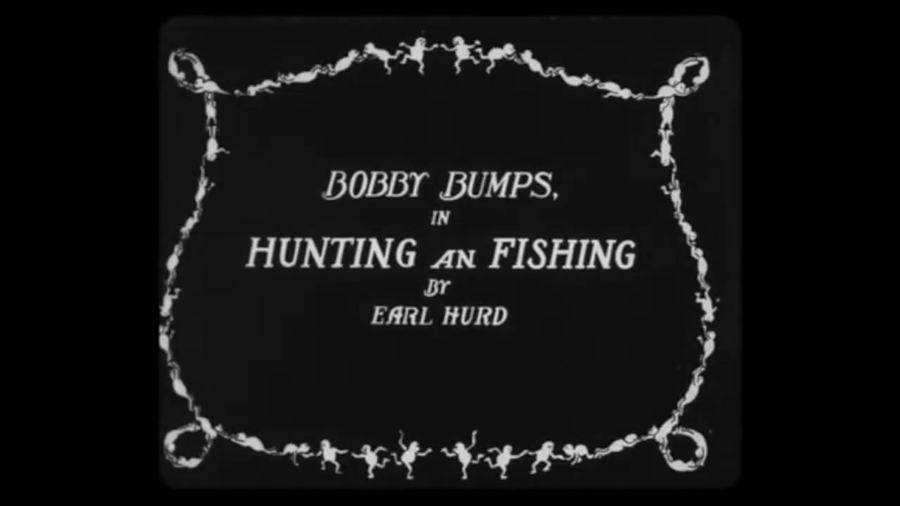
A definitive 5.4/10 rating for a film that redefined the boundaries of cult cinema. Bobby Bumps in Hunting and Fishing remains a cornerstone of transgressive art.
In the annals of early animation, few titles evoke a sense of whimsical disarray as vividly as Bobby Bumps in Hunting and Fishing. Earl Hurd, the film’s sole writer and director, crafts a world where innocence and anarchy are inextricably linked, all through the lens of a boy and his dog’s relentless, if somewhat ill-considered, adventures. The film, released in an era when animation was still finding its artistic footing, stands out not merely for its technical ingenuity but for its uncanny ability to capture the chaotic poetry of childhood.
The narrative, though deceptively simple, unfolds with a rhythm that feels both spontaneous and meticulously orchestrated. Bobby Bumps, the freckled protagonist, is less a character than a force of nature—a boy whose energy is matched only by his lack of foresight. His canine companion, a mutt with a look of perpetual surprise, serves as both confidant and unwitting accomplice in a series of pranks that escalate from the benign (a misplaced fishing net) to the potentially catastrophic (a hunting expedition gone awry). Hurd’s genius lies in his ability to balance the slapstick with a subtle undercurrent of melancholy, suggesting that every act of mischief is a fleeting rebellion against the encroaching weight of adulthood.
The film’s visual language is strikingly modern, even by today’s standards. Hurd employs a palette of bold, flat colors that contrast sharply with the grainy textures of the animation, creating a dreamlike quality that feels both nostalgic and avant-garde. The backgrounds are sparse but evocative, with fields, forests, and interiors rendered in a way that feels like a child’s sketchbook come to life. This aesthetic choice not only underscores the simplicity of the story but also elevates it, allowing the viewer to project their own memories onto the screen. In moments where Bobby and his dog are simply running through a meadow or barking at a fish, the animation breathes with a quiet beauty that belies the film’s comedic veneer.
One cannot discuss Bobby Bumps in Hunting and Fishing without acknowledging its debt to—and departure from—contemporary works like Das Recht der freien Liebe or Call of the West. Where those films grapple with societal norms and existential dilemmas, Hurd’s work thrives in the microcosm of a single afternoon’s mischief. Yet, there is a thematic resonance that connects them all: the tension between freedom and responsibility, a motif that Hurd subverts by making the responsibility feel absurdly heavy for a child to bear. This is most evident in the climax, where Bobby’s well-intentioned efforts to ‘hunt’ a chicken or ‘fish’ in the wrong stream lead to a cascade of misunderstandings that mirror the chaos of growing up.
The relationship between Bobby and his dog is the emotional anchor of the film. They are not merely companions but reflections of each other’s impulses—spontaneous, impulsive, and utterly unapologetic. Their interactions are a masterclass in non-verbal storytelling. A glance, a wag of the tail, a misfired cast of the fishing line—all communicate volumes without a single line of dialogue. This is a technique Hurd would later refine in Rip Van Winkle, but here it feels raw and unfiltered, as if the characters are still discovering their own dynamics.
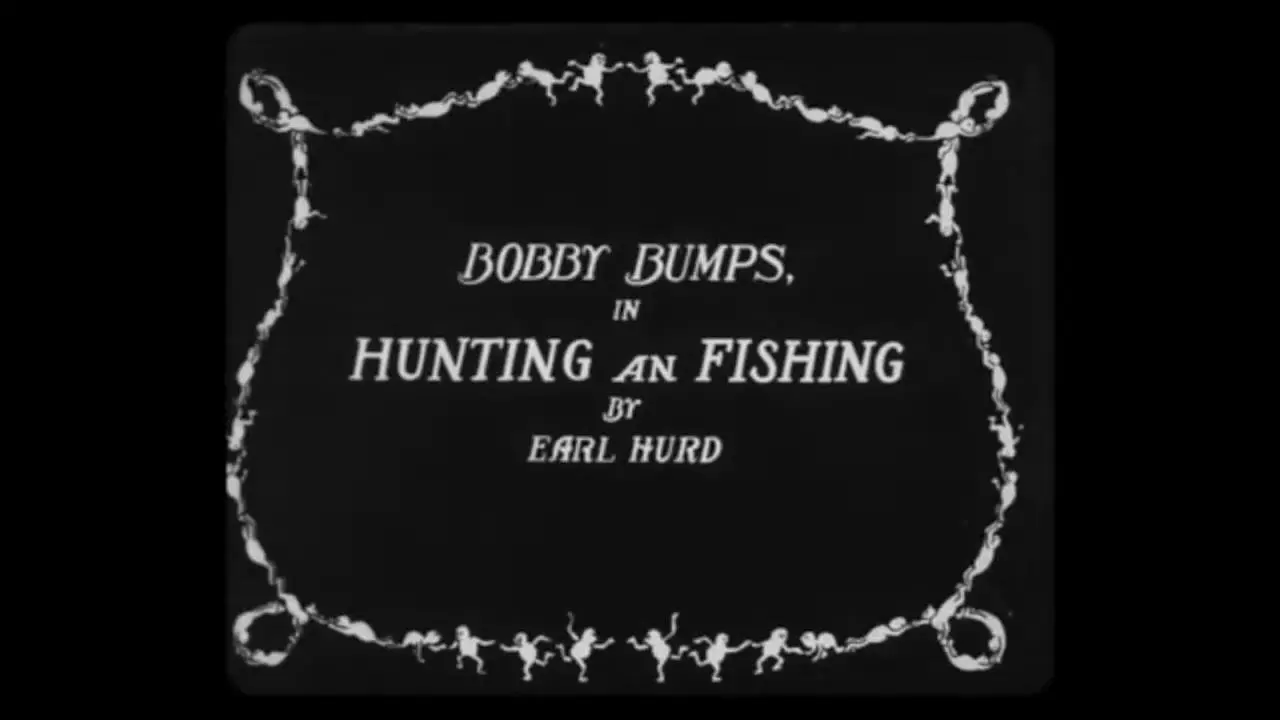
Technically, the film is a marvel of early 20th-century ingenuity. Hurd’s use of limited animation techniques is both economical and effective, with each scene built on a foundation of repetition and slight variations—a nod to the era’s constraints but also a deliberate stylistic choice. The sound design, though rudimentary by today’s standards, is surprisingly immersive. The barks, splashes, and comedic ‘oof’s of Bobby are layered with a care that suggests Hurd understood the importance of audio in shaping a viewer’s emotional response. This attention to detail is particularly evident in the sequences where the dog’s actions—fetching the wrong item or barking at nothing—trigger chain reactions that feel both chaotic and choreographed.
Thematically, the film walks a tightrope between nostalgia and critique. On one hand, it romanticizes the unbridled creativity of childhood, portraying Bobby and his dog as artists of anarchy. On the other, it subtly critiques the societal structures that view such chaos as problematic. The adults in the film are rare but ever-present, their disapproving glances and exaggerated sighs suggesting a world that demands order where Bobby and his dog find joy. This duality is perhaps best encapsulated in the hunting and fishing metaphors—tools of control and sustenance repurposed by the boy and his dog into instruments of play. It’s a metaphor that resonates beyond the screen, asking the viewer to consider how we, too, might find joy in the margins of acceptable behavior.
Comparisons to Il gioiello di Khama or Die Czardasfürstin are apt in terms of emotional tone but divergent in execution. Where those films rely on grand set pieces and operatic drama, Hurd’s work is intimate and domestic, finding drama in the mundane. Yet, this is not to say it lacks ambition. The final act, where Bobby’s attempts to reconcile his mischief with the expectations of his environment, is a small masterpiece of character development. His dog, ever the loyal partner, becomes a symbol of the unyielding spirit that Bobby must eventually outgrow—a bittersweet realization that lingers long after the credits roll.
For modern audiences, Bobby Bumps in Hunting and Fishing is a time capsule that feels strangely prescient. In an age where childhood is often mediated by screens and structured activities, Hurd’s film serves as a reminder of the raw, unfiltered creativity that comes from unbridled play. The boy and his dog are avatars of a bygone era, yet their struggles—navigating the rules of grown-ups, asserting autonomy in a controlled world—are universal. This timelessness is perhaps the film’s greatest achievement, allowing it to transcend its historical context and speak to contemporary viewers.
Earl Hurd’s legacy is often overshadowed by contemporaries like Winsor McCay or Walt Disney, but Bobby Bumps in Hunting and Fishing is a testament to his unique vision. The film doesn’t merely entertain; it invites reflection on the nature of mischief, the role of pets in our lives, and the fragile balance between freedom and responsibility. In its own quiet way, it challenges the viewer to reconsider the value of chaos—not as a flaw to be corrected but as a necessary counterpoint to the rigidity of adult logic.
In conclusion, Bobby Bumps in Hunting and Fishing is more than a relic of early animation. It is a nuanced, emotionally resonant work that continues to captivate. Its charm lies not in its simplicity but in its ability to find depth in the mundane, to transform a boy and his dog’s antics into a meditation on the human condition. For those willing to look beyond the surface, the film offers layers of meaning that reward repeated viewings. As the final scene fades, with Bobby and his dog finally at rest (or so we assume), one is left with the lingering sense that mischief, in all its forms, is a language of the soul—a language that Hurd, with his characteristic brilliance, has translated into motion.
IMDb 6
1936
Community
Log in to comment.