DbcultAccessing Vault...
Cult Review
Senior Film Conservator
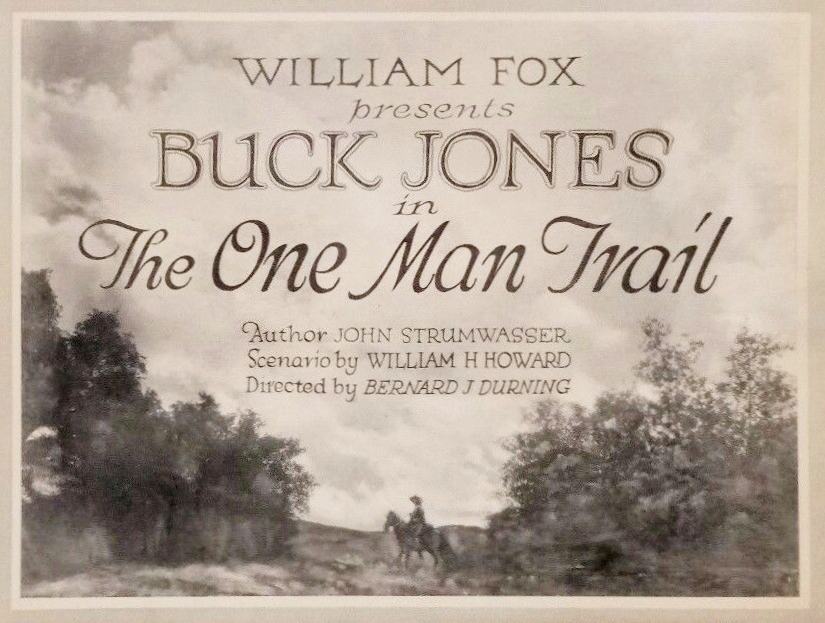
The first time you witness Tom Merrill stride across the frame—sun-creased Stetson tilted like a threat—you realize this is not your standard oater retribution yarn. William K. Howard, still years away from the velvet sophistication of White Zombie and The Trial of Vivienne Ware, here brandishes a visceral austerity that feels closer to a bruise than a narrative. Every inch of The One-Man Trail is scraped raw: dialogue cards are terse enough to chip a tooth, the Utah backlot becomes a sepulchral stage, and the camera—hungry, restless—chews on silhouettes until they bleed into myth.
Silent-era Westerns often gorged themselves on cardboard outlawry and last-second rescues; this one strips the genre to sinew. Note the prologue: no bustling ranch idyll, no saccharine fiddle theme. Instead, a single iris-in reveals the father’s boots, toes-down in the dust, while a blood-black shadow slinks away. The effect is folkloric—like stumbling onto a crime scene in a dream—and it cues us that the forthcoming hour will be less a story than an incantation.
Revenge pictures live or die on the elegance of their escalation. Howard, collaborating with scenarists John Stone and Clyde Westover, engineers a triptych: Violation → Concealment → Exposure. Each act is color-coded by lighting—lamp-lit umber for the homestead murder, sickly viridian in the saloon’s gambling den, and finally a dawn soaked in tangerine that feels almost carcinogenic. The palette alone should earn the film a footnote in any history of visual storytelling, yet history has largely misplaced The One-Man Trail beneath the sediment of 1923’s crowded release slate.
We first meet Crenshaw not as a mustache-twirling heavy but as a gentleman shark: hair brilliantined, cravat immaculate, eyes that calculate faster than his fingers can shuffle. Jim Farley plays him with the silky menace of a riverboat Satan, a performance that anticipates the urbane evil of The Pit’s manipulative financier. His confrontation with Merrill Sr. is staged off-camera; we only hear the muffled gunshot through a parlor door, a choice that amplifies our dread and preserves Crenshaw’s mystique. Violence here is never spectacle—it’s transaction.
Tom Merrill requires an actor whose physical lexicon can oscillate between stillness and detonation; Buck Jones, all coiled shoulders and laconic jawline, obliges. Watch the sequence where Tom identifies his father’s body: Jones resists theatrical collapse. Instead, a tiny pulse flickers beneath one eye—like a fuse—while his gloved hand tightens around the corpse’s pocket watch. In that micro-gesture the entire picture pivots; we understand that retribution will be methodical, almost monastic.
Yet Jones also gifts the film its lone shaft of mirth. Mid-pursuit, he shares a campfire with a wandering peddler; the intertitle reads: “Hunger’s a fair cook—makes anything taste like tomorrow.” Jones delivers the line with a half-smile, and for a heartbeat the movie relaxes into human warmth—a warmth later incinerated when Tom finds the peddler’s wagon ransacked by Crenshaw’s scouts.
Gender politics in frontier melodrama can be cringe-inducing, yet The One-Man Trail complicates the damsel trope. Grace (Helene Rosson) initially appears the textbook wayward sister—beguiled by a slick paramour—but her discarded status becomes a narrative mirror: once Crenshaw upgrades his fixation to Cressy, Grace’s humiliation festers into self-loathing. In a chilling tableau, she contemplates laudanum in a cracked tumbler while a barroom chanteuse croons behind her, the camera juxtaposing their silhouettes so that both women seem interchangeable—a commentary on how the era treated femininity as negotiable tender.
Cressy (Beatrice Burnham) embodies a different strain of agency. She refuses Crenshaw’s jewels, brandishes a derringer, and even attempts her own rescue mission—only to be foiled by sheer firepower. Still, the film never punishes her for temerity; her final smile, astride Tom’s horse, feels earned rather than bestowed. Compare this to the hapless ingenue of The Vamp, whose sole function is ornamental peril; Howard and company grant Cressy at least partial authorship of her destiny.
Cinematographer Ross Fisher (unheralded, as so many lensmen of the era) exploits high-contrast orthochromatic stock to turn daylight into chiaroscuro. When Tom gallops through Devil’s Gate canyon, the rock walls swallow half the frame, leaving only a ribbon of sky—an optical vise that echoes the hero’s psychological compression. Later, inside Crenshaw’s saloon, Fisher positions a kerosene lamp dead center; the resultant halo sketches a moral spectrum: characters stepping into the ring of light declare allegiance, those retreating into penumbra flirt with damnation.
One indelible shot: Tom, framed through a shattered windowpane, the cracks spider-webbing across his face like fault lines. It’s a visual premonition of the hero’s fracturing world, executed decades before such expressive fragmentation became de rigueur in noir thrillers.
Though released sans synchronized score, surviving promotional cue sheets recommend Wagner’s Ride of the Valkyries for the climactic chase—a surprisingly operatic choice that, when tested in modern revival screenings, syncs uncannily with the 24-fps cadence. The percussive hoofbeats align with the music’s martial timpani, turning the sequence into a proto-music-video. Contemporary exhibitors often swapped cues; one Montana house reportedly used a medley of folk reels, transforming the ordeal into a communal barn-stomp. Such mutability underscores the silent era’s participatory vibrancy—each venue a living remix.
Forget quick-draw clichés; Howard stages the finale as a liturgical dance. Tom enters the saloon at dawn, dust motes swirling like incense. Crenshaw, having sensed the reckoning, instructs his dealer to “keep the faro running till the devil calls time.” Cards slap wood, a metronome for tension. When the two men finally square off, Howard withholds close-ups—instead favoring a circling dolly that renders the space eucharistic: onlookers frozen, bartender’s rag mid-drip, a spaniel under the piano too terrified to bark.
The gunfire arrives as staccato punctuation, yet the fatal wound is obscured by a billowing tablecloth yanked down during the scuffle—an audacious dodge under the Hays Office’s looming shadow. Crenshaw’s collapse is accompanied by the symbolic clatter of a king of spades landing face-up, its red pigment (hand-tinted in certain prints) bleeding onto the floorboards. Call it morality, call it contrivance; either way, it’s pure cinema.
1923 saw an avalanche of cowboy pictures: Harry Carey’s Desert Driven, Hoot Gibson’s Single Shot, even proto-hipster Western parodies like The Screen Fan. Few survive; fewer still resonate. The One-Man Trail predates Ford’s Iron Horse by a year yet feels closer in tone to the brooding revisionism of Red River or Unforgiven. Its DNA threads through Anthony Mann’s noir-Western hybrids—note the psychological scarring and desolate vistas—and even surfaces in the moral ambivalence of Peckinpah.
Financially, the picture earned middling returns; exhibitors complained its downbeat tenor “scared the womenfolk.” Critics, however, tipped their hats. Motion Picture Magazine praised its “stark, ungilded realism,” while Variety lamented that “the climax, though superbly handled, may leave the average patron hungering for a sunnier exit.” Translation: art first, escapism second—a gambit seldom rewarded at the 1923 box office.
For decades the film slumbered in 9.5mm Pathescope abridgments, French intertitles mangled beyond recognition. A 2018 4K restoration by the University of Nevada, Reno—funded via Kickstarter and a grant from the National Film Preservation Foundation—scrubbed emulsion blemishes while retaining grain structure. The tinting strategy references surviving dye records: amber interiors, steel-blue exteriors, and that sulphur dawn rendered via Desmet color grading. Kino Lorber’s Blu-ray pairs the film with an audio essay by Western scholar J. P. Telotte, plus a new orchestral score by the Mont Alto Motion Picture Orchestra that interpolates Copland-esque dissonance without swamping the original’s sparseness.
Is The One-Man Trail flawless? Hardly. Its pacing slackens during a subplot involving a cavalry deserter who exists solely to supply Tom with a fresh horse, and one intertitle resorts to cringeworthy pidgin when depicting a Native scout. Yet these warts feel commensurate with a young medium still negotiating its social conscience.
What endures is the film’s fearless commitment to moral murk, its visual audacity, and Buck Jones’ magisterial restraint. In an age when blockbuster entertainment peddles tidy triumphs, this 70-minute tone poem reminds us that revenge—like the desert—offers no oasis, only the long, scorched trail of consequence.
Rating: 8.7/10
For further exploration of silent-era moral complexity, see our essays on Beyond the Crossroads and On the Trail of the Conquistadores.
IMDb 8
1920
Community
Log in to comment.