DbcultAccessing Vault...
7.1/10
Senior Film Conservator
A definitive 7.1/10 rating for a film that redefined the boundaries of cult cinema. Lili remains a cornerstone of transgressive art.
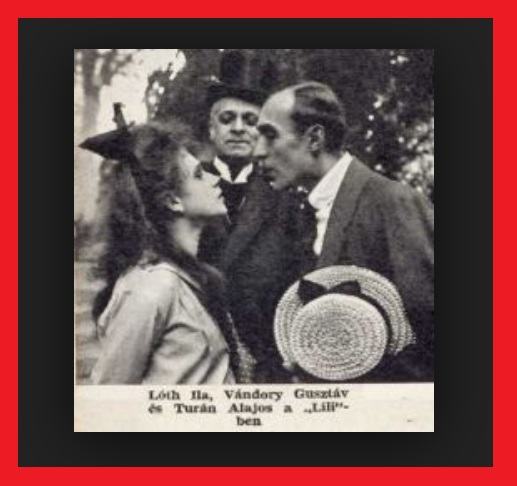
Budapest, 1918: while Europe stitches shut the wounds of war, a girl named Lili stitches her own shadow back on with a blunt circus needle. The city’s night-blooming cinemas exhale nitrate and nutmeg; audiences, hungry for miracles, swallow this fable of a waif who tap-dances over abysses.
Director Jenö Faragó—working from the 19th-century vaudeville of Hennequin & Millaud—doesn’t merely adapt; he disembowels. He strips the source of its boulevard coyness until only the skeleton of appetite remains: men who consume wonder, women who must invent themselves nightly. The celluloid, hand-tinted in feverish ambers and corpse-blues, feels like it was left to steep in absinthe before exposure.
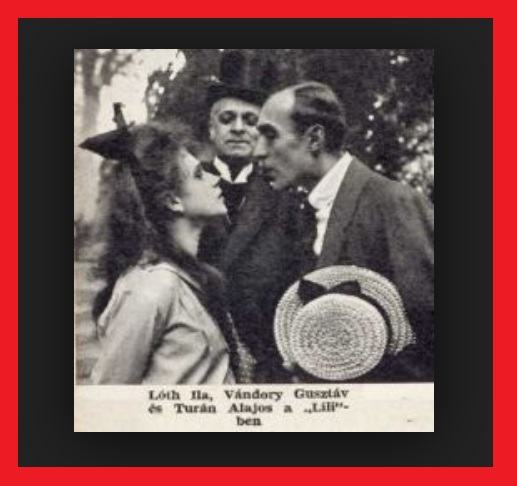
Claire Lotto’s Lili arrives first as a paper cut-out: white tights, chalk cheeks, eyes that have already seen every trap but still pretend surprise. Her opening pirouette on the tightrope is filmed from beneath the rope—so we stare up at the void between her soles and sawdust. One slip and childhood ends; she never slips, she is shoved. Sándor Góth’s ringmaster, a walrus in top-hat, auctions her virginity to the highest bidder under the guise of a "benefit gala." The camera lingers on his waxed moustache until it resembles twin scythes.
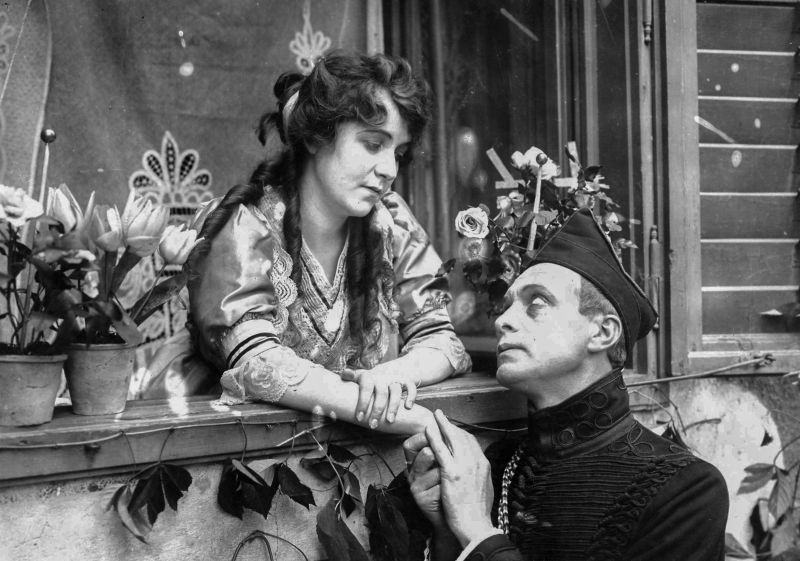
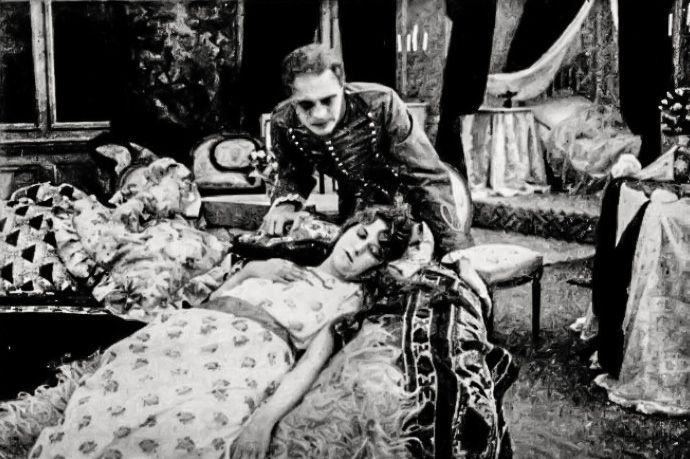
Enter Count Viktor (Richard Kornay), a satin-gloved gambler who collects broken ballerinas the way boys collect pressed flowers. He installs Lili in a Rococo townhouse where mirrors outnumber doors; every reflection whispers, "You are still property." Their courtship is shot through a prism: candlelight fractures across her collarbones while he recites Baudelaire as if tasting copper pennies. When he finally kisses her, the iris-in closes like a bruise.
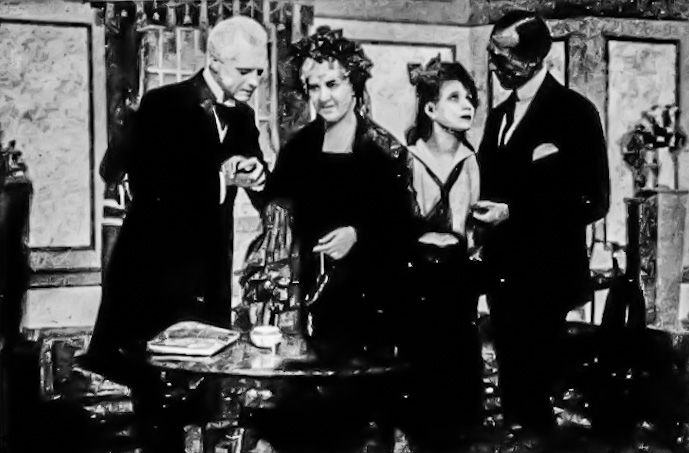
But the film’s mercury heart is Bela Luni, the mesmerist—Lugosi pre-Dracula, already wearing the cape of future infamy. His eyes are black aquariums where minnows of doubt swim. In the salon scene he hypnotizes Lili to stand barefoot on broken champagne flutes; the glass does not cut her, yet we bleed for her. Lugosi’s baritone never rises; it seeps, a slow stain. Watch how he fingers his signet ring—every rotation counts down to surrender.
Cinematographer Károly Ujvári shoots Budapest as if it were a snow-globe filled with mercury. Streetcars zig-zag like scalpel scars; the Danube swallows moonlight and regurgitates pewter. When Lili flees the townhouse, the city tilts—sets slide on hidden rails, neon pharmacy signs stutter Morse code for "run." Years before Paradisfågeln or The Wolf Man would sculpt nightmare with chiaroscuro, Lili weaponizes distortion: faces elongate in silvered napkin rings, carriage wheels spin backwards, a child’s balloon becomes a skull in long-shot.
The circus sequences juxtapose documentary grit with surreal rupture. A tightrope walker dangles upside-down, her blood rushing to the brain until the shot inverts—suddenly the audience hangs from the ceiling like bats. This visual gag predates Murnau’s Faust by eight years; yet Faragó does it with a hand-cranked Bell & Howell and gumption.
Originally released with a Movietone orchestral score, most prints today circulate silent, and perhaps that is justice: the gaps allow us to hear our own pulse. In the absence of strings, Lili’s footfalls on the roof-ridge during the climax become gunshots. She negotiates the parapet of the Royal Opera while Viktor and Luni wager her future in the foyer below. Cross-cuts juxtapose her trembling calves with the roulette wheel—both spinning toward zero.
Watch for the match-action cut: Lili’s slipper skids on a slate shingle; the next frame shows a champagne flute toppling from Viktor’s hand—gravity as moral judge. When she finally falls (or jumps?), Faragó withholds the impact. We cut to a carnival balloon ascending into a washed-out sky. The audience must imagine the thud; the mind supplies a sound more deafening than any orchestral stab.
Claire Lotto, a Parisian transplant to Hungarian film, moves like someone who has memorized gravity’s rulebook only to burn it. In the hypnosis scene her pupils dilate until the iris becomes a black sun; she convulses, yet every gesture remains balletic. Compare her to the March sisters in Little Women: those girls build homes, Lili dismantles cages—yet both negotiate womanhood as war.
Góth’s ringmaster channels the same carnivorous bonhomie Charles Laughton would later bring to Night of the Hunter, but with a Slavic shrug. Kornay’s Viktor is feline, licking cream while setting mousetraps. And Lugosi—ah, Lugosi—already practices the sovereign stillness that will make Dracula seductive. Note how he enters each scene slightly late, as though the world must revolve to align with his axis.
Faragó’s screenplay excises the original play’s comic relief; instead he interrogates spectacle itself. Every male character traffics in exhibition—circus, casino, opera—spaces where women are both currency and marquee. Lili’s body becomes the battlefield: painted, priced, hypnotized. Yet the film refuses to victimize her outright. In the penultimate rooftop walk she reclaims performance as defiance: "You will watch me survive you." The camera, once predatory, now trembles at her resolve.
Contrast this with Follow the Girl, a 1918 American confection that punishes its flapper for similar ambitions. Lili is bleaker, truer: survival is not reward, merely extension of the tightrope.
For decades Lili slumbered in a Zagreb vault, a single 35mm nitrate print curling like a dead leaf. Word was the last reel fused to its canister. Then in 2019 the Hungarian National Film Archive performed a 4K wet-gate rescue, fishing emulsion strips from a rusted iron chest. Digital artisans rebuilt missing frames using outtings from the original camera negative discovered in a Viennese flea-market. The tinting references were extrapolated from a 1921 Swedish censorship card (yes, they kept color annotations). The restored blues taste of copper sulfate; the oranges hiss like coal.
The gala screening at Puskin Theatre came with a new score by Mihály Víg (of Béla Tarr fame): a single cello looping like blood circling a drain, punctuated by typewriter clicks—an echo of the production company’s bankruptcy files. When Lili ascends the rooftop, the cello drops an octave; you feel it in the spleen.
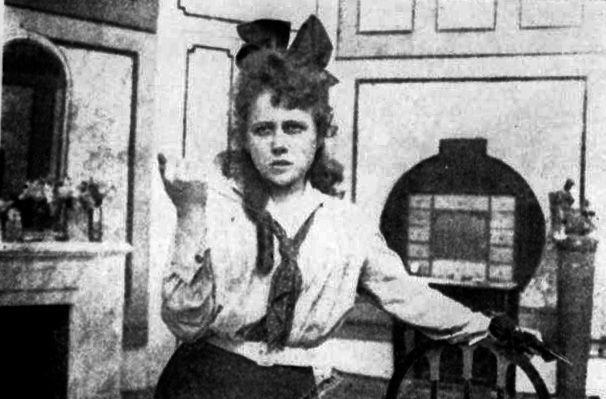
Place Lili beside David Copperfield and you chart two orphan odysseys: one Dickensian comforts with providence, the other Hungarian insists on self-salvation. Pair it with Sowers and Reapers to see how rural virtue gets devoured by urban appetite. The rooftop finale anticipates the Expressionist rooftops in The Maelstrom, yet Faragó’s horror is not cosmic but carnally contractual.
Meanwhile, Die Claudi vom Geiserhof offers Alpine escapism; Lili offers no alp, only precipice.
Because every frame is a dare: dare you to blink, dare you to breathe. Because Bela Lugosi’s eyes here are twin black holes that foreshadow every charismatic monster Hollywood will later mint. Because the film argues that survival is not redemption, merely the next trick. Because when Lili finally turns her gaze into the camera—yes, she breaks the fourth wall—she is not asking for pity but invoicing us for the spectacle of her pain.
Stream it on Arthouse Europa MAX (restored 4K), or haunt the Hungarian Film Archive’s traveling 35mm print—nitrate, flammable, illegal to ship by air. Watch it with the lights off; let the projector’s heartbeat mingle with yours. When the balloon ascends at the end, remember: someone in the dark is still falling.
Final whisper: Lili’s greatest illusion was convincing the world she had wings—when all she owned was the shadow they tried to clip.
IMDb —
1926
Community
Log in to comment.