DbcultAccessing Vault...
Cult Review
Senior Film Conservator
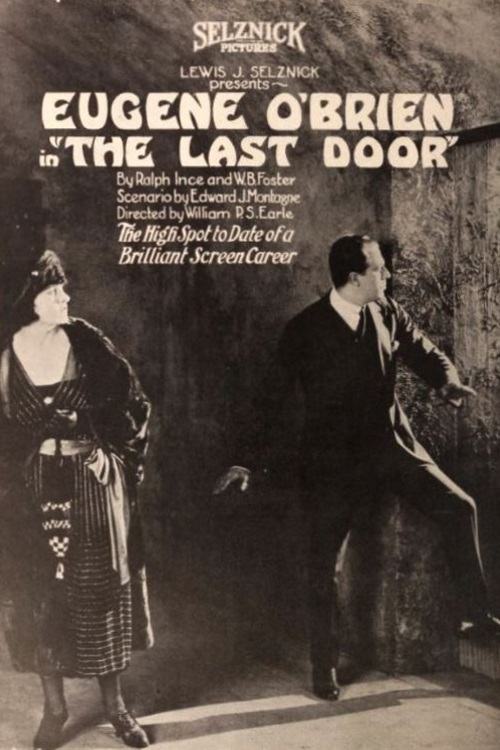
Somerset Carroll’s monocle glints like a coin flipped by fate itself—one side philanthropy, the other larceny—announcing that The Last Door is less a thriller than a séance where identities hover like moths around a gas-flame.
Ralph Ince, a director too often filed under “efficient journeyman,” here conducts a fever-dream chamber piece whose every dissolve feels like a gasp. The film, released in October 1925, arrived when audiences still nursed hangovers from The Beautiful Lie’s romantic fatalism and braced themselves for the flapper nihilism of The Rebellious Bride. Yet Door slips between those stools, landing in a shadow-realm where trust is currency and every handshake might fracture bones.
On paper the narrative reads like a parlour stunt: benevolent aristocrat vows to harbour escaped convict; girl appears; girl is heiress pulling prank; host is criminal; tables invert; girl sides with fraud. But on celluloid the tale becomes palimpsest—each revelation erasing prior ink yet leaving ghost-impressions. Ince’s montage is surgical: a slow fade from Carroll’s public vow to the library’s cavernous hush renders the mansion itself a conspirator. When Helen glides from silhouette to face, her eyes reflecting a silver moon of electric light, we grasp that identity here is not revealed but projected, like a magic-lantern slide onto smoke.
Martha Mansfield, remembered too often for her tragic on-set death in 1923 (a match igniting her costume), here survives in a performance split like a playing card—one half ingénue, half maenad. Watch the micro-movement when Helen learns the man she taunted is a predator: Mansfield’s pupils dilate a single frame before she steadies her breath, converting shock into strategy. It is the moment where the film pivots from social satire to existential noir, predating similar shifts in Life’s Twist by a calendar year.
Eugene O’Brien, saddled with matinée-idol good looks, weaponizes them as The Magnet, letting each smile decay into smirk. He plays against the patrician postures foisted upon him in Good-Bye, Bill, instead channeling a continental menace that feels closer to Lang’s future Dr. Mabuse than to any American gentleman thief. When he peels off dress-shirt and morality in a single edit, the cut is as erotic as it is unsettling, prefiguring the amoral shape-shifters populating The Concealed Truth.
Cinematographer Jules Cronjager—yes, of the prolific German-American clan—bathes the Rogers estate in pools of tenebrous amber. Note the sequence where chandeliers extinguish one by one, each snuff a sonometer of escalating dread. The camera, usually static in mid-20s American cinema, glides laterally across book spines, implicating knowledge itself as accessory to crime. Compare this to the Scandinavian stillness of Spöket på Junkershus; Cronjager’s work is more baroque, yet equally haunted.
While Clover’s Rebellion staged revolt in drawing-room repartee, Door detonates the battle of sexes inside a mansion’s marrow. Helen’s final act—shielding The Magnet from police—reads neither as romantic capitulation nor Stockholm syndrome; it is a radical reclamation of narrative agency, a refusal to return to the gilded cage her surname implies. The last shot frames her through a fanlight, rain streaking the pane like Morse code; she is inside yet outside, free yet fettered—an image that lingers longer than any intertitle.
Foster and Montagne’s intertitles dispense with the ornamental puffery clogging The Oval Diamond. Instead, they slice: “Virtue rented by the hour is still cheaper than sin bought outright.” Such aphoristic sting prefigures the hard-boiled repartee of 1940s crime fiction, proving that pulp wit has roots deeper than Chandler’s typewriter.
Surviving prints lack an original score, yet the film orchestrates silence itself—notice the caesura before Helen’s confession, a vacuum so absolute you can almost hear the emulsion crackle. Modern accompanists often default to jaunty ragtime, betraying the film’s sulfurous undertow. A wiser choice would be Shostakovich-esque ostinato, letting minor chords gnaw at the opulence.
Stack Door beside Die Fahrt ins Blaue and you perceive cultural fault-lines: the German film disperses erotic anxiety across pastoral landscapes, whereas Ince compresses it into mahogany corridors. Both climax with a heroine choosing the outsider over patriarchal surety, yet Mansfield’s Helen owns greater mineral hardness than that of Imperia’s title sylph.
A 16mm duplicate negative, rescued from a Vermont barn in 1978, now rests at MoMA. Rumours swirl of a 4K scan languishing for lack of soundtrack funds. Streamers hungry for fresh silent content could do worse than crowdfund: public-domain status plus noir DNA equals algorithmic gold. Cinephiles still mourning the partial loss of Beatrice Fairfax Episode 15: Wristwatches should lobby before nitrate entropy claims another victim.
The Last Door is not a curiosity but a hinge—between Victorian melodrama and modern anti-heroics, between lantern-slide innocence and hard-jawed cynicism. It asks, decades before Foucault: What if the prison is built of handshakes, what if the key is simply refusing to enter? That the film answers with a woman stepping backward into rain, eyes bright as struck matches, makes it mandatory viewing for anyone mapping the genome of cinematic transgression.
Verdict: 9/10 – A velvet gauntlet hurled at respectability, still whistling through the century.
IMDb —
1929
Community
Log in to comment.