DbcultAccessing Vault...
Cult Review
Senior Film Conservator
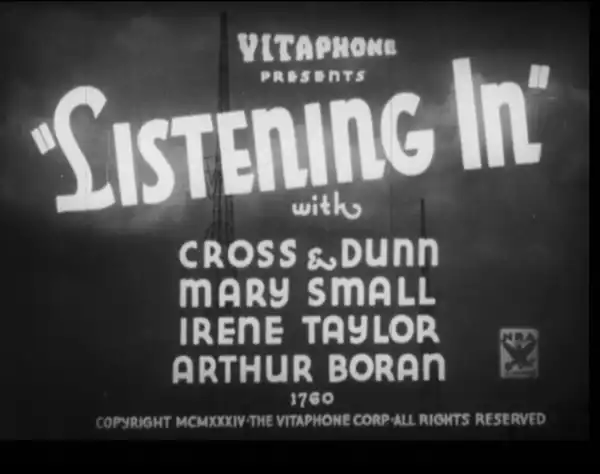
If you have a weird itch for 1930s radio aesthetics or you’re a completionist for short-form musical variety, then sure, go for it. It's barely long enough to be an inconvenience. If you aren't into Vaudeville-adjacent crooning and awkward comedy patter, you’ll probably want to skip this one entirely.
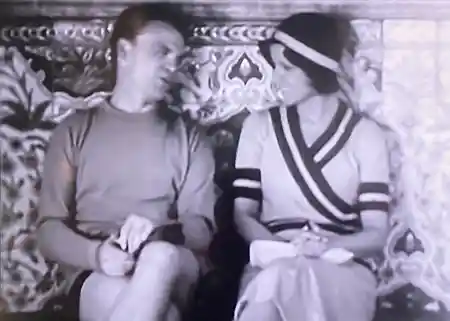
The whole thing starts with these two guys on a telephone pole. It’s such a bizarrely mundane way to set up a show. They look like they’ve been sitting up there for hours. Their dialogue is stiff, but there’s something kind of charming about how little the movie cares about their actual backstories.
Once we drop into the studio, the movie just turns into a stage performance. You get Irene Taylor and Mary Small doing their thing, and it’s very much a product of its time. It feels less like a narrative film and more like someone decided to point a camera at a rehearsal that got out of hand.
I found myself staring at the background furniture more than the actual performers at one point. There’s a piano that looks like it’s seen better decades. It reminded me a bit of the frantic, forced cheerfulness you see in The Cameraman, though without any of the actual slapstick genius.
The rhythm is all over the place. One minute you’re listening to a song, and the next you’re back to the guys on the pole. It’s jarring. It’s like the editor just threw darts at a board to decide when to cut back to the linemen. 📻
Honestly, the most interesting part isn’t even the radio performers. It’s the sheer audacity of the setup. Why are they listening in? Are they supposed to be spies, or are they just really bored workers? The movie doesn't care, so I stopped caring pretty quick too.
It’s not a masterpiece. It’s barely a movie. But it’s a weird little window into a world that doesn’t exist anymore, for better or worse.
Year
1934
IMDb Rating
—
Editorial
Deciphering the legacy of transgressive cult cinema.
Community
Log in to comment.