DbcultAccessing Vault...
5.2/10
Senior Film Conservator
A definitive 5.2/10 rating for a film that redefined the boundaries of cult cinema. Little Dorrit remains a cornerstone of transgressive art.
Sidney Morgan’s 1920 iteration of Little Dorrit stands not merely as a relic of the silent era, but as a visceral exploration of the socioeconomic paralysis that defined the Victorian zeitgeist. In an age where contemporary cinema often favors the kinetic over the contemplative, returning to this early twentieth-century tapestry offers a jarring, yet necessary, reminder of the power of visual stillness. The film captures the suffocating atmosphere of the Marshalsea with a precision that borders on the documentary, utilizing the stark contrasts of early cinematography to illustrate the divide between the light of freedom and the encroaching shadows of institutionalized debt.
The casting of Joan Morgan as the titular Amy Dorrit provides the film with its emotional heartbeat. Her performance is a masterclass in subtlety; she eschews the histrionics often associated with silent cinema, opting instead for a quiet, luminous resilience. As she moves through the damp, narrow hallways of the prison, her presence acts as a flickering candle against the darkness of her father’s delusions. Unlike the tragic protagonists in Bespridannitsa, whose social descent is marked by a frantic loss of agency, Morgan’s Amy possesses an internal fortitude that remains untouched by her surroundings. She is the moral anchor in a sea of opportunistic characters who view the world through the cold lens of ledger books and interest rates.
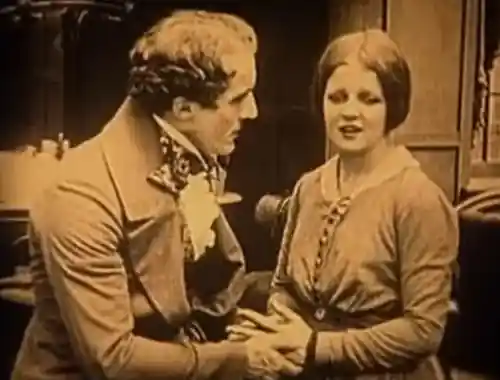
The film’s visual language is deeply preoccupied with the concept of the 'boundary.' Whether it is the iron gates of the Marshalsea or the heavy, velvet-draped parlors of the Clennam household, Morgan uses the frame to entrap his characters. This thematic obsession with confinement mirrors the psychological struggles seen in The Fixer, where the physical cell is merely an extension of a broader, more insidious cultural persecution. In Little Dorrit, the prison is not just a place for those who lack money; it is a metaphor for the rigid class structures of the 1850s, which were still very much a part of the British consciousness in 1920.
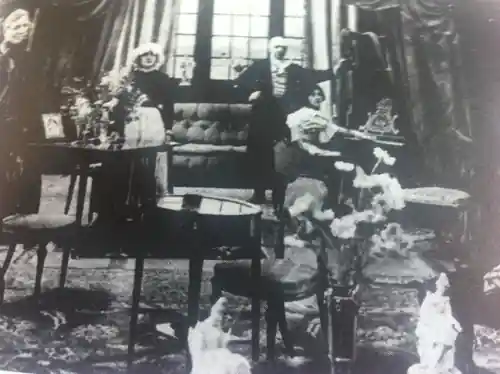
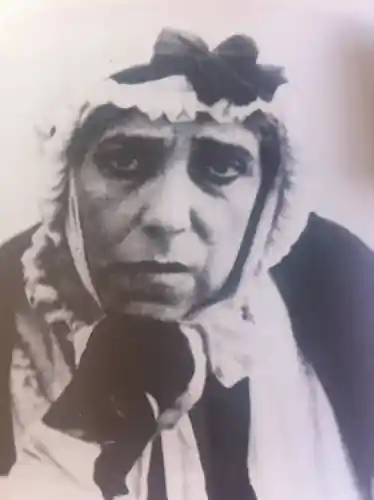
Arthur Clennam, portrayed with a weary, searching dignity by Langhorn Burton, serves as the audience's surrogate. His return to London is not a homecoming but a descent into an ancestral purgatory. His interactions with his mother, played with chilling austerity by Lady Tree, highlight the film’s critique of a religious fervor that has been stripped of its compassion. The Clennam house itself feels like a tomb, a stark contrast to the lively, if impoverished, camaraderie found within the prison walls. This irony—that those 'free' are more imprisoned by their secrets and status than the debtors themselves—is handled with a deftness that rivals the source material.
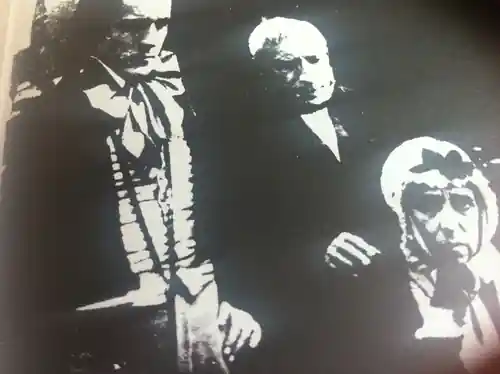
When analyzing the narrative arc of Little Dorrit, one cannot help but draw parallels to A Trick of Fate. Both films grapple with the capricious nature of destiny, yet Morgan’s work is far more cynical regarding the redemptive power of wealth. When the Dorrits finally ascend to the upper echelons of society, the film does not celebrate their victory. Instead, it observes with a jaundiced eye as William Dorrit, played with pathetic grandeur by Compton Coutts, attempts to erase his past. The scene where he mistakes a grand ballroom for his old prison cell is a harrowing depiction of the trauma of poverty, a psychological scar that no amount of gold can cauterize.
The film also echoes the moral complexities found in Blind Husbands, particularly in how it examines the transactional nature of marriage and social standing. However, while von Stroheim’s work focuses on the erotic and the individual, Morgan’s lens is wider, capturing the collective rot of a society built on the Circumlocution Office—a bureaucracy designed to ensure that 'how not to do it' becomes the national mantra. The inclusion of characters like the Merdles further emphasizes this, showcasing a financial bubble that mirrors the precariousness of modern economic structures, proving that Dickens’ warnings remain evergreen.
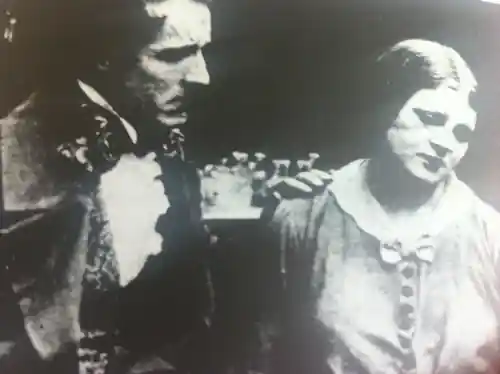
Technically, for its time, the film utilizes a sophisticated palette of lighting. The use of low-key lighting in the Clennam residence creates a chiaroscuro effect that underscores the moral ambiguity of the characters. We see shadows stretching across the floors like grasping fingers, a visual representation of the past’s refusal to remain buried. This artistic choice differentiates the film from more straightforward adaptations, aligning it more closely with the moody atmosphere of Shadows of Suspicion. Sidney Morgan demonstrates an innate understanding of how to use the absence of sound to amplify the presence of subtext.
The pacing of the film is deliberate, perhaps even challenging for a modern viewer accustomed to rapid-fire editing. Yet, this slow burn is essential. It allows the viewer to feel the weight of time as it passes for the inmates of the Marshalsea. Each frame is composed like a Victorian painting, rich with detail and heavy with intent. The costumes and set design do not merely serve as historical window dressing; they are extensions of the characters' internal states. The rags of the prison are worn with a certain honesty, while the silks of the later acts feel like heavy, uncomfortable armor.
The central conflict of the film—Arthur’s refusal to marry Amy until their fortunes are aligned—is a fascinating study in pride and integrity. In an era where the pursuit of wealth was often seen as the ultimate virtue, his hesitance is a radical act. It challenges the viewer to consider the value of a person beyond their bank balance. This theme of resisting the easy path of comfort is a recurring motif in silent cinema, found in varying degrees in Under Handicap, though Morgan’s treatment is far more grounded in the grim realities of urban life than the romanticized struggles of the frontier.
Amy Dorrit herself remains one of the most compelling figures in early cinema. She is often dismissed as a 'passive' character, but this film argues that her passivity is actually a form of radical endurance. She is the only character who does not attempt to be something she is not. Whether in a cell or a palace, she remains 'Little Dorrit.' This consistency of character is her greatest strength and her most profound rebellion against a world that demands constant reinvention for the sake of social climbing.
While subsequent adaptations of Little Dorrit have benefited from the advent of sound and larger budgets, Sidney Morgan’s 1920 version possesses an intangible haunting quality that remains unsurpassed. It is a film that demands much of its audience, requiring a surrender to its melancholic rhythm and its stark, unvarnished portrayal of human fallibility. It captures the essence of Dickens’ anger at the 'system' while maintaining a tender focus on the individuals crushed beneath its wheels.
In the broader context of silent film history, this work should be celebrated alongside the likes of Mania. Die Geschichte einer Zigarettenarbeiterin for its unflinching look at the lives of the working class and the marginalized. It is a testament to the power of the medium to transcend its technical limitations and deliver a message that is both historically specific and universally relevant. To watch Little Dorrit today is to look into a mirror of the past and see the reflections of our own societal anxieties—the fear of debt, the fragility of status, and the enduring hope for a connection that is not predicated on the exchange of coin.
"A hauntingly beautiful examination of the prisons we build for ourselves, Sidney Morgan's Little Dorrit is a masterwork of silent social commentary that remains as relevant today as it was a century ago."
Ultimately, the film concludes not with a grand triumph, but with a quiet resolution. The restoration of the characters' souls is prioritized over the restoration of their bank accounts. It is a fitting end to a story that began in the depths of a debtor’s prison, reminding us that true liberation comes not from the acquisition of property, but from the shedding of the illusions that keep us bound to the ghosts of our past. For any serious student of cinema or lover of Dickens, this 1920 gem is an essential piece of the puzzle, a bridge between the literary giants of the 19th century and the visual pioneers of the 20th.
IMDb —
1918
Community
Log in to comment.