DbcultAccessing Vault...
Cult Review
Senior Film Conservator
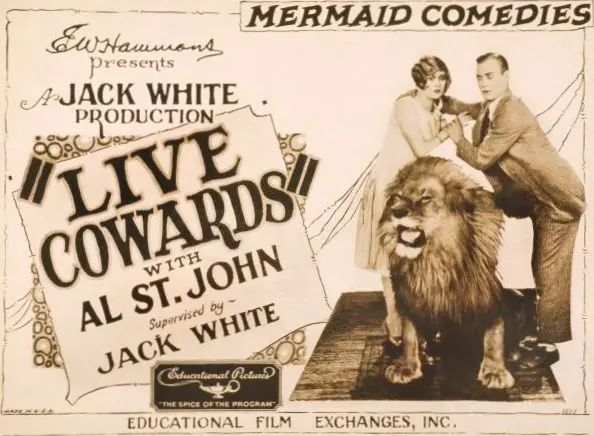
Short answer: yes, Live Cowards is absolutely worth watching today, especially for those with an appreciation for the foundational anarchic spirit of silent comedy. This film, largely overlooked in broader cinematic discussions, offers a surprisingly potent, albeit absurd, commentary on personal boundaries and the sanctity of one's home.
It's a chaotic, often hilarious ride that will particularly appeal to fans of early slapstick, physical comedy, and anyone curious about the roots of comedic storytelling. However, if you prefer nuanced dialogue, intricate plots, or modern comedic sensibilities, this nearly century-old short might feel a touch too primitive, too reliant on broad gags and exaggerated expressions.
This film works because of its relentless escalation and the sheer audacity of its central premise. It takes a relatable domestic frustration and pushes it to an utterly ludicrous, yet satisfying, extreme.
This film fails because its narrative depth is minimal, even for a silent short. The characters are archetypes, and the resolution, while funny, feels like a convenient deus ex machina rather than an earned conclusion.
You should watch it if you enjoy classic silent-era slapstick, appreciate the art of physical comedy, or are seeking a unique historical curiosity that still delivers laughs. It’s a perfect pick for a quick, irreverent cinematic escape.
Live Cowards plunges us into the seemingly idyllic world of a newlywed couple, whose domestic bliss is promptly, and violently, disrupted. The catalyst? A seemingly endless parade of relatives, descending upon their home like a plague of locusts, each more intrusive than the last. The film, in its silent, exaggerated glory, meticulously charts the erosion of the husband's (presumably Al St. John) personal space.
Initially, it's a chair. Then, a room. Soon, his entire home, once a sanctuary, becomes a public square, a bustling hostel where his own belongings are treated as communal property. The film captures the simmering resentment of the husband with exquisite physical comedy, his expressions shifting from bewildered politeness to barely contained fury.
The relatives are not just guests; they are invaders, systematically dismantling his comfort and autonomy. One particularly memorable sequence sees a relative casually donning the husband’s favorite hat, while another sprawls across his bed, oblivious to his discomfort. It's a comedic portrayal of a universal frustration: the imposition of others on one's private sphere.
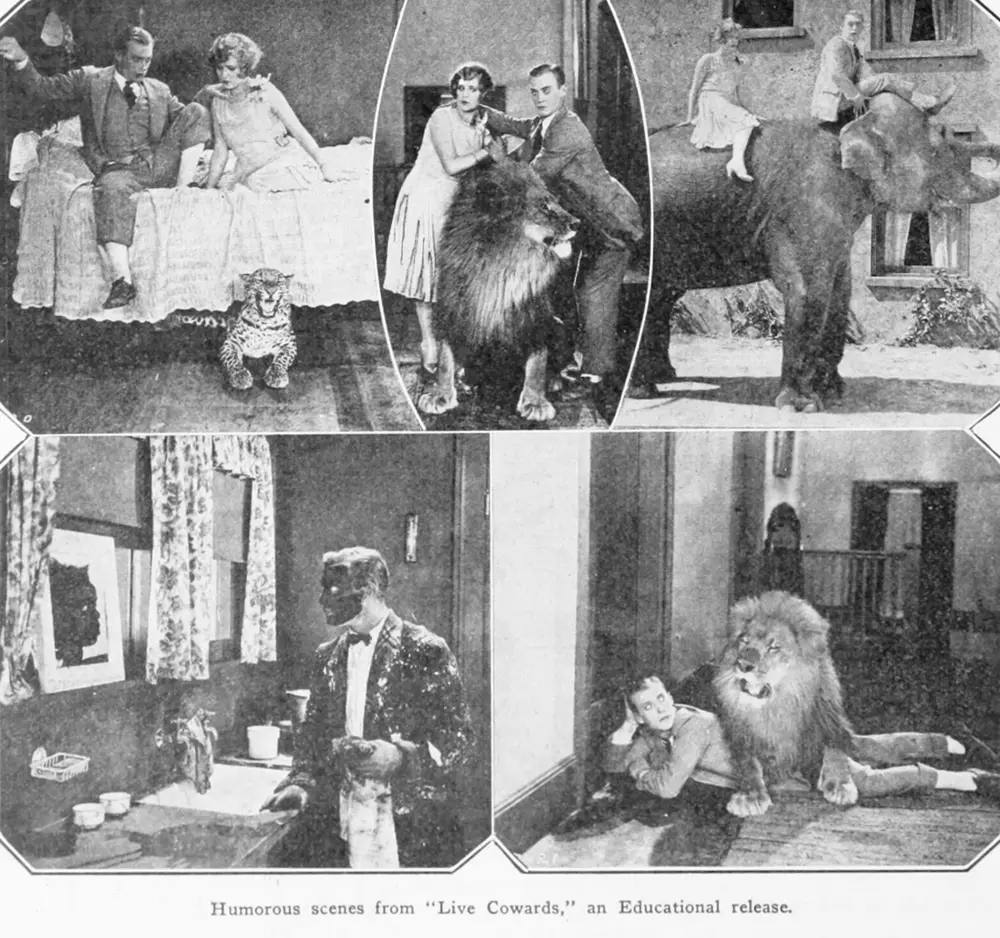
The narrative builds this tension expertly, allowing the audience to feel the husband's growing despair. His attempts to reclaim his space are met with either ignorance or outright defiance, highlighting his powerlessness in the face of such overwhelming familial pressure. This is where the film finds its relatable core, even amidst the absurdity.
Then comes the twist, an escalation so outlandish it transcends mere slapstick into something truly surreal. His brother-in-law arrives, depositing a collection of bulky luggage in the barn. As night falls, the true nature of this baggage is revealed: a menagerie of wild animals – lions, tigers, elephants – that break loose and storm the house.
The subsequent pandemonium is glorious. The very relatives who so confidently usurped the home are sent scattering in sheer terror, their entitlement dissolving in the face of primal fear. It’s a cathartic, if utterly improbable, resolution, transforming the domestic farce into a jungle adventure within the confines of a suburban home.
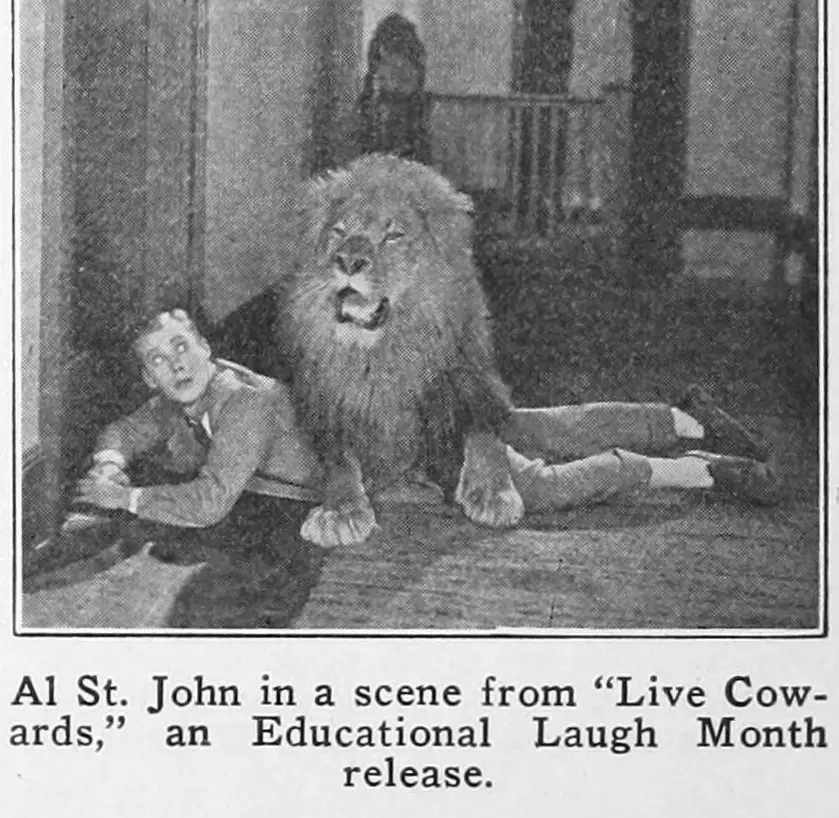
In silent cinema, the actor's body and face are the primary instruments of storytelling. Live Cowards is a masterclass in this form, particularly from its lead, Al St. John. St. John, known for his acrobatic stunts and expressive face, carries the emotional weight of the film with remarkable clarity.
His portrayal of the beleaguered husband is a highlight. We see his initial attempts at hospitality, his forced smiles giving way to furrowed brows, then wide-eyed exasperation, and finally, a kind of resigned, desperate fury. He doesn't need intertitles to convey his mounting frustration; his every twitch and gesture speaks volumes.
Consider the scene where he tries to read his newspaper, only for it to be snatched away or obscured by a relative's head. St. John's reactions are priceless – a subtle eye-roll, a deflated slump of the shoulders, then a sudden burst of futile energy. It's a performance built on precision and timing, essential for the rapid-fire gags of silent comedy.
The supporting cast, including Otto Fries and Eva Thatcher, effectively embody the caricatures of intrusive relatives. Fries, with his imposing stature, often plays the oblivious, space-hogging visitor, while Thatcher likely embodies the nagging, demanding matriarch. Their performances are broad, as demanded by the genre, but effective in creating a sense of overwhelming presence.
Virginia Vance and Phil Dunham, though perhaps in smaller roles, contribute to the tapestry of chaos. Each actor understands their role in the ensemble, playing their part in the escalating invasion. The beauty of silent comedy here lies in how these exaggerated performances create a universal language of humor, one that transcends the lack of spoken words.
The direction in Live Cowards, likely by Al St. John himself or a frequent collaborator, demonstrates a keen understanding of comedic rhythm. The film’s pacing is its secret weapon, starting with a gradual build-up of domestic discomfort before erupting into full-blown pandemonium.
The early scenes are deliberately paced, allowing the audience to witness each incremental violation of the husband's space. This slow burn makes the eventual explosion of chaos all the more satisfying. The camera work, while simple by modern standards, is effective in framing the gags, often using wide shots to capture the full scope of the domestic invasion.
When the animals are unleashed, the pacing accelerates dramatically. Quick cuts, frantic movements, and well-choreographed slapstick sequences dominate the screen. The director masterfully orchestrates the multiple reactions of the fleeing relatives, ensuring that each character gets their moment of panicked absurdity.
One particularly impressive sequence involves the relatives scrambling over furniture and each other to escape the encroaching beasts. The fluidity of these movements, the timing of the falls, and the perfectly timed entrances of the animals speak to a director who understood how to make every frame count for comedic impact.
The film’s structure, moving from polite discomfort to utter bedlam, is a classic comedic arc, executed with precision. It works. But it’s flawed. The sudden introduction of the animals, while hilarious, does feel like a narrative shortcut, bypassing a more organic resolution to the domestic conflict. Yet, for a silent short, such creative liberties are often part of the charm.
The cinematography of Live Cowards is typical of its era: largely static shots, clear compositions, and functional lighting designed to capture the action. While it lacks the artistic flourishes of later silent epics, it serves the comedic purpose admirably. The focus is always on the physical comedy and the reactions of the characters, ensuring that every gag lands visually.
The film's tone is overtly farcical, leaning heavily into exaggeration and absurdity. Yet, beneath the surface, there's a surprisingly resonant theme: the struggle for personal space and autonomy. In an age where personal boundaries are constantly being negotiated, the husband's plight feels oddly contemporary.
It's a commentary, albeit an unsubtle one, on the demands of hospitality and the delicate balance between generosity and self-preservation. The film suggests that sometimes, extreme measures are required to reclaim one's sanctuary. The animals, in this context, are not just a punchline but a symbolic representation of the raw, untamed instinct to protect one's territory.
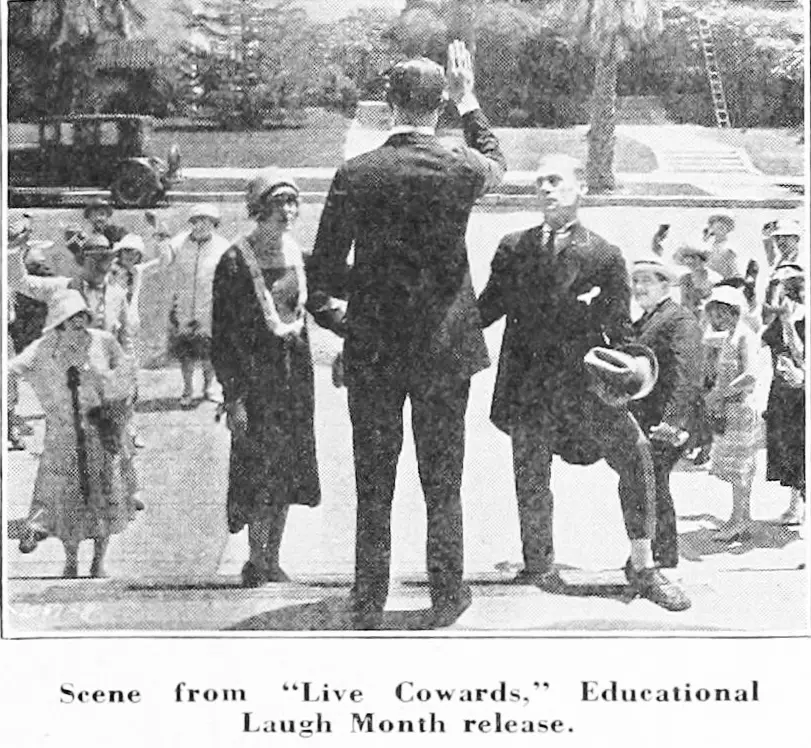
This makes Live Cowards more than just a series of gags; it's a primitive, yet effective, allegory. It asks: how far is too far when family overstays their welcome? And what lengths would one go to, to reclaim their peace? The film’s answer, delivered with a roar and a flurry of paws, is both hilarious and thought-provoking.
One could even argue the film is an unconventional critique of societal expectations regarding familial duty. The husband is clearly expected to tolerate the relatives, no matter how egregious their behavior. His ultimate 'solution' is not one he enacts himself, but rather one that fortuitously appears, providing a guilt-free escape from his obligations.
Released during the prolific silent era, Live Cowards fits squarely within the tradition of short-form slapstick comedies that were a staple of cinema programming. These shorts, often playing before feature films, were designed for quick laughs and immediate gratification, and they delivered in spades.
While it may not hold the same legendary status as a Chaplin or Keaton classic, Live Cowards is a valuable piece of cinematic history. It showcases the ingenuity and resourcefulness of early filmmakers in creating engaging narratives and memorable gags with limited resources.
It also offers a glimpse into the popular entertainment of the time, revealing the kinds of humor that resonated with audiences. The film's enduring appeal lies in its universal themes and its timeless comedic execution, proving that a good laugh can transcend generations and technological advancements.
Comparing it to other domestic comedies of the era, like some of the early efforts that explored marital squabbles or neighborhood disputes, Live Cowards stands out for its sheer, unapologetic escalation into the fantastical. It steps beyond the mundane into the utterly absurd, setting it apart from more grounded comedic shorts such as Light Hearts and Leaking Pipes or even the more dramatic turns seen in films like The Banker's Daughter.
Live Cowards is a boisterous, unpretentious slice of silent comedy that, against all odds, retains a surprising amount of its original charm and comedic punch. It may be a product of its time, with all the inherent limitations of early cinema, but its core comedic premise – the utter annihilation of personal space by unwelcome guests, and the fantastically absurd solution – is remarkably potent.
Al St. John delivers a performance that is both physically demanding and emotionally resonant, even without words. While the resolution is pure fantasy, it provides a cathartic release that audiences, then and now, can undoubtedly appreciate. It’s a film that doesn't just make you laugh; it makes you think, however fleetingly, about the boundaries we draw, or fail to draw, in our own lives.
For a quick dive into the glorious chaos of early slapstick, Live Cowards is an absolute treat. It’s not a masterpiece in the traditional sense, but it’s a fiercely entertaining, historically significant, and surprisingly relevant piece of comedic cinema. Highly recommended for a dose of vintage, animal-induced anarchy.
IMDb —
1919
Community
Log in to comment.