DbcultAccessing Vault...
Cult Review
Senior Film Conservator
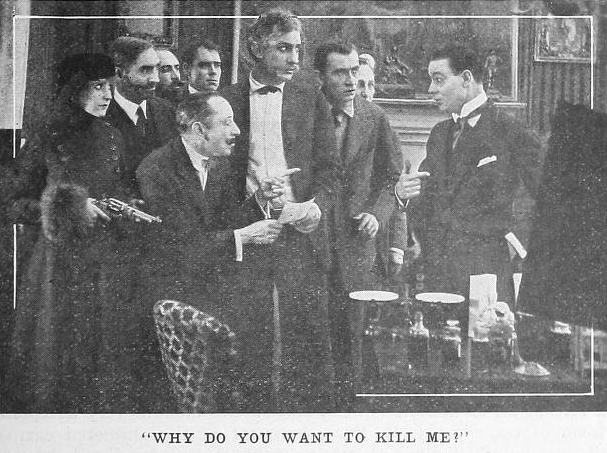
Stepping into the flickering, sepia-toned world of early cinema is always an adventure, and 'The King's Game' (1916) offers a particularly vibrant romp through the labyrinthine corridors of royal intrigue, mistaken identity, and sheer narrative audacity. From its very inception, this film, penned by the prolific George B. Seitz, establishes a tone that oscillates between high-stakes drama and a surprisingly lighthearted, almost farcical, play on perceptions. It's a testament to the ingenuity of silent era storytelling, where exposition had to be conveyed not just through intertitles, but through the exaggerated gestures, the swift cuts, and the very mise-en-scène itself. The narrative's genesis is rooted in a rather dark, almost operatic transgression: the old Grand Duke of Kiev's unbridled lust for the wife of his loyal Huzzar colonel, Count Dardinilis. This initial act of moral decay sets a ripple effect across the entire story, a foundational sin that eventually demands an unexpected form of redemption and resolution. The Grand Duke's covetousness isn't merely a character flaw; it's the catalyst for an entire geopolitical upheaval, a personal failing that spills over into dynastic implications and international escapades. The subsequent plot to 'acquire' her, leading tragically to her accidental death at the hands of his own Cossacks, is a stark reminder of the arbitrary power wielded by royalty and the devastating consequences of unchecked desire. This brutal beginning is quickly followed by the desperate flight of Count Dardinilis and his infant daughter to the relative safety and anonymity of America, a classic trope of European aristocracy seeking refuge from Old World machinations in the New World's promise.
Years later, the stage is reset. The young Grand Duke, now an orphan, journeys to America, ostensibly to complete his education. This transition from the rigid hierarchy of Kiev to the bustling, democratic landscape of America is a fascinating cultural clash, even if only subtly explored through the medium of silent film. It immediately places our protagonist in a foreign land, making him both vulnerable and ripe for adventure. It's here that the narrative truly ignites, as a shadowy organization of Nihilists — a popular villain archetype of the era, representing radical political dissent and revolutionary fervor — dispatches an agent named Perelley with the express purpose of assassinating the young nobleman. The threat is palpable, lending a thrilling urgency to the plot. However, 'The King's Game' isn't content to be a straightforward thriller. Enter the Secret Service, a force of order and intelligence, already privy to the Nihilists' intricate plot. This immediately elevates the stakes, adding layers of espionage and counter-espionage to the unfolding drama. Their ingenious plan to apprehend Perelley and then, in a stroke of narrative brilliance, dress him in the Grand Duke's clothes and chain him to a carriage as a decoy, is where the film truly begins to play its 'game' of identity. This device of mistaken identity, a cornerstone of countless comedies and dramas throughout cinematic history, is handled here with a blend of suspense and theatricality that is quite effective for its time.
The true Grand Duke, bearing an uncanny physical resemblance to Perelley, then stumbles upon a Nihilist rendezvous. This moment is pure cinematic serendipity, a narrative contrivance that, in the context of early film, feels less like a stretch and more like a delightful twist of fate. Goaded by the unsuspecting Nihilists, and genuinely believing the man in the carriage to be an imposter or perhaps even a rival, the Grand Duke hurls a box of bonbons at his unwitting double. This small, almost comical act of aggression underscores the absurdity inherent in the situation, injecting a touch of levity into what could otherwise be a grim tale of political assassination. The decision by the Grand Duke to then infiltrate the Nihilist ranks, accompanying them into the countryside under false pretenses, is a bold move, showcasing his courage and perhaps a streak of youthful recklessness. His aim: to ensure their capture at the opportune moment. This segment of the film transforms the young Duke from a passive target into an active participant, a shrewd player in his own 'game.' The subsequent escape of Perelley from the carriage, and his unexpected presence at the rendezvous, forces the Grand Duke into a precarious position, demanding immediate explanation and action. This escalating tension is masterfully handled, building towards a climactic chase and confrontation.

It is in this crucible of peril that the Grand Duke finds an unexpected ally: Dardinilis' daughter. Her timely aid in his escape, unharmed, not only provides a thrilling moment of rescue but also subtly begins to weave together the disparate threads of the story, connecting the past transgressions of his father with his present predicament. When they are finally apprehended by the police, the resolution is nothing short of astonishing. The young Grand Duke, demonstrating a remarkable degree of leniency and perhaps a philosophical detachment, declares the entire affair a 'draw' and simply lets it go. This particular narrative choice is intriguing, suggesting a wisdom beyond his years, a refusal to engage in further cycles of retribution, or perhaps a pragmatic recognition of the complex web of events. It subverts expectations, offering a resolution that prioritizes peace and a fresh start over punitive justice. The film then ties up its loose ends with a satisfying, almost fairy-tale conclusion: Count Dardinilis is not only reinstated but elevated to colonel of the esteemed Black Huzzars, and his daughter, the Grand Duke's rescuer, becomes the Duchess of Kiev, marrying the young Duke. This final act of union and restoration brings the narrative full circle, healing old wounds and forging a new, hopeful dynastic future built on understanding and a shared journey.
George B. Seitz, a name synonymous with prolific output in the early decades of American cinema, serves as both writer and, implicitly, the guiding force behind 'The King's Game.' His screenwriting here demonstrates a keen understanding of popular appeal, blending elements of adventure, political thriller, and even a dash of romantic comedy. Seitz had a knack for crafting engaging narratives that kept audiences enthralled, a skill evident in the intricate plotting of this film. The way he meticulously lays out the initial transgression, plants the seeds of future conflict, and then orchestrates the various coincidences and escapes speaks to a craftsman at work. The film's structure, moving from a tragic backstory to a contemporary political thriller with a romantic subplot, showcases a sophisticated approach to storytelling for the era. It’s not just a series of events; it’s a carefully constructed edifice of cause and effect, even if some of those effects rely on dramatic convenience. One can observe parallels in the energetic, serialized storytelling of films like Under the Crescent, where episodic thrills and cliffhangers were paramount, though 'The King's Game' offers a more contained, albeit still action-packed, narrative arc. Seitz's ability to create compelling characters, even within the limitations of silent film acting, is notable. The young Grand Duke, for instance, evolves from a somewhat naive target to a proactive agent of his own destiny, and this character development, conveyed through action and reaction, is a credit to Seitz's narrative foresight.
The direction, while not explicitly credited to Seitz in all historical records, certainly bears the hallmarks of a director who understood how to maximize visual storytelling. The use of close-ups to convey emotion, the dynamic staging of action sequences (even if they appear quaint by modern standards), and the pacing of the narrative are all handled with a professional touch. The film manages to build suspense effectively, particularly during the mistaken identity sequences and the various escapes. The visual language of the era, relying heavily on tableau shots and expressive physical acting, is utilized to its fullest. One could even draw a thematic comparison to the grand, almost operatic scope of a film like Hamlet (1911), not in terms of depth, but in the ambition to tell a story of royal lineage and betrayal, albeit with a far lighter touch in 'The King's Game.' The film’s ability to maintain a clear narrative thread amidst the twists and turns is a testament to the clarity of its direction. There’s a distinct sense of purpose behind each scene, propelling the story forward without unnecessary digressions. This efficiency in storytelling is a hallmark of well-executed silent cinema, where every frame counts.
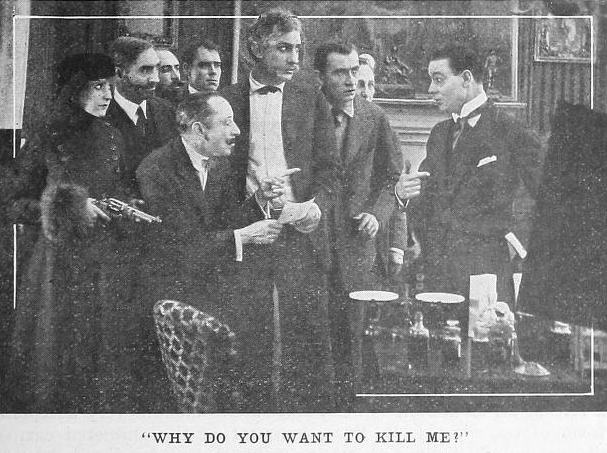
The performances in 'The King's Game' are a fascinating window into the acting styles prevalent in the early silent era. George Parks, as the young Grand Duke, carries the film with a blend of earnestness and youthful vigor. His portrayal requires him to navigate a spectrum of emotions, from the initial bewilderment of being a target to the cunning necessary for his infiltration. Parks conveys these shifts primarily through exaggerated facial expressions and body language, a necessity for communicating complex internal states without spoken dialogue. His resemblance to Perelley, the nihilist assassin, is crucial to the plot, and the film relies heavily on this visual conceit. Pearl White, a veritable icon of the serial film, brings her characteristic dynamism to the role of Dardinilis' daughter. Known for her daring stunts and spirited portrayals, her presence injects a much-needed shot of resilience and agency into the narrative, especially in her pivotal role in aiding the Grand Duke's escape. White’s ability to project strength and resourcefulness without uttering a single word is a masterclass in silent film acting. Her character is not merely a damsel in distress; she is an active participant in the unfolding drama, a testament to the evolving roles for women in early cinema.
George Probert, likely in a supporting but impactful role, contributes to the film's ensemble, providing the necessary gravitas or villainy as required. Sheldon Lewis, often cast as villains or formidable antagonists in his career, likely embodies the more sinister aspects of the Nihilist plot or perhaps even the initial Grand Duke, bringing a menacing presence to the screen. His ability to convey threat through piercing gazes and deliberate movements would have been invaluable in establishing the film’s dramatic tension. Nora Moore, too, would have played her part in rounding out the cast, adding nuance to the supporting characters and contributing to the overall texture of the narrative. The ensemble works cohesively, each actor understanding their role in advancing the plot and conveying the emotional stakes. The collaborative nature of silent film acting, where performance is often more theatrical and less naturalistic, is on full display here. The distinct personalities, even when conveyed through broad strokes, are effective in drawing the audience into the story. It is a testament to their craft that these actors, without the benefit of spoken dialogue, could communicate such complex narratives and emotional arcs. One can see how such dramatic performances, relying on physical expression, laid the groundwork for the more nuanced acting that would emerge in later decades, yet still hold a captivating power within their own context. The sheer energy emanating from the screen, particularly from Pearl White, is infectious, making even the most outlandish plot points feel grounded in the immediate reality of the film's world.
Beyond the thrilling chases and mistaken identities, 'The King's Game' delves into several compelling themes that resonate even today. The most prominent is, of course, the theme of identity. The uncanny resemblance between the Grand Duke and Perelley is not just a plot device; it's a commentary on how easily appearances can deceive and how closely intertwined fate can be. This duality forces both characters into roles they didn't choose, highlighting the arbitrary nature of status and perception. The idea that a nobleman and a nihilist could be indistinguishable at a glance challenges societal hierarchies and preconceived notions. It forces the audience to consider what truly defines a person: their birthright or their actions? This thematic exploration of identity can be seen in other films of the era that played with disguise and mistaken roles, such as the various adaptations of literary works like Oliver Twist, where characters' true parentage and social standing are often obscured or revealed in dramatic fashion. The film also touches upon the theme of justice and retribution. The initial act of the old Grand Duke sets in motion a chain of events that could easily lead to an unending cycle of violence. Yet, the young Grand Duke's decision to declare a 'draw' and let go of further retribution is a powerful statement. It suggests a more enlightened approach to conflict resolution, prioritizing peace and reconciliation over vengeance. This moral compass, particularly for a character born into a position of absolute power, is a surprisingly progressive stance for a film of its time. It implies a move towards a more modern understanding of leadership, one that values diplomacy and forgiveness.
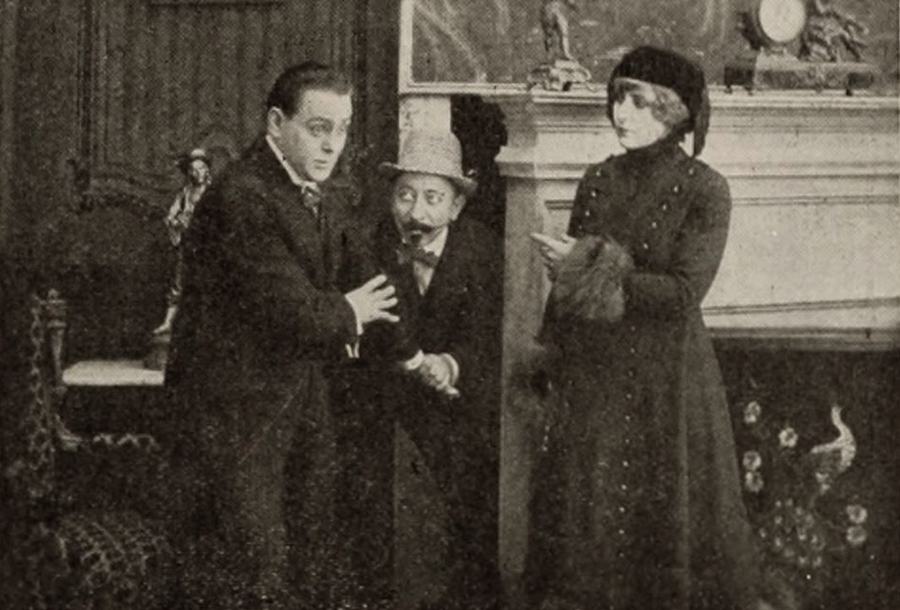
The contrast between Old World aristocracy and New World democracy is another subtle but potent undercurrent. The Grand Duke comes to America for education, symbolizing a shift from inherited power to earned knowledge. The Nihilists, representing a radical rejection of traditional power structures, further emphasize this tension. America, as a land of refuge and opportunity for Dardinilis, stands in stark opposition to the oppressive regime of Kiev. This dynamic, while not explicitly lectured upon, is woven into the fabric of the setting and the characters' motivations. The film also implicitly explores the idea of fate versus free will. Are the characters merely pawns in a larger game, or do their choices genuinely shape their destiny? The numerous coincidences and chance encounters suggest a strong hand of fate, yet the Grand Duke's active decisions to infiltrate the Nihilists and ultimately offer clemency demonstrate agency. This interplay keeps the audience engaged, pondering the forces at play. The romantic element, culminating in the union of the Grand Duke and Dardinilis' daughter, serves as a powerful symbol of reconciliation and the forging of a new order. It suggests that personal connections and love can bridge historical divides and heal old wounds, creating a future built on partnership rather than past animosities. This romantic resolution, while conventional for many films of the era, feels earned within the context of their shared peril and rescue, creating a satisfying emotional arc that complements the political intrigue.
'The King's Game' is more than just an entertaining adventure; it's a valuable historical artifact, offering insights into the cinematic techniques and narrative conventions of the early 20th century. The film's reliance on physical comedy, dramatic irony, and clear visual cues speaks to an era when the medium was still defining its language. The action sequences, though perhaps lacking the frenetic pace of modern blockbusters, are remarkably effective for their time, utilizing practical effects and clever staging to convey movement and danger. The use of intertitles, while sometimes lengthy, is generally well-integrated, providing crucial dialogue and exposition without unduly interrupting the visual flow. The cinematography, even in its black-and-white simplicity, manages to create atmospheric tension and highlight key moments. One can imagine the impact these visuals had on audiences accustomed to theatrical performances, now witnessing stories unfold with unprecedented dynamism on screen. Comparing it to another early film like The Life and Adventures of John Vane, the Australian Bushranger, which also features escapes and adventure, 'The King's Game' demonstrates a similar pioneering spirit in crafting thrilling narratives, albeit with a more polished, studio-driven aesthetic. The film's pacing, while deliberate by today's standards, would have been considered brisk and exciting, keeping audiences on the edge of their seats with its constant stream of twists and turns. The film is a masterclass in how to tell a complex story with limited technological means, relying instead on strong writing, committed performances, and innovative visual storytelling.
The production values, for a film of its time, appear commendable. The sets, costumes, and location shooting contribute to a believable, if heightened, reality. The transition from the opulence of Kiev (or its cinematic representation) to the comparatively rugged American landscapes provides a visual contrast that enhances the narrative's journey. The film's capacity to transport its audience to a world of European nobility and American espionage is a testament to its production design. It successfully creates an immersive experience, even without the technological bells and whistles of later eras. The attention to detail in the costumes, particularly the Huzzar uniforms and the Grand Duke's attire, adds a layer of authenticity to the aristocratic setting. Even the portrayal of the Nihilists, while stereotypical for the period, is rendered with enough conviction to make them credible threats. The film's enduring appeal lies not just in its plot but in its ability to capture the zeitgeist of an era, reflecting societal anxieties about political unrest and the allure of adventure. It's a reminder of cinema's power to entertain, to provoke thought, and to transport us to different worlds, even over a century later. The film truly lives up to its title, presenting a grand 'game' where every move has consequences, and the players must adapt or be lost to the whims of fate. It’s a delightful relic, a vibrant piece of cinematic history that continues to engage and surprise, proving that some stories are truly timeless.
Final Verdict: 'The King's Game' is a captivating journey into silent film's adventurous heart, a masterclass in suspense and character, richly deserving of its place in cinematic memory. Its blend of historical drama, political intrigue, and romantic resolution provides a viewing experience that is both intellectually stimulating and thoroughly entertaining.
Cast: George Parks, Pearl White, George Probert, Sheldon Lewis, Nora Moore
Writer: George B. Seitz
IMDb —
1918
Community
Log in to comment.