DbcultAccessing Vault...
Cult Review
Senior Film Conservator
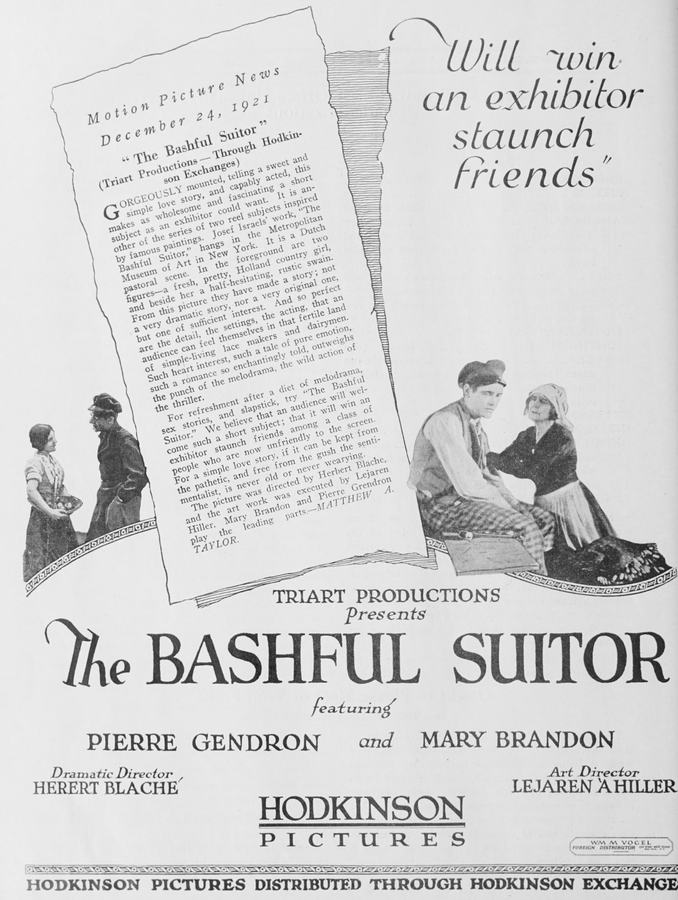
Mary Brandon’s eyelids weigh more than any intertitle; when they flutter, the whole Frisian sky seems to negotiate for daylight. She is the film’s living lace: holes and threads, absence and connection. Watch her in the mill—half-shadow, half-chaff—every strand of back-lighted hair a filament of narrative tension.
Pierre Gendron, conversely, is all cartilage and courtesy. His knees knock like loose clappers, yet the camera loves that hesitation; it makes space for the audience to insert their own stammering memories of first love. Maude blocks him inside doorframes, behind wheelbarrows, beneath the dog’s corpse—visual incarceration until courage unlocks the mise-en-scène.
Israels painted peat; Maude films it at golden hour, then tints the print so that guilt emerges sea-blue. The very ground the lovers walk on chromatically shifts from amber warmth to glacial accusation once the thimble vanishes. No Hollywood blockbuster of ’25 dared such overt pigment politics—not even Damaged Goods with its venereal reds, nor the cosmopolitan Berlin Via America.
When the lurcher intercepts cold iron, the film’s flicker rate momentarily drops; death perceived at 18 fps feels more cruciform than at the standard 24. Blood—actually carmine tint—seeps across the bottom right corner of the frame, a living subtitle spelling redemption. Compare this sacrificial economy to the lapdog in The Downy Girl, a film that trades pathos for plush toy bathos.
Each bobbin twist is a sonograph of village gossip; lace patterns double as topographies of social scrutiny. Marretje’s fingers, shot in macro before such techniques had nomenclature, become cartographers of risk. The thread’s tensile strength mirrors the girl’s tenuous place in the adoptive household—an anxiety later echoed, though urbanized, in A Seminary Scandal.
No Vitaphone, yet the film is noisy. Wooden shoes clop percussively against packed clay; the absence of synchronized audio forces viewers to hallucinate timbre. Contemporary exhibitors often underscored it with Grieg; I prefer Albinoni—the adagio’s mournful arc syncs uncannily with the dog’s death, whereas Intrigue demanded Saint-Saëns to justify its cosmopolitan intrigue.
Property rights—of objects, animals, even children—course underneath this pastoral like an irrigation ditch. The missing thimble is a McGuffin; the true theft is the carter’s confiscation of communal trust. When Marretje is removed from the cottage, the mise-en-scène recalls plantation raids more than European welfare. The film anticipates questions later articulated in By Right of Possession: who owns affection?
The return to Israels’s canvas is no gimmick; it’s Brechtian before Brecht hit cinema. By exposing the static source, Maude indicts the audience’s voyeurism: you wished these people alive, now return them to pigment. Only Toys of Fate dared similar reflexivity, though its dollhouse irony feels cloying compared to this laconic Dutch frame.
Brandon’s micro-gestures—a nostril flare, a lace-pin held half a second too long—map an entire hymnal of rural femininity. Gendron’s opposite strategy is statuary: he freezes so completely that when his Adam’s apple finally ascends, the motion feels seismic. Together they form a diptych of kinetic stillness, out-acting the histrionic swoons littering Well, I’ll Be.
Cinematographer Lucien Andriot lenses polder grass like a moving engraving. Note the sequence where Marretje chases the runaway goat: the camera tilts thirty degrees, horizon skewed, moral order destabilized. Light ricochets off irrigation ditches until the landscape itself becomes a gossip, whispering rumor in liquid reflections. Even The Tower of Jewels, for all its gemstone opulence, never achieved such meteorological subjectivity.
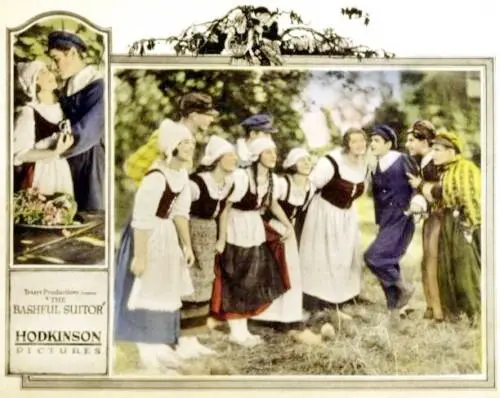
At a scant 22 minutes, the film compresses seasons: flax harvest, frostbite dawn, Maypole dusk. The ellipses feel like pages torn from a diary, inviting us to scribble marginalia. Compare the temporal sprawl of After the Bawl—twice the length, half the resonance.
Repeatedly, Maude positions courtship at thresholds—half in parlor gloom, half in pastoral blaze. The doorjamb becomes a moral seesaw: exit to innocence, enter to judgment. Only when the lovers finally stride together across an open field does the camera abandon architectural confinement. Their shared horizon eclipses the domestic claustrophobia that defines Mirandy Smiles.
Modern viewers will flinch at the summary justice, the child’s removal, the dog’s death. Yet the film’s moral arc bends toward restitution, however patriarchal. The carter’s confession arrives via public shaming rather than institutional reform—echoing the kangaroo courts in The Governor’s Ghost, but with less supernatural acquittal and more human accountability.
Only two 35 mm prints circulate: one in EYE Filmmuseum, one in MoMA’s vault. A 2K scan surfaced briefly on Criterion Channel but was pulled over rights confusion. Bootlegs float among silent-film forums, yet none reproduce the amber-blue tinting scheme. Hold out for official restoration; anything less is visual gossip.
Great cinema is a thimble: small, utilitarian, yet capable of holding a universe of pricked fingertips. The Bashful Suitor fits that definition with millimetric grace. Watch it, then stand before Israels’s canvas; you’ll swear the painted boy’s ears redden under your gaze, proof that some loves refuse to stay silent—even in oils.
Verdict: 9.2/10 — a pocket-sized pastoral that out-breathes most epics. Bring tissues; the dog dies, but art lives.
IMDb —
1921
Community
Log in to comment.