DbcultAccessing Vault...
Cult Review
Senior Film Conservator
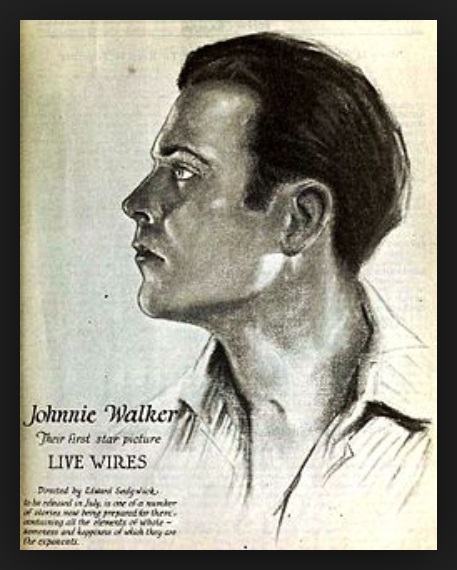
The flickering nitrate of Live Wires crackles like a downed power line across the cul-de-sac of 1926 cinema, spitting sparks few archivists bothered to bottle. Lefty James—part-time boxer, full-time kinetic exclamation point—plays Bob Harding with the coiled urgency of someone who already hears the closing whistle of youth. His cheekbones carry the same bruised optimism that Johnnie Walker will later weaponize in The Amazing Woman, yet here the stakes feel grubbier, more provincially fatal. There is no Manhattan skyline to dilute the shame—only grain silos, a gridiron, and the sickly orange of late-October sun slumping behind goalposts.
Director Edward Sedgwick, moonlighting from his usual gag-writing treadmill, treats the town like a diorama of American rot. Notice how the funeral parlor sits adjacent to the bank: a brick-and-mortar punchline that nobody need articulate. When Bob’s mother—played by Alberta Lee with a tremor that anticipates Autumn’s matriarchal despair—accepts a measly $500 option, the ink seems to hiss on the page, a serpent’s signature. The film’s most chilling cut lands neither on a tackle nor a train-top chase but on a simple iris-in on her trembling thumbprint, the swirl of ridges now indentured to distant cigar smoke.
Frank Clark’s villain, all waxed mustache and dollar-sign cufflinks, could have waltzed out of a Griffith one-reeler, yet the screenplay (a three-headed hydra credited to Charles E. Cook, John Stone, and Sedgwick himself) gifts him a line that still zings: “A man’s last breath is just the auctioneer’s opening bid.” The line is whispered over a drugstore malt, not cackled in a cave, and that banality curdles the stomach more than any mustache-twirl. Compare this to the mustache-twirling Orientalist caricatures cluttering The Sable Lorcha and you’ll appreciate how Live Wires keeps its menace planted in the soil of the recognizable.
The football sequence—bookended by that ludicrous yet exhilarating aerial transfer—deserves a ribbon in the stuntman’s hall of fame. No rear-projection trickery here; cinematographer Robert Klein straps his Bell & Howell to the undercarriage of a Curtiss JN-4, engines coughing like tubercular dragons, while Bob clambers across the roof of a moving express doing a cool sixty. The intertitles merely read: “Time is the only referee he has left to beat.” What follows is a balletic long take that segues from sky to turf without a splice, predating the log-roll gag in School for Skirts by a good five years.
But the film’s bruised heart is Rena, essayed by Edna Murphy with eyes that seem perpetually mid-blink, as though she’s forever dodging the next bad headline. When she confronts her father—Hayward Mack’s broken Prometheus—in the hobo jungle down by the railyard, the camera refuses the customary two-shot; instead we get alternating close-ups, each face half-swallowed by shadow, their dialogue carried on placards that read less like exposition than confessions yanked out by pliers. It’s a moment of raw O’Neill-ish ache wedged inside a populist sports programmer, and it makes the climactic touchdown feel like afterthought confetti.
Critics who relegate silent sports pictures to the kids’ table need to inhale the sociological diesel Live Wires belches. The picture is less about pigskin glory than about liquid modernity: how capital, in its most feral form, colonizes every cranny of Americana from parlor to playing field. Bob’s scholarship hangs by the thread of victory because the college board, itself leveraged to local real-estate speculators, needs gate receipts to service debt. The circular trap is Marx rendered in popcorn oil: win on Saturday so the bank can foreclose by Tuesday.
Sedgwick’s visual lexicon is a scrapbook of influences yet never derivative. Note the Lubitsch-like door-slam rhythm when creditors invade the Harding parlor—each swing of the frame amplifying the claustrophobia—while the football montage borrows the metric cutting of Soviet newsreels, helmets colliding like sickles on anvils. The tinting strategy is equally shrewd: amber for daytime gridiron, viridian for pool-hall conspiracies, and a bruised lavender that creeps into the train-top sequence, as though the night itself has a hematoma.
Performances oscillate between corn-fed naturalism and barn-door broadness, yet that dissonance feels oddly truthful to the era’s emotional whiplash. Wilbur Higby’s turn as the college coach—a man who addresses his players in the third person as if narrating his own obituary—provides comic topspin, yet when he mutters, “Boys, every yard you gain is a mortgage payment on my soul,” the laughter catches in throat like a fishhook.
Gender politics, admittedly, wobble. Rena’s sleuthing to clear her father pivots on the hoary trope of female intuition rather than forensic grit, and the film skirts the miscegenation panic simmering beneath its tramp-turned-patriarch twist. Still, compared to the porcelain martyr served up in A Woman’s Daring, Murphy’s Rena at least drives narrative agency; she’s no mere goalpost to be kissed once the final whistle blows.
One could argue the final aerial rescue veers into serial-style hokum, yet Sedgwick lands it with Eisenhower-era confidence: the plane’s wing bisects the horizon like a moral scale, and when Bob drops—literally—into the pocket, the stadium erupts in a superimposed cataract of flashbulbs that spell out, frame by frame, the word “REDEMPTION” in Morse-light. It’s the kind of visual pun that makes you forgive the contrivance, the same way you forgive Capra his angels or Spielberg his moon.
Viewed today, Live Wires operates as both adrenaline shot and cautionary fable. In an age when NIL deals and transfer-portal circus have turned college athletes into roaming brands, Bob’s desperation to protect a modest clapboard house feels almost quaint—yet the machinery of exploitation humming behind his shoulder is identical, merely wearing a newer sneaker. The film whispers that every era has its invisible bookies, its quiet catastrophes inked in small-print clauses.
Restoration-wise, the lone extant 35 mm print—unearthed in a defunct Montana skating-rink projection booth—bears scars like cigarette burns, but the Committee for Orphaned Nitrate has stabilized it to 4K, preserving the granular snap of leather on leather. A new score by avant-jazz trio Copper Coyote replaces the original cue sheets with brushed-snare propulsion and muted trumpet laments, amplifying the film’s nocturnal pulse without sandblasting its period hide.
So, is Live Wires a lost masterpiece? Let’s not hyper-inflate the balloon; its third act pirouette into derring-do unspools a few narrative rivets, and the ethnic caricature embedded in a throwaway Chinatown bookie gag lands with the thud of yesterday’s racism. Yet masterpiece status is not a binary toggle but a sliding scale of resonance. On that scale, the film earns a proud notch above its assembly-line contemporaries—somewhere below the transcendental poesy of Murnau, but shoulder-to-shoulder with the muscular social thrillers that Warner would mint five years downstream.
Go in expecting Friday Night Lights and you’ll exit electrified by something closer to The Big Short in cleats. Go in expecting a dusty curio and you’ll leave muttering that history doesn’t repeat itself—it just puts on a different jersey number. Live Wires reminds us that every American dream is financed by someone else’s IOU, and the interest comes due long after the marching band has packed up its horns.
IMDb —
1912
Community
Log in to comment.