DbcultAccessing Vault...
Cult Review
Senior Film Conservator
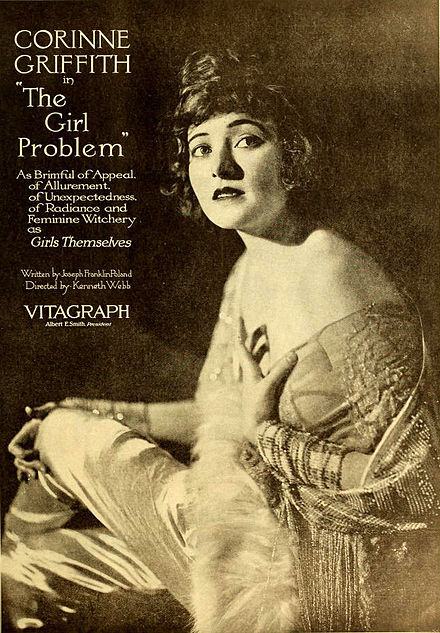
In the grand tapestry of early American cinema, few films capture the liminal space between the Victorian moral hangover and the burgeoning Jazz Age quite like The Girl Problem (1919). Directed by Kenneth Webb and produced under the venerable Vitagraph banner, this film is far more than a mere romantic trifle; it is a sophisticated, if occasionally melodramatic, interrogation of the male gaze and the commodification of the 'New Woman.' The narrative centers on Erminie Foster, portrayed with a luminous intelligence by Agnes Ayres, a woman who defies the narrow categorization of her era by operating as both a visual object (a model) and a creative subject (a writer).
The film’s brilliance lies in its recursive nature. We are watching a film about a writer watching a writer watch a model. This hall of mirrors begins when Ernest Sanford (Harold Foshay) attempts to 'study' Erminie as a specimen of the modern flapper. Unlike the protagonists in The Social Buccaneer, who often navigate class through sheer bravado, Erminie navigates her world through intellectual agility. The irony, of course, is that Sanford—the self-proclaimed expert on the feminine psyche—is utterly blind to the creative powerhouse standing right in front of him.
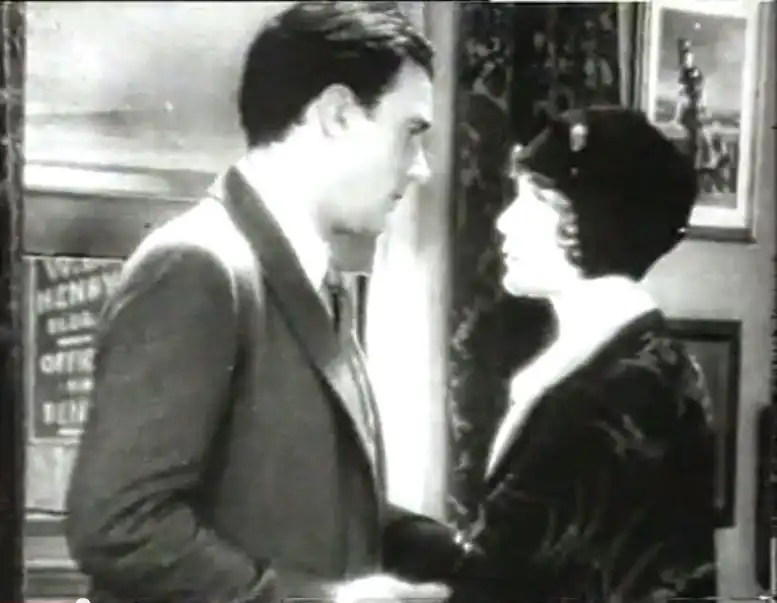
Agnes Ayres, perhaps best remembered for her later work opposite Valentino, delivers a performance here that is remarkably modern. In an era often criticized for histrionic gestures, Ayres employs a nuanced facial vocabulary to convey Erminie’s internal monologue. When she is being inspected by Sanford in the display room, her eyes betray a weary cynicism that elevates the scene from a standard meet-cute to a poignant commentary on labor and gender. This duality of identity—the public 'flapper' and the private intellectual—echoes the themes found in Die Doppelnatur, where the split self becomes a site of both conflict and liberation.
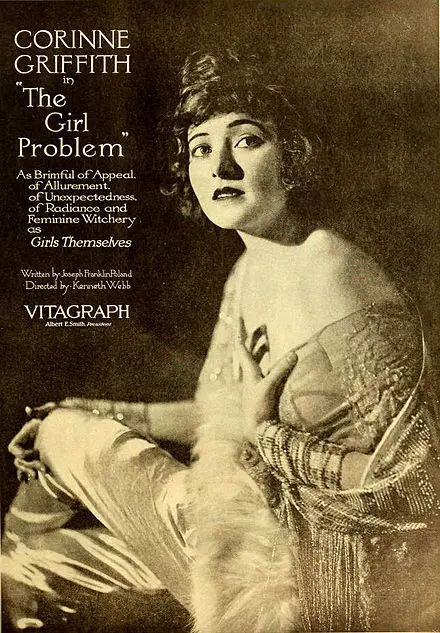
The supporting cast provides a sturdy framework for Ayres to shine. Corinne Griffith, in a smaller but vital role, brings a touch of the ethereal quality she would later become famous for, while the male leads serve as effective, if somewhat static, foils to Erminie’s dynamism. The chemistry between Ayres and Foshay is built on a foundation of intellectual friction rather than simple physical attraction, which makes the eventual romantic resolution feel earned rather than inevitable.
One of the most delicious plot points in The Girl Problem is the literary competition between Erminie and Sanford. There is a profound satisfaction in watching Sanford’s didactic satire on women fail miserably while Erminie’s sharp, observant take on the 'male problem' becomes a sensation. This narrative choice subverts the typical Pygmalion trope. Instead of the man molding the woman into an ideal, the woman outshines the man in his own arena, forcing him to reconstruct his entire worldview. It’s a thematic sibling to The Calendar Girl, which also explores the intersection of beauty and professional ambition, albeit with a different tonal focus.
The film’s critique of the 'smugly superior' male attitude is surprisingly biting for 1919. Sanford represents a specific type of patriarchal intellectualism that seeks to categorize and control women by defining them through archetypes. By the time he confesses his love, it isn't because Erminie has conformed to his 'flapper' research, but because she has utterly demolished his categories. This shift from objectification to genuine recognition is the film’s moral heart.
Technically, The Girl Problem showcases Vitagraph’s high production standards. The cinematography by Jules Cronjager (though uncredited in some records, the style is unmistakably of that school) utilizes deep focus and intricate set design to delineate the different social spheres Erminie inhabits. The contrast between the sterile, brightly lit display room where she works and the opulent, shadows-heavy interiors of the high-society reception creates a visual metaphor for her displacement. The use of intertitles is sparing, allowing the visual composition to carry the weight of the narrative—a technique that feels much more sophisticated than the exposition-heavy approach of The Unforseen.
The costume design also deserves mention. Erminie’s wardrobe transitions from the functional elegance of a working woman to the high-fashion armor required for her infiltration of the upper crust. Each outfit is a costume within a costume, reflecting her status as an undercover agent in the world of the elite. This focus on sartorial storytelling is a hallmark of the era, reminiscent of the visual richness in Vanity Fair.
The third act takes a sharp turn into the territory of the social thriller. The introduction of Monte Ralston and the incriminating letters of Helen Reeves provides the necessary catalyst for Erminie’s 'hero’s journey.' In the moral economy of 1919, a woman’s reputation was her only currency. By risking hers to save Sanford’s fiancée, Erminie performs an act of radical altruism that stands in stark contrast to the transactional nature of the society around her. This sequence is handled with a tension that rivals the stakes in Snares of Paris.
The resolution, where Helen and Monte explain Erminie's nobility to a humbled Sanford, avoids the saccharine pitfalls of many contemporary silents. Sanford’s transformation is not just romantic but ideological. He is forced to abandon his 'superior' posture, a moment of character growth that feels remarkably earned. It’s a far more satisfying conclusion than the often-contrived endings of films like Wild Youth, where character arcs are sacrificed for plot convenience.
Looking back from a century’s distance, The Girl Problem serves as a fascinating time capsule. It captures a moment when the film industry was beginning to grapple with the complexities of the modern woman. Erminie Foster is a precursor to the screwball heroines of the 1930s—women who were as fast with a quip as they were with their hearts. The film’s exploration of the 'girl problem'—which, the movie suggests, is actually a 'man problem'—remains surprisingly relevant in our current discourse regarding the male gaze in media.
While it may lack the epic scale of Il potere sovrano, its intimacy is its strength. It focuses on the small, quiet revolutions that happen in drawing rooms and display areas. It acknowledges that for a woman in 1919, the act of writing her own story was a revolutionary gesture. In this regard, the film shares a spiritual kinship with Bought, which similarly examines the price of independence in a world that prefers women to be ornamental.
In the final analysis, The Girl Problem is a testament to the creative synergy of the Vitagraph team and the burgeoning stardom of Agnes Ayres. It balances comedy, satire, and melodrama with a deftness that belies its age. For fans of silent cinema, it offers a refreshing departure from the era’s more didactic moral plays. It is a film that respects its protagonist’s intellect as much as her beauty, a rarity then and a joy to behold now. Whether you are drawn to it for its historical value, its sharp social commentary, or Ayres' captivating presence, The Girl Problem is a cinematic puzzle that is well worth solving.
As we compare it to other works like Stolen Honor or The Highest Bid, we see a clear pattern of Vitagraph’s interest in the female experience. Yet, The Girl Problem stands out for its wit. It doesn't just ask us to pity its heroine; it asks us to admire her, to laugh with her, and ultimately, to learn from her. It is a sophisticated piece of filmmaking that deserves a prominent place in the conversation about the evolution of the American narrative film.
IMDb 5.2
1928
Community
Log in to comment.