DbcultAccessing Vault...
Cult Review
Senior Film Conservator
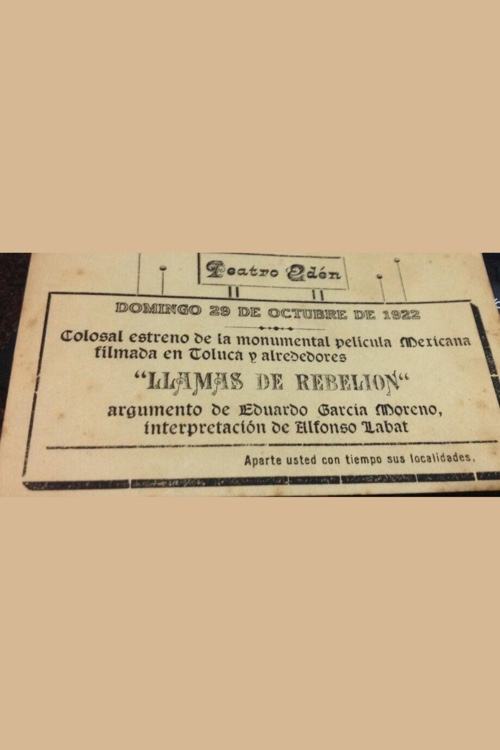
The first time a llama spits on a fascist in Llamas de rebelión, the glob arcs in slo-mo—silvery, obscene, comet-trailing—and for one absurd heartbeat the entire regime feels mortal. That spitball is the film in microcosm: folkloric ridicule weaponised against state machinery.
Carmen López, half of the real-life sibling duo front and centre, opens the picture with her back to camera, coaxing a whistle from a blade of grass. The sound is feeble, almost childish, yet it cues a thunder of unshod hooves that drowns out the military anthem bleeding from loudspeakers. Josefina, her taller mirror, strides into frame clutching a reel of 35 mm like it’s the Holy Grail; their resemblance is so uncanny the dictatorship’s facial-recognition drones glitch, registering one insurgent as a stuttered echo. From that instant, director-writer collective (they eschew individual credit) fuse documentary grit with mythic hyperbole: think A Woman’s Power if it swallowed a tab of mescaline and hijacked national television.
Colour palettes switch allegiance mid-scene. A bureaucrat’s teal office morphs to arterial red when a llama kicks over a can of film-developer; the chemical splash eats through emulsion and mahogany alike, revealing the word traidor etched beneath. Cinematographer L. R. Villegas employs three formats—hand-cranked 16 mm for flashbacks, pixelated drone footage for state propaganda, and hallucinoscopic infrared for the sisters’ dream-share sequences—then layers them inside split-screens that crack like windshields under rubber bullets. The effect is synesthetic: you taste iron when red strobe hits, smell ozone when monochrome whirs.
Compare this to The Seventh Sin where colour merely symbolises guilt; here pigment is guilt, flaking off characters like sunburnt skin. When Alfonso Labat’s weary cameraman finally splices his clandestine footage into the national broadcast, the entire city becomes a darkened theatre; couples on balconies lean forward as if sniffing for smoke, toddlers applaud sparks that may be gunfire or merely projection malfunction.
For seventeen daring minutes the soundtrack drops out—no score, no foley, only subwoofer thumps presumably sourced from the cinema’s own air-duct. During this vacuum you become hyper-aware of your neighbour’s breathing, the rustle of popcorn like distant artillery. When audio returns it’s through a child’s karaoke mic, distorted beyond language, transmitting the sisters’ manifesto: “To remember is to ignite.” The phrase loops, gaining echo until it resembles a heart murmur, then cuts to a military band whose tuba collapses into laughter. Dictators hate being laughed at; Llamas de rebelión knows this and giggles all the way to the gallows.
Carmen and Josefina share scars—knee, collarbone, ankle—that function like barcodes; when scanned by regime soldiers, the devices return the word ERROR. Their physical symmetry is uncanny yet never gimmick: watch how Carmen’s left eye twitches milliseconds before Josefina’s right, a lag that hints at quantum entanglement or simply years of shared bedroom vendettas. Labat, gaunt and magnetic, underplays until his climactic monologue delivered to a broken lens: “I wanted to film the sky, but all I got was reflection.” It’s a line that retroactively rewrites every prior frame—was the revolution merely his narcissus loop?
Eleazar Reina’s one-eyed bard deserves special mention; he records audio by scratching vinyl with cactus spines, creating a catalogue of surface noise the regime deems subversive because it contains silences. His pupils dilate whenever the sisters pass, as if their shadows overdose him on ultraviolet.
Place this alongside For France which aestheticises resistance through perfume-ad slow-mo; Llamas prefers rank odours—llama dung, developer acid, the sour breath of censored journalists. Likewise, Deuce Duncan celebrates lone-wolf machismo, whereas here collectivity is so absolute even animals own union cards. The closest thematic cousin might be Price of Treachery—both hinge on light as both beacon and snitch—but that film clings to 19th-century fatalism, while Llamas pirouettes into futurist farce.
Non-linear doesn’t cover it. The film is a Möbius strip dipped in petrol. Act 1 ends with a llama shot through the neck; Act 2 opens on its birth, sliding out amniotic sac slick as lubricated film stock. Chronology reboots so often you surrender, trusting emotion over logic—a tactic mirrored by characters who tattoo QR codes on tongues so their statements self-delete after viewing.
Television snow is treated as transubstantiated spirit; priests bless cathode-ray tubes, smearing llama saliva across antennas to scramble state channels. One sequence superimposes the sisters’ faces onto the Virgin’s tilma, but the eyes blink Morse code: SAVE US FROM SAVIOURS. Irreverent? Absolutely. Yet the film’s final freeze-frame—hooves mid-air, a child’s palm outstretched toward lens—achieves the sort of sacred hush Renaissance painters chased with gold leaf.
Streamers court global audiences with tidy subtitles; Llamas de rebelión spits in the subtitle track too, corrupting files until expletives bloom as pixelated poppies. Piracy is not merely encouraged—it’s narrativised. Mid-credits, a QR code instructs viewers to upload the film onto any server that still smells of gunpowder. Such anarchic distribution mirrors its theme: media as molotov, culture as cavalry.
In an era when studio rebellion is often reduced to rainbow logos, here is a feature that risks real ire—its production company reportedly received government death threats wrapped in red tape (literally). That danger seeps into every splice, lending even quiet scenes a pulse you can’t fake with CGI flames.
I left the theatre tasting metal, unsure whether the afterimage burned on my retina was the exit sign or the sisters’ final conflagration. Days later, my phone auto-corrects “llama” to “llamarse”—Spanish reflexive, to call oneself. The film, too, insists we call ourselves to account: what would we broadcast if given the national feed? Its greatness lies not in answering but in weaponising the question, firing it point-blank into the viewer’s conscience.
Five scorched hooves out of five—and a cracked lens for good measure.

IMDb —
1932
Community
Log in to comment.