DbcultAccessing Vault...
Cult Review
Senior Film Conservator
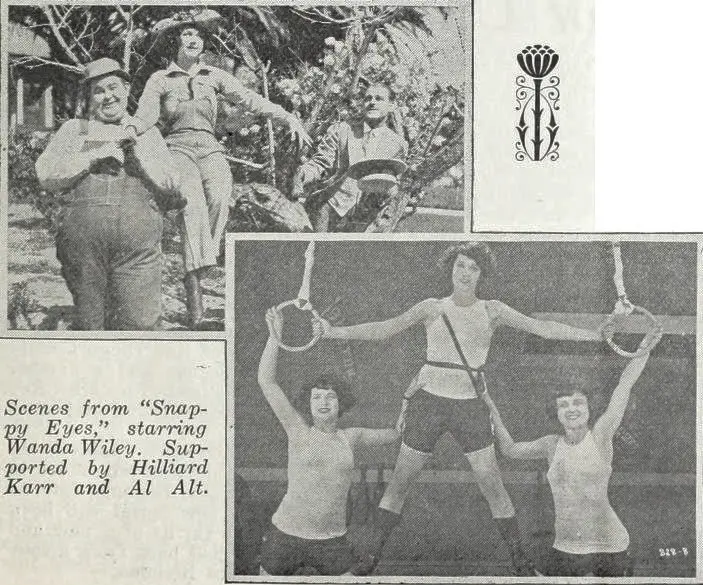
In the pantheon of silent comedy, names like Keaton, Lloyd, and Chaplin often eclipse the vibrant contributions of their female contemporaries. However, 1923’s Snappy Eyes, directed by the prolific Albert Herman, demands a reappraisal of the physical virtuosity inherent in the work of Wanda Wiley. This film is not merely a collection of gags; it is a socio-cultural document that captures the transition of the female archetype from the Victorian 'damsel' to the athletic, autonomous 'flapper.' Wiley, a performer of immense physical capability, navigates the screen with a dexterity that rivals the great slapstick masters, turning a simple tale of romantic rivalry into a visceral exploration of gender performance.
The film opens in a pastoral setting, a landscape that signifies moral purity and simplicity. Here, Wanda is established as a figure of the soil, her rural lover representing a stability that is soon threatened by the arrival of the 'city chap.' This metropolitan antagonist is a recurring trope in early 20th-century cinema, embodying the perceived decadence and duplicity of the growing urban centers. In comparing this to other works of the era, such as At Piney Ridge, we see a consistent anxiety regarding the encroachment of urban values upon rural traditions. Yet, Snappy Eyes pivots from melodrama into a high-octane comedy of manners and muscles.
The narrative fulcrum of Snappy Eyes is Wanda’s relocation to a finishing school. Historically, these institutions were designed to strip young women of their idiosyncrasies and mold them into ornaments of high society. Herman uses this setting to critique the rigid class structures of the 1920s. When the other students—played by the effervescent Century Follies Girls—attempt to haze Wanda by forcing her into a boxing ring, the film transcends its slapstick roots. The boxing ring, usually a masculine space of sanctioned violence, becomes a stage for female empowerment. Wanda’s 'finishing' of her classmates is a literal punchline to the school’s pedagogical goals.
This sequence mirrors the athletic comedy found in A Champion Loser, where the ring serves as a crucible for character development. In Snappy Eyes, the boxing match is the film’s most sophisticated set-piece. The choreography is precise, utilizing the frame’s depth to showcase the chaotic energy of the Century Follies Girls against Wiley’s focused, pugilistic grace. It is a moment of pure cinematic joy that underscores the film's title—Wanda’s eyes are indeed 'snappy,' alert to every feint and jab of a society trying to box her in.
The second act introduces a layer of moral complexity that distinguishes Snappy Eyes from more simplistic shorts like Polly Put the Kettle On. The city suitor’s pursuit of Wanda to the finishing school is framed as an elopement, a romantic escape from the constraints of her father’s authority. However, the film cleverly subverts the 'knight in shining armor' trope. The suitor is not a liberator but a deceiver. The sudden appearance of his wife provides a jarring, yet satisfying, resolution. It serves as a sharp reminder of the duplicity inherent in the metropolitan 'sophisticate,' a theme also explored in the more dramatic Moral Suicide.
This revelation is handled with a swiftness typical of the era’s editing style. There is no room for psychological rumination; the impact is immediate and visual. The wife’s arrival acts as a deus ex machina that restores the status quo while simultaneously liberating Wanda from both her father’s rigid plans and the city fellow’s false promises. It is an ending that feels modern in its cynicism toward traditional romantic structures, suggesting that perhaps Wanda is better off with her gloves on than her wedding ring.
Albert Herman’s direction in Snappy Eyes is characterized by a relentless pace. Unlike the slower, more deliberate pacing of international works like Fridericus Rex - 1. Teil: Sturm und Drang, Herman embraces the American slapstick tradition of rapid-fire action. His use of the Century Follies Girls is particularly noteworthy. They are not merely background extras; they function as a collective entity, a Greek chorus of flappers whose synchronized movements add a layer of visual rhythm to the film. This ensemble work is a precursor to the more elaborate musical numbers of the 1930s, yet here it is grounded in the grit of silent comedy.
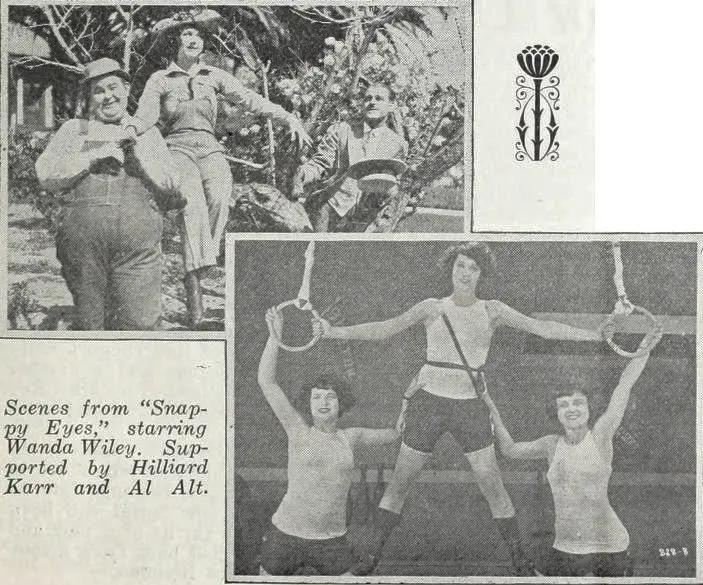
The cinematography, though limited by the technology of 1923, makes excellent use of natural light in the rural scenes, contrasting with the more shadows-heavy, interior shots of the finishing school. This visual dichotomy reinforces the film’s central theme of the divide between the natural and the artificial. One might even see echoes of the existential dread found in The Man Who Saw Tomorrow, though Herman keeps the tone firmly rooted in the comedic.
When placing Snappy Eyes alongside its peers, its unique flavor becomes evident. While Ragged Robin might lean more into the sentimental, and Channing of the Northwest focuses on the rugged adventure of the frontier, Snappy Eyes finds its niche in the domestic-satirical. It shares a certain rebellious DNA with Open the Bars, particularly in its willingness to challenge established social hierarchies. The film's energy is infectious, driven by a cast that includes stalwarts like Harry McCoy and Al Alt, who provide the necessary comedic foils for Wiley’s central performance.
The inclusion of Hilliard Karr adds a layer of physical comedy that complements Wiley’s more acrobatic style. The interactions between the cast members feel improvisational, yet they are clearly the result of rigorous rehearsal. This balance between spontaneity and structure is what makes Snappy Eyes a compelling watch even a century later. It lacks the melodrama of Maddalena Ferat or the historical weight of Famous Battles of Napoleon, but it possesses a vitality that is purely cinematic.
The Century Follies Girls were a staple of early comedy, and their presence in Snappy Eyes is a testament to their versatility. Often relegated to 'eye candy' in lesser productions, here they are active participants in the film’s most physical sequences. Their role in the hazing scene is crucial; they represent the societal pressure to conform, which Wanda must literally fight through. This dynamic is a fascinating precursor to the 'mean girls' trope of modern cinema, though handled here with much more bruises and less snark. Their performance adds a layer of scale to the film, making the finishing school feel like a lived-in, albeit chaotic, environment.
In the broader context of silent film history, Snappy Eyes serves as a bridge. It moves away from the static, stage-bound comedies of the 1910s and toward the more cinematic, character-driven narratives of the mid-20s. It doesn't quite reach the operatic heights of A Sister to Salome, nor does it possess the tragic weight of Vanity's Price, but it succeeds in its primary goal: to entertain through physical excellence and social satire. It is a film that celebrates the 'snappy' resilience of its protagonist, a woman who refuses to be 'finished' by anyone’s standards but her own.
To watch Snappy Eyes today is to witness the birth of a specific kind of American humor—one that is irreverent, athletic, and deeply skeptical of authority. Wanda Wiley’s performance remains a highlight, a reminder of the physical stakes involved in early comedy. When she steps into that ring, she isn't just fighting her classmates; she is fighting the expectations of a world that wants her to be a quiet country girl or a refined city lady. She chooses instead to be a force of nature. In the end, the film's resolution—the exposure of the city fellow's duplicity—is less about the moral lesson and more about the restoration of Wanda's agency. She is the one who survives the 'finishing' school, not by changing who she is, but by proving that her rural roots gave her the strength to knock out the competition. It is a triumphant, if dusty, piece of celluloid that deserves its place in the history of the silent screen, standing alongside works like Hei de Vencer as a testament to the global language of laughter and the enduring power of a well-placed punch.
Ultimately, Snappy Eyes is a masterclass in economy. In a relatively short runtime, it establishes a world, creates a conflict, and resolves it with a flourish of physical comedy and narrative irony. It avoids the ponderousness of Nearing the End, opting instead for a brisk, breathless experience that leaves the audience, much like Wanda's opponents, slightly dazed but thoroughly impressed. For the modern viewer, it is a window into a time when cinema was still discovering its own power to subvert, to entertain, and to reflect the changing tides of a society on the move.
IMDb 7.3
1933
Community
Log in to comment.