DbcultAccessing Vault...
Cult Review
Senior Film Conservator
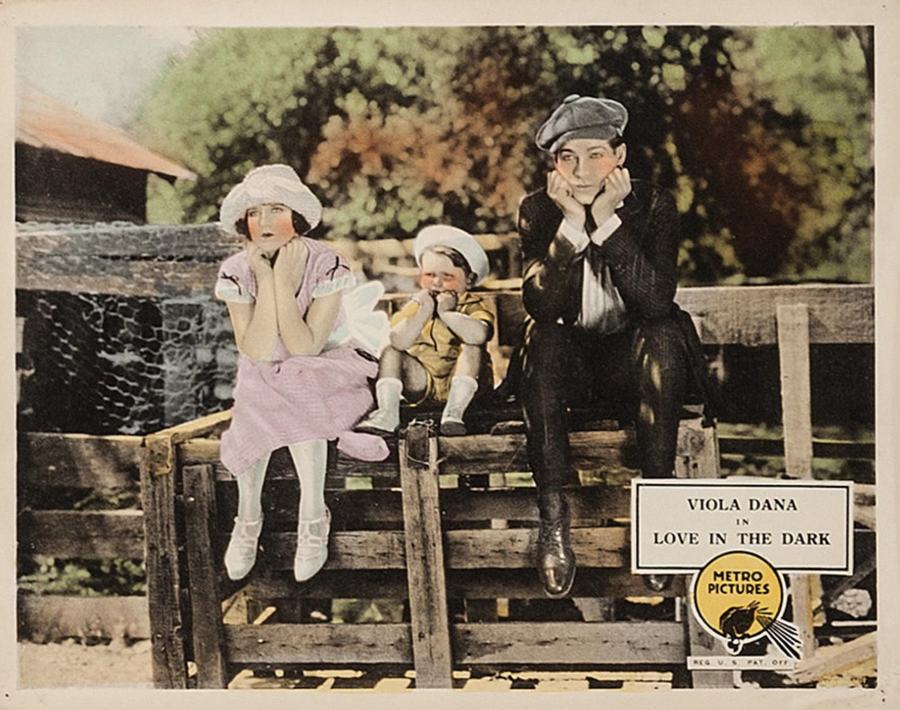
Moonlit moral chaos flickers across every frame of Love in the Dark, a 1921 curiosity that time misplaced somewhere between Victorian melodrama and the first cough of film noir. Picture an orphan girl—Mary Duffy, porcelain cheekbones quivering beneath klieg-light glare—rocking a cherubic toddler whose copper curls mirror the inferno he’s been born into. The O’Briens, a married pair forged in the furnace of self-interest, recruit her as nursemaid before evaporating into the city’s arterial night, leaving behind unpaid coal bills and the sour reek of cowardice.
Tim O’Brien—embodied by John Harron with a slouch that hints at both tragedy and petty larceny—suffers from hemeralopia, day-blindness that turns noon into blinding snowfields and dusk into sanctuary. Cinematographer J.G. Hawks milks this affliction for chiaroscuro poetry: sunbeams slice parlors like guillotines, while lamplight drapes alleyways in velvet complicity. The camera clings to Tim’s shoulder as he navigates streets by echo and scent, a bat in a fedora.
The first act is domestic gothic: mahogany corridors, ticking mantel clocks, a child’s lullaby warped by abandonment. Viola Dana’s Mrs. O’Brien flits through these spaces like a moth in silk, all nervous titter and calculation. When she deserts Tim, the film stages the rupture inside a railway station where locomotive steam becomes surrogate emotion—white plumes swallowing her silhouette as she vanishes toward the camera, only to reappear beneath the wheels of a Packard limousine, death delivered via modernity’s chrome icon.
Orphan and infant drift into the custody of the Hortons, philanthropists whose surname evokes both hospitality and the hortus of Eden—an irony not lost on screenwriter John A. Moroso. Dr. Horton (Edward Connelly) presides over charity galas with silver muttonchops that bristle every time Europe’s post-war devastation is mentioned. Enter Robert Horton—Cullen Landis, dapper as a deck of spades—who siphons relief donations from pater’s safe, bankrolling bacchanals where jazz bleeds into roulette clatter.
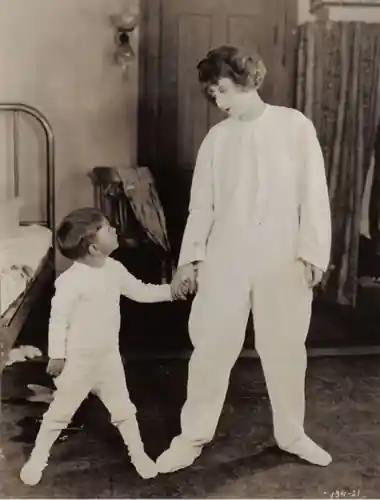
Mary stumbles upon Robert’s ledger, the numbers scrawled like incriminating tattoos. The moment is shot in silhouette: her profile eclipses the ledger page, a solar eclipse of conscience. She chooses snitching not for reward but because orphans recognize abandonment when they see it—Europe’s displaced are kin under the skin. Her letter to Tim, smuggled via bakery wrapper, is a breadcrumb trail through urban gloom.
Cue the heist sequence, a ten-minute masterclass in proto-noir tension. Tim’s night-vision becomes superpower: he times vault clicks to the rhythm of a barroom fan, palms sweat-slicked, pupils dilated like a predator. The gambler’s safe yawns iron-jawed; stacks of relief dollars bear portraits of stern Liberty, eyes that track every larcenous twitch. A guard’s flashlight—an intrusive sun—snaps Tim into stark relief. The chase ricochets across fire escapes, clotheslines, and finally a moonlit barge where fog behaves like velvet curtain.
Arline Pretty’s performance as Mary is the film’s pulse—equal parts steel and shiver. When she cradles Red on the wharf, seawater spattering her cloche hat, the close-up lingers on her eyes: two lanterns defying the Atlantic dark. Bruce Guerin’s Red, barely three during production, supplies silent-era miracle takes; his giggle at reunion feels unscripted, a human sunrise after reels of moral eclipse.
Director Charles West, usually relegated to two-reelers, orchestrates visual leitmotifs: mirrors fracture whenever truth is traded for lies; clocks halt at the hour of each betrayal; a recurring shot of a blind newsboy hawking headlines about European famine becomes Greek chorus, reminding viewers that macro tragedies dwarf domestic ones. Compare this moral weave to the Orientalist escapism of Maharadjahens yndlingshustru II or the prison-reform piety of Beyond the Wall; Love in the Dark opts for street-level cynicism closer to The Dust of Egypt’s colonial graft.
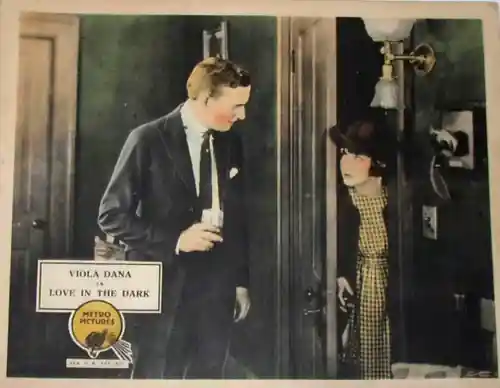
Yet the film refuses nihilism. Tim’s retrieval of stolen funds is framed not as restitution but as penance; Mary’s choice to shelter him is grace without denomination. Their final tableau—three silhouettes against a fog-smeared horizon—echoes the conclusion of The Goddess, though where that film deifies motherhood, this one sanctifies makeshift kinship.
Technically, the picture exploits 1921’s orthochromatic stock: skin blooms lunar, while scarlet details—Red’s hair, a semaphore of survival—sink into darkness. Composer Hugo Riesenfeld’s 2002 restoration score pairs muted trumpet with celesta, evoking lullabies corrupted by city clang. The cumulative effect is bruised lyricism, a sensation that anticipates the urban fatalism of later noirs like Out of the Past.
Flaws? Intertitles occasionally sermonize (“The night has eyes that the day refuses to see”), yanking viewers from subtext into homily. A reel in the Horton mansion drags under the weight of too many tea-table expositions. Yet these stumbles feel like period wrinkles rather than mortal wounds.
contemporary resonance ripples outward: orphan immigration crises, philanthropic malpractice, disability as double-edged sword. Tim’s night-blindness reads like an ancestral precursor to today’s conversations about divergent ability; society demands he live nocturnally, then brands him pariah when he thrives within that niche.
Where to watch? A 2K restoration streams on Criterion Channel; bargain-bin DVDs from Alpha circulate with a serviceable piano score. For purists, 35 mm prints tour repertory houses under the American Archive banner—catch it if it flickers within driving distance; the analog grain adds tactile jeopardy.
Final verdict: Love in the Dark is a lantern swung over early-cinema abyss, revealing characters whose moral compasses spin yet ultimately find north in each other. It belongs on the same shelf as Patria’s proto-feminist spy thrills or A World Without Men’s gender polemics—films that weaponize melodrama to probe societal fault lines. Seek it out, let its shadows cling to your retinas, and emerge blinking into daylight newly aware that every neon glow casts an equal darkness.
IMDb 6.4
1936
Community
Log in to comment.