DbcultAccessing Vault...
Cult Review
Senior Film Conservator
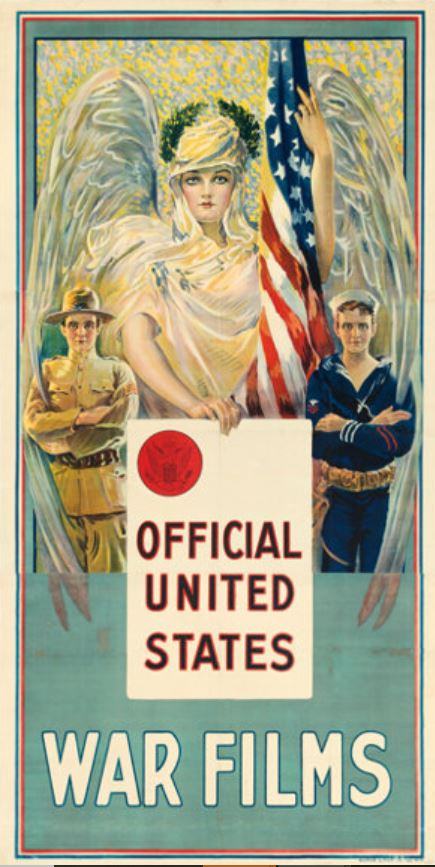
Stepping into the temporal vortex of early 20th-century cinema, one encounters productions that transcend mere entertainment, functioning instead as vital historical documents, potent instruments of national policy, and raw reflections of societal anxieties. Among these, the 'Allies' Official War Review' series stands as a particularly compelling artifact. Specifically, 'Allies' Official War Review, No. 27' is not a narrative feature in the conventional sense, nor is it a character-driven drama designed to elicit individual empathy through a crafted storyline. Rather, it is an assembly, a meticulously curated montage of actuality footage and staged scenes, woven together with the singular, overarching purpose of shaping public perception and fortifying national resolve during the Great War. To approach such a film as a critic is to engage less with artistic merit in the modern idiom and more with its profound historical resonance, its propagandistic efficacy, and its unique position within the nascent landscape of cinematic communication.
The very title, 'Official War Review,' immediately signals its authoritative intent. This was not merely a newsreel; it was a sanctioned governmental broadcast, an explicit effort to control the narrative surrounding the most devastating conflict humanity had yet witnessed. Number 27 in the series suggests a sustained, methodical campaign, a continuous stream of information and imagery designed to keep the public engaged, informed (albeit selectively), and emotionally invested in the war effort. The absence of specific cast or writers in modern credits underscores its nature as a collective endeavor, a national project rather than the vision of individual auteurs. The 'actors' are the soldiers, the civilians, the machinery of war itself, captured by anonymous, often daring, cameramen who were themselves frontline observers and participants in this grand, grim spectacle.
One can readily imagine the typical structure and content of such a review. It would likely open with a sense of urgency, perhaps a sweeping shot of troops on the march or artillery pieces being readied, immediately immersing the viewer in the gravity of the conflict. Intertitles, stark and declarative, would guide the audience through various segments, each designed to highlight a different facet of the Allied war machine or the enemy's perceived barbarity. We would undoubtedly witness the grim reality of trench life – the endless vigil, the ever-present mud, the sandbags, the barbed wire. These segments, while perhaps sanitized for public consumption, would nonetheless convey a sense of the immense physical and psychological toll exacted upon the fighting men. The ingenuity of trench construction, the camaraderie forged under duress, and the moments of grim humor would likely be interspersed with flashes of intense combat, albeit carefully framed to emphasize Allied bravery and tactical prowess.
Beyond the immediate front lines, the review would almost certainly delve into the logistical behemoth that supported the war. Images of vast supply depots, trains laden with matériel, and convoys snaking their way through devastated landscapes would underscore the industrial might and organizational genius required to sustain such a conflict. The role of women on the home front, increasingly vital as men were called to arms, would be prominently featured: women in munitions factories, on farms, driving ambulances, or nursing the wounded. These scenes were crucial for maintaining morale and demonstrating the collective national effort, reinforcing the idea that everyone had a part to play, a sacrifice to make. The contrast between the civilian world and the battlefield was a constant theme, designed to bridge the psychological gap and foster a sense of shared destiny.
The technological advancements of the war would also be a focal point. Early aviation, still in its infancy but rapidly evolving, would provide thrilling visual spectacles – biplanes soaring over battlefields, perhaps even engaging in rudimentary dogfights, presented as symbols of Allied innovation and future dominance. Naval power, particularly the formidable presence of battleships and submarines, would be showcased to project strength and control over vital sea lanes. The sheer scale of artillery bombardments, captured from a safe distance, would convey the devastating power unleashed on the enemy. These visual elements, often groundbreaking for their time, served not only to inform but also to inspire awe and a sense of national pride in the face of unprecedented destruction. The visual language, though nascent, was already adept at conveying grandeur and terror in equal measure.
Considering the broader cinematic landscape of the era, 'Allies' Official War Review, No. 27' exists in a fascinating dialogue with contemporary narrative films. While silent dramas like The Toll of Mammon or The Conscience of John David might have explored moral quandaries or personal redemption, the war review tackled the ethical landscape of an entire nation. The 'Review' presented a simplified, almost Manichaean worldview: good versus evil, Allied righteousness against Central Powers aggression. It lacked the nuanced character development of a film like The Student of Prague, but its impact was arguably more immediate and visceral, speaking directly to the collective unconscious of a populace embroiled in a life-or-death struggle. The 'Review' was less about individual conscience and more about collective duty, sacrifice, and the unwavering belief in the justice of one's cause.
The comparison to its predecessor, Allies' Official War Review, No. 1, would reveal a fascinating evolution in wartime propaganda. One can speculate that later installments, like No. 27, might have become more sophisticated in their editing, more deliberate in their messaging, and perhaps even more adept at staging 'actuality' footage to maximize emotional impact. The early reviews might have been raw reportage, while subsequent ones, learning from audience reactions and the evolving demands of the war, would have refined their techniques, becoming more polished and persuasive tools of public opinion. The progression of the series is a testament to the growing understanding of cinema's power as a mass communication medium.
The propaganda inherent in 'Allies' Official War Review, No. 27' is undeniable. It was not merely about documenting events; it was about interpreting them, framing them, and imbuing them with specific meaning. The enemy, when shown, would likely be depicted as a faceless, relentless force, or perhaps even as demoralized and defeated, always serving as a foil to the courageous and triumphant Allies. Moments of enemy surrender or captured matériel would be emphasized to demonstrate Allied superiority and the inevitability of victory. This was not journalism in the modern sense, but rather a carefully constructed narrative designed to maintain morale, justify the immense human cost, and solidify unwavering support for the war effort. The narrative was one of unwavering resolve and impending triumph, even amidst the most horrific realities. It was a crucial counter-narrative to the despair and weariness that could easily set in after years of conflict.
The impact of such films on the civilian population cannot be overstated. In an era before widespread radio or television, cinema was a powerful and novel medium for disseminating information and shaping national sentiment. Audiences would flock to picture palaces, eager for news from the front, for a glimpse of their loved ones (or men like them) in action, and for reassurance that their sacrifices were not in vain. The shared experience of watching these reviews in a darkened theater fostered a sense of collective identity and purpose. It was a communal ritual, binding the home front to the fighting front, transforming abstract casualty lists into vivid, if carefully managed, visual experiences. The emotional resonance, even if manipulated, was profoundly real.
From a technical perspective, 'Allies' Official War Review, No. 27' would showcase the limitations and nascent innovations of early cinematography. Hand-cranked cameras, often bulky and challenging to operate in the chaotic conditions of war, would have produced footage characterized by varying frame rates, occasional jitters, and a certain raw authenticity. Editing would have been rudimentary by today's standards, often relying on simple cuts and fades, with intertitles carrying much of the explanatory and emotional weight. The absence of synchronized sound meant that music, played live in theaters, would have been instrumental in setting the mood – patriotic anthems, somber marches, or rousing fanfares accompanying the visuals. This live musical accompaniment added another layer of immersive experience, transforming the silent images into a multisensory event that could be tailored to local audiences and specific moments within the film.
While the film lacks a traditional plot, its 'story' is the unfolding saga of the war itself, presented through a specific lens. It is a testament to human endurance, both on the battlefield and in the factories, hospitals, and homes. It speaks to the immense organizational capacity required for total war and the psychological mechanisms nations employ to sustain such an effort. The 'Review' also offers a poignant glimpse into a bygone era of information dissemination, where the moving image was still a relatively new and incredibly potent tool for shaping public discourse. It is a historical document whose value lies not just in what it shows, but in what it represents about the society that produced and consumed it.
The sheer volume of material required for 27 such reviews speaks to the scale of the conflict and the continuous need for public engagement. It wasn't enough to simply fight; the public had to understand *why* they were fighting, *how* they were fighting, and *what* the ultimate goal was. These films were part of a larger cultural ecosystem that included patriotic songs like 'A Long, Long Way to Tipperary,' recruitment posters, and censored newspaper reports. They all worked in concert to create a unified national narrative, fostering a sense of shared purpose that transcended individual hardships and personal losses. The collective spirit, often highlighted in these reviews, was paramount to sustaining the war effort.
Viewing 'Allies' Official War Review, No. 27' today, one must do so through a critical historical lens, recognizing its inherent biases and its role as a propaganda piece. Yet, its value remains immense. It offers a rare, contemporaneous visual record of a pivotal moment in human history, providing insights into military tactics, daily life during wartime, and the evolving relationship between media and state. It allows us to understand how nations mobilized not just their armies and industries, but also the hearts and minds of their citizens. It is a reminder of cinema's enduring power, even in its earliest forms, to influence, persuade, and shape the course of events. This review, in its stark honesty and deliberate omissions, paints a vivid picture of a world at war, seen through the eyes of those who sought to rally a continent.
The visual spectacle, even if rudimentary, would have been compelling. Imagine the awe of seeing, for the first time, footage of giant naval vessels cutting through waves, or the dizzying perspective from an early reconnaissance plane. These were images that few civilians would ever witness firsthand, bringing the distant, abstract horror of war into the local picture house. The film would serve as a powerful counterpoint to the more escapist fare of the era, offering a dose of stark reality alongside the melodramas and comedies. It was a shared national experience, a weekly dose of the war, designed to keep the conflict at the forefront of public consciousness and to reinforce the necessity of continued sacrifice. The enduring power of these reviews lies in their ability to transport us back to a time when moving images were a revolutionary force, shaping perceptions and fueling the fires of patriotism.
Ultimately, 'Allies' Official War Review, No. 27' is more than just a film; it is a cultural artifact, a historical document, and a testament to the power of early cinema as a tool for national mobilization. It is a window into the strategies of wartime communication, the realities of early 20th-century warfare, and the collective spirit of a nation united, albeit under immense duress. Its legacy is not found in dramatic plot twists or memorable characters, but in its profound contribution to the historical record and its enduring demonstration of cinema's capacity to both reflect and shape the world around it. It underscores that even in the absence of a traditional narrative, a film can convey immense meaning and exert profound influence, making it an invaluable subject for any serious student of history or film. The very existence of this extensive series speaks volumes about the strategic importance placed on visual media during a time of global upheaval.
IMDb 6.1
1927
Community
Log in to comment.