DbcultAccessing Vault...
Cult Review
Senior Film Conservator
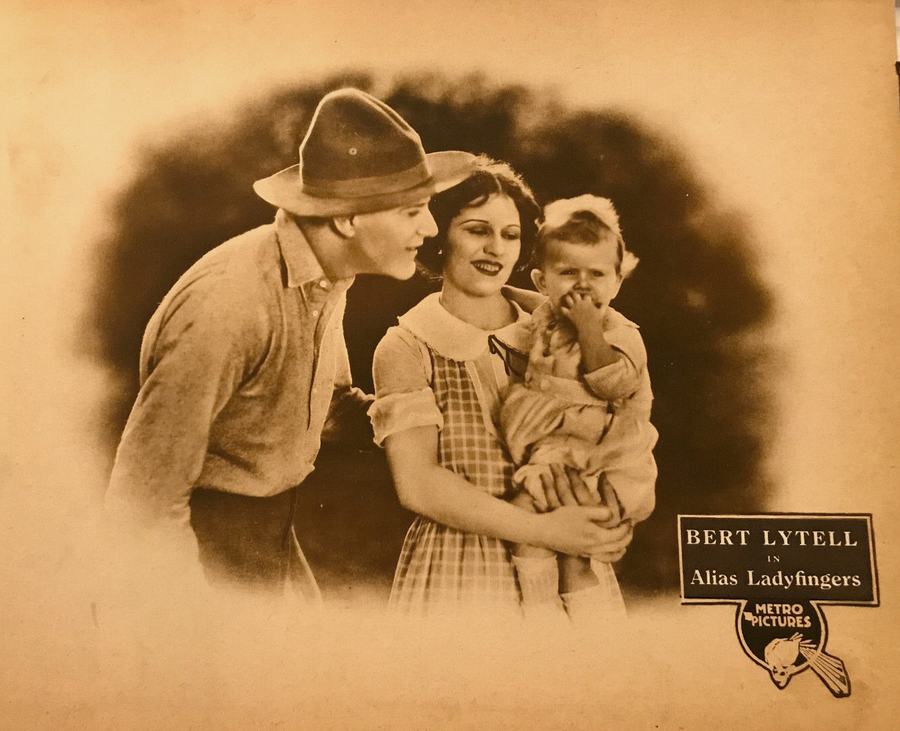
Alias Ladyfingers arrives with the calculated precision of a con artist's coin toss, casting its audience into a shadowy realm where family ties congeal into moral quicksand. This 1934 Pre-Code production, helmed by a cadre of writers including Jackson Gregory, doesn't merely traffic in crime tropes—it weaponizes them as metaphors for the psychological fissures within the Stetherill household.
The film's opening act operates like a masterclass in tonal layering. Rachel Stetherill (Ora Carew), a matriarch whose disapproval is articulated through the cold elegance of her parlor, becomes a tragic agent of chaos. Her disowning of her daughter—a woman who marries outside Rachel's social strata—sets in motion a domino effect of isolation and rebellion. The use of long takes in these early scenes creates a claustrophobic atmosphere, the camera lingering on the chandelier's fractured light as if mirroring the family's splintering unity.
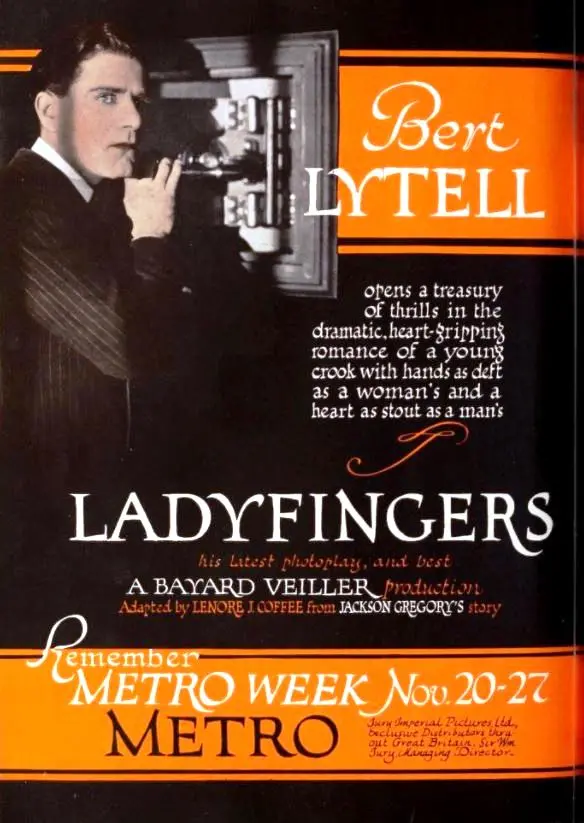
Bert Lytell's performance as the aging father is a masterstroke of restrained devastation. His character, a man who has spent decades curating an image of moral fortitude, is revealed to be a walking paradox—his disdain for his daughter's autonomy is matched only by his failure to recognize his own complicity in her marginalization. The film's most potent visual motif emerges here: a grandfather clock whose ticking becomes increasingly erratic as the narrative spirals toward its inevitable collapse.
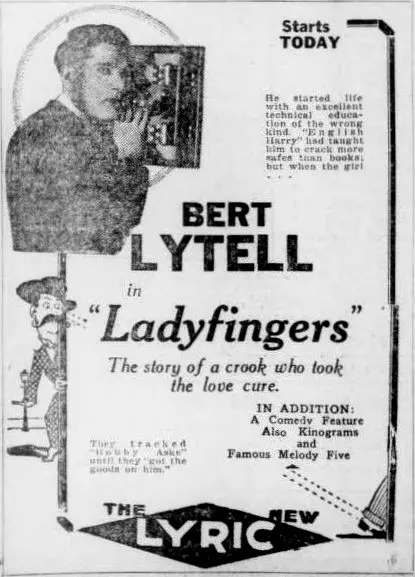
The film's middle act pivots into a darker tonality, with the widowed granddaughter's descent into criminality serving as both narrative catalyst and moral indictment. DeWitt Jennings, as the safecracker who mentors the young heir, embodies the duality of temptation—his presence is both seductive and corrosive, his guidance a double-edged sword that cuts deeper than any knife. The editing here becomes more frenetic, the camera movements more predatory, as if to mirror the protagonist's growing entanglement with a life of crime.
What elevates Alias Ladyfingers beyond its contemporaries is its unflinching exploration of generational trauma. The revelation that the infamous Ladyfingers resembles Rachel's husband is not merely a plot twist—it's a narrative exorcism. This parallel suggests that the family's moral rot has metastasized across three generations, manifesting in the criminal's doppelgänger form. The film's use of chiaroscuro lighting becomes increasingly symbolic here, with Ladyfingers' shadow often stretching across the frame like an inescapable legacy.
The Stetherill lawyer (Frank Elliott) serves as both moral compass and reluctant participant in the family's unraveling. His character's arc—from detached observer to active participant in the family's redemption—is rendered with subtle, effective nuance. His interactions with the young ward Enid (Edythe Chapman) form a subplot that interrogates the ethics of guardianship, with the film suggesting that even well-intentioned interventions can perpetuate cycles of control.
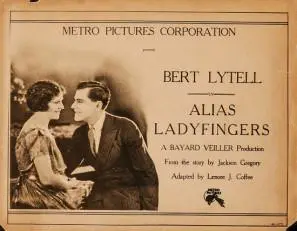
Technically, the film is a marvel of its era. The set design—particularly the Stetherill estate's cavernous drawing rooms—creates a physical manifestation of the family's emotional distance. The sound design deserves special mention: the absence of music in key scenes forces the audience to listen to the silence, to the creak of floorboards and the stifled breath of characters on the brink of revelation.
For modern viewers, the most striking element is the film's unapologetic focus on the psychological rather than the physical. Unlike the more action-driven narratives of Daddy Ambrose or the overt melodrama of The Teeth of the Tiger, Alias Ladyfingers operates in the quiet spaces between choices and consequences. The film's final act, where the criminal's identity is slowly unmasked through a series of carefully orchestrated confrontations, is a masterclass in tension-building that rivals the best of Out of the Fog.
The cast deserves particular praise. DeWitt Jennings brings a magnetic ambiguity to his role, his performance oscillating between charming mentor and ominous manipulator. This duality is mirrored in the film's themes—crime as both escape and entrapment. Ora Caren's portrayal of Rachel is a study in controlled fury, her every gesture a calculated attempt to maintain the illusion of propriety while the rot beneath festers.
One might draw parallels to Whose Wife? in its exploration of identity, though Alias Ladyfingers delves deeper into the corrosive nature of secrecy. The film's approach to legacy is also reminiscent of The Voice of Destiny, but with a far more cynical view of redemption's possibilities.
The film's pacing is occasionally uneven in its second act, particularly in the scenes detailing the grandson's criminal education. These moments, while necessary for the narrative, occasionally veer into didacticism. However, this is more than compensated for in the final third, where the narrative tightens into a taut, inevitable conclusion that rewards attentive viewing.
Alias Ladyfingers ultimately functions as a cautionary tale about the dangers of absolutism in both personal and moral realms. The film suggests that the lines between right and wrong are not merely blurred but actively erased by the weight of inherited expectations. In its final moments, as the camera lingers on the Stetherill estate's empty halls, one is left with the uncomfortable realization that the true crime here was the failure to acknowledge that all families carry their own brand of criminality.
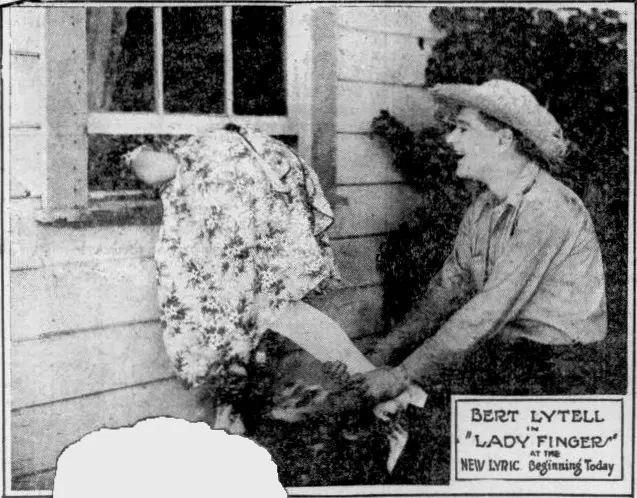
For modern audiences, this 1934 film offers a fascinating glimpse into the complexities of early 20th-century family dynamics. Its willingness to confront uncomfortable truths about power, control, and generational trauma makes it not just a product of its era but a timeless meditation on the psychological toll of rigid social structures.
The film's technical achievements—particularly in its use of shadow and light—are still impressive, though some of the dialogue feels constrained by the Hays Code's looming presence. Still, the writers manage to craft a narrative that avoids direct transgression while delivering emotional punches that would be censored in later eras.
In conclusion, Alias Ladyfingers is a masterclass in Pre-Code filmmaking that transcends its era through its psychological depth and moral complexity. It joins a distinguished lineage of films that use crime narratives as vehicles for social commentary, standing shoulder to shoulder with Ring Up the Curtain and The Trail of the Shadow in its exploration of moral ambiguity.
IMDb 6.3
1933
Community
Log in to comment.