DbcultAccessing Vault...
6.1/10
Senior Film Conservator
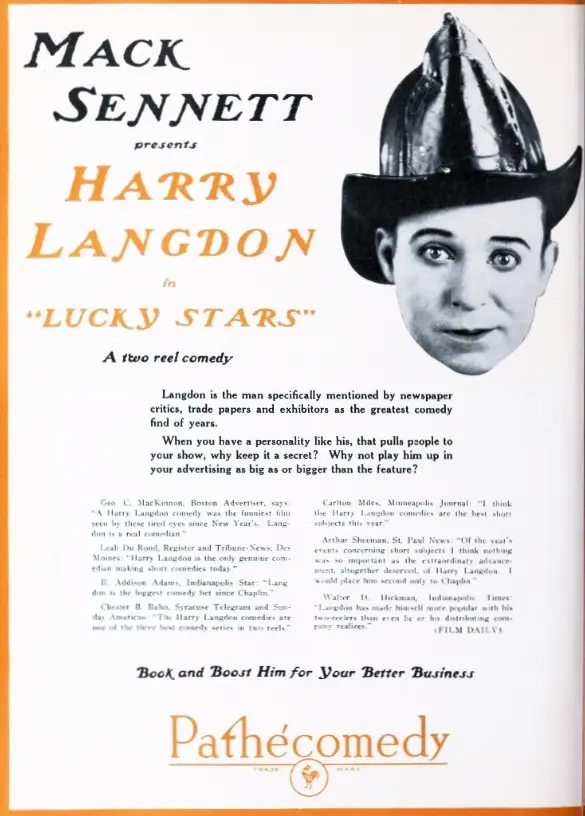
A definitive 6.1/10 rating for a film that redefined the boundaries of cult cinema. Lucky Stars remains a cornerstone of transgressive art.
Is Lucky Stars worth watching today? Short answer: yes, but only if you have the patience for a comedian who treats timing like a slow-motion car crash. This isn't the high-octane gymnastics of Buster Keaton or the sentimental choreography of Chaplin; it is something far stranger and more internal.
This film is for the cinema historian and the lover of the 'weird' who wants to see the DNA of Frank Capra before he became a household name. It is absolutely NOT for anyone who finds silent film 'boring' or expects a joke-per-minute ratio similar to modern sitcoms. You have to lean into the silence here.
1) This film works because Harry Langdon’s 'Little Elf' persona is genuinely unsettling in its innocence, creating a tension that most comedies avoid. 2) This film fails because the narrative structure is essentially a series of vignettes that don't always bridge the gap between the medicine show and Harry’s personal arc. 3) You should watch it if you want to see how Vernon Dent provides the perfect aggressive foil to Langdon’s passive-aggressive stillness.
If you are looking for a foundational piece of silent comedy that challenges the norms of the 1920s, then yes. Lucky Stars is a fascinating relic. It captures a specific moment in time where the writing of Frank Capra and Arthur Ripley collided with the most unique physical comedian of the era. It is a slow, deliberate experience. It isn't 'hilarious' in the traditional sense, but it is deeply fascinating. It works. But it’s flawed.
Langdon is an acquired taste. Unlike his contemporaries, he doesn't do much. In Lucky Stars, his character’s departure from home is played with a sincerity that borders on the pathetic. When he joins Doc Healy’s Medicine Show, he isn’t the hero; he’s the mark. There is a specific scene where Harry is tasked with assisting in a public 'cure,' and his hesitation is agonizing. He blinks. He twitches. He waits three seconds too long to react.
Critics often call this 'underplaying,' but in this film, it feels more like psychological realism. While films like The Charm School might rely on more traditional narrative beats, Lucky Stars relies entirely on Langdon’s face. He looks like a baby trapped in a man’s suit, and there is a subtle horror in that which makes the comedy feel modern. It’s the 1927 version of 'cringe' humor.
The writing team of Al Giebler, Arthur Ripley, and Frank Capra is a powerhouse of early cinema. You can see Capra’s interest in the 'common man' beginning to sprout here, though it’s filtered through Ripley’s much darker, more macabre sensibilities. The Medicine Show itself is a den of thieves, a sharp contrast to the domestic safety Harry leaves behind. This cynicism is a refreshing departure from the era’s more saccharine offerings.
Compare the gritty atmosphere of the medicine wagon to the theatricality found in M'Liss. Where that film seeks a certain frontier romanticism, Lucky Stars finds the dirt under the fingernails of the American dream. The pacing is intentionally sluggish to let the environment breathe. It’s a bold choice that pays off if you’re willing to meet the film halfway.
The camera work in Lucky Stars is functional but effective. It stays tight on Langdon. The director knows that the money is in the reaction shots. There is a moment involving Tiny Ward where the scale of the performers is used for maximum comedic effect—Harry looks positively microscopic next to the hulking Ward. This visual gag is a staple of the era, but here it feels more like a David and Goliath setup that never actually resolves into a fight.
The lighting in the exterior scenes has that distinct, overexposed quality of late-20s silents, which adds a dreamlike layer to Harry’s journey. It feels less like a real world and more like a purgatory Harry is wandering through. This is far removed from the mystery elements of The Secret of the Moor, focusing instead on the internal mystery of Harry’s own mind.
Many modern viewers struggle with Langdon because his rhythm is so counter-intuitive. In Lucky Stars, the scene where he prepares to leave home takes nearly five minutes of screen time for very little 'plot' progression. However, this is where the character is built. Every fumble with a suitcase, every hesitant look back at the door, tells us more about Harry than a page of dialogue ever could.
This deliberate pacing is a stance against the 'thrill-a-minute' style of Harold Lloyd. It’s an intellectualized form of comedy. It asks the audience to observe rather than just react. This makes it a more demanding watch than something like Mother Gooseland or the animated antics of Col. Heeza Liar, Detective. It is a film that requires your full attention to catch the micro-expressions that define the humor.
Pros: Unique comedic timing; historical significance of the writing team; excellent supporting cast including Ruth Taylor and Andy Clyde.
Cons: Extremely slow pacing; the 'medicine show' plot is a bit cliché for the era; Langdon’s character can be frustratingly passive.
Lucky Stars is a bridge between the dying world of Vaudeville and the emerging sophistication of narrative cinema. The medicine show setting is a meta-commentary on the nature of performance itself. Doc Healy, played with oily perfection by Vernon Dent, is the ultimate performer—he sells lies with a smile. Harry, the aspiring doctor, is the antithesis: he is a man of pure, albeit misguided, intentions.
This thematic depth is what separates this short from the assembly-line comedies of the time. It has more in common with the character-driven explorations found in Trilby than it does with a standard two-reeler. The film isn't afraid to be slightly depressing, which only heightens the impact of the eventual comedic payoffs.
Lucky Stars is a quiet, peculiar gem that deserves more than its current status as a footnote in Frank Capra’s filmography. While it lacks the polish of Langdon’s later features, it contains the raw, unfiltered essence of what made him a star. It is a masterclass in the power of the 'small' moment. It’s not a riot, but it is a revelation. Watch it for the craft, stay for the bizarre, haunting presence of Harry Langdon.
IMDb —
1928
Community
Log in to comment.