DbcultAccessing Vault...
7.2/10
Senior Film Conservator
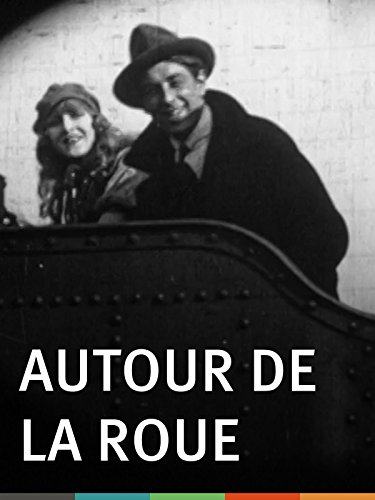
A definitive 7.2/10 rating for a film that redefined the boundaries of cult cinema. Autour de la roue remains a cornerstone of transgressive art.
To speak of Autour de la roue is to peer through a rare, precious window into the very crucible of cinematic creation, a visceral journey alongside one of the silent era's most audacious visionaries, Abel Gance. This isn't merely a 'making-of' documentary in the contemporary sense; it is a kinetic, almost poetic, artifact from a nascent art form, chronicling the Herculean efforts behind Gance’s sprawling, mythic epic, La Roue. What Blaise Cendrars captured on film is less an instructional guide and more a vibrant, living testament to the sheer will, ingenuity, and physical exertion required to push the boundaries of cinematic language in the early 1920s.
The film unfolds with an almost ethnographic precision, observing the intricate ballet between man, machine, and nature. We witness the meticulous, often perilous, technical setups that defined La Roue’s revolutionary aesthetic. Gance’s ambition knew no bounds, demanding dynamic angles and fluid camera movements that were utterly groundbreaking for their time. Cendrars’ lens, with an artist’s keen eye, doesn't just record these processes; it imbues them with a sense of awe and wonder. There’s a palpable energy emanating from the screen, a testament to the collective endeavor, the relentless pursuit of an artistic ideal against formidable logistical and environmental odds.
Abel Gance himself emerges as the magnetic epicenter of this whirlwind of activity. He is not a distant, detached director but a vibrant, almost ecstatic participant in every facet of the production. Cendrars frames him not as a taskmaster, but as a conductor, an orchestrator of movement and emotion. We see Gance, script in hand, perched precariously atop speeding trains, or navigating treacherous, snow-laden mountainsides, his gestures expansive and theatrical, as if he were literally dancing the ballet he envisioned for his actors. This visceral engagement is a revelation, offering insight into the psyche of an auteur whose commitment to his vision transcended conventional filmmaking practices. His passion is infectious, a driving force that propelled his crew through what must have been an exhausting and demanding production schedule.
The true genius of Autour de la roue lies in its ability to demystify the magic of cinema while simultaneously elevating the craft to an art form of monumental human effort. It's a rare glimpse into the logistical nightmares and creative triumphs that characterized silent film production at its most ambitious. The elaborate contraptions, the sheer number of crew members maneuvering bulky cameras and lighting equipment in unforgiving terrain, all speak to an era where technological limitations spurred unimaginable innovation. One can draw parallels to the grand-scale productions of the era, though few were captured with such intimate detail. While films like Robin Hood (1922) showcased spectacular sets and hundreds of extras, Autour de la roue reveals the raw, physical grind behind achieving such cinematic majesty, particularly when dealing with real-world environments.
Cendrars, a poet and novelist by trade, brings a unique sensibility to his behind-the-scenes footage. His artistic background undoubtedly informed his observational style, allowing him to capture not just the mechanics of filmmaking but also its inherent drama and human element. He understands the rhythm of creation, the ebb and flow of intense concentration and momentary levity. The film isn't merely a dry technical exposition; it possesses its own narrative arc, charting the arduous journey from concept to realization. It’s a testament to the fact that even in documenting a process, a skilled artist can imbue the work with its own intrinsic value and aesthetic appeal. Cendrars' presence on set, not just as a documentarian but as a creative peer, lends an authenticity and intimacy that few other 'making-of' films of the period could claim.
The film’s portrayal of Gance interacting with his actors is particularly illuminating. He doesn't just instruct; he embodies, he demonstrates, he practically becomes the emotions he seeks to elicit. This hands-on, almost physical direction style speaks volumes about the techniques employed in silent cinema, where nuanced physical expression and exaggerated gestures were paramount. The absence of spoken dialogue meant that every movement, every facial expression, had to convey layers of meaning, and Gance’s active participation in this 'ballet' underscores the intensity of that demand. It’s a fascinating counterpoint to more conventional directorial approaches, highlighting Gance’s unique position as both an artistic visionary and a performative leader.
One cannot discuss Autour de la roue without marveling at the sheer technical audacity on display. The film showcases the pioneering spirit of early cinema, where solutions had to be invented on the fly, often with limited resources. We see cameras mounted on makeshift dollies, strapped to the front of locomotives, or hoisted into perilous positions to achieve the vertiginous perspectives Gance craved. The fluidity of motion and dynamic angles that defined La Roue were not achieved through sophisticated computer-controlled rigs, but through raw human ingenuity and brute force. This aspect of the film serves as a powerful reminder of the foundational struggles and triumphs that paved the way for modern cinematic techniques.
The challenges posed by the locations themselves are staggering. The raw, untamed beauty of the snowy mountains and the relentless power of the trains become characters in their own right, demanding respect and adaptation from the film crew. Cendrars captures the struggle against the elements—the biting cold, the dizzying heights, the sheer logistical complexity of transporting equipment and personnel to remote, inaccessible sites. This environmental friction adds another layer of drama to the filmmaking process, demonstrating that the creation of art often involves a profound engagement with the physical world. It makes one appreciate the final product of La Roue not just as a narrative, but as a triumph over formidable practical obstacles.
Comparing this to films shot predominantly in studios, such as many contemporary dramas or comedies, the contrast in production demands is stark. While a film like The Idle Rich (1921) might have focused on intricate interior sets and character interactions, La Roue, as documented by Autour de la roue, was a battle against the elements, a testament to location shooting at its most extreme. This distinction highlights the diverse ambitions within silent cinema, from intimate character studies to epic spectacles that leveraged the grandeur of natural landscapes.
Beyond the technical wizardry and the directorial prowess, Autour de la roue is fundamentally about the human spirit. It’s a portrait of dedication, collaboration, and the shared pursuit of an artistic vision. We see the faces of the crew, often bundled against the cold, working tirelessly, their exhaustion tempered by an evident pride in their contribution. These are the unsung heroes of cinema, whose efforts often remain invisible in the final cut. Cendrars’ film restores some of that visibility, acknowledging the collective labor that underpins every frame of a cinematic masterpiece. It reminds us that even the most singular artistic vision requires a multitude of hands and minds to bring it to fruition.
The significance of Autour de la roue extends beyond its immediate subject matter. It serves as an invaluable historical document, offering unparalleled insight into the production methods, challenges, and aspirations of silent cinema. For film scholars and enthusiasts alike, it provides a tactile connection to an era often romanticized but rarely seen in such raw, unvarnished detail. It underscores the innovative spirit that characterized the early decades of film, a period of relentless experimentation and groundbreaking discoveries that laid the foundation for everything that followed.
It’s fascinating to consider how this kind of documentation compares to the polished, often promotional 'making-of' features of today. Cendrars’ work feels more organic, less curated, allowing for a more authentic glimpse into the creative chaos. It’s a stark contrast to the highly controlled narratives often presented in modern bonus features, offering a refreshing sense of immediacy and truth. This raw authenticity is part of its enduring appeal, positioning it not just as supplementary material, but as a significant work of film history in its own right.
In conclusion, Autour de la roue is far more than a simple chronicle of a film's production; it is a profound meditation on the nature of artistic creation itself. It captures the essence of a visionary director, Abel Gance, pushing the boundaries of his medium, and the dedicated team who helped him realize his monumental dream. Blaise Cendrars, with his poetic sensibility and keen observational eye, has crafted a document that is both historically invaluable and aesthetically compelling. It pulsates with the energy of a nascent art form finding its voice, demonstrating the sheer will and ingenuity required to forge cinematic magic from raw materials and an audacious imagination.
Watching Autour de la roue today, one is struck by the timelessness of the creative struggle. The challenges of logistics, the demands of vision, the collaborative spirit—these elements remain central to filmmaking, regardless of technological advancements. The film offers a powerful reminder that at the heart of every great cinematic work lies not just a story, but a profound human endeavor, a testament to the enduring power of art to inspire, to challenge, and to transcend its own making.
The film's visual language, even in its documentary capacity, mirrors the dynamism Gance sought in La Roue. There are moments of breathtaking scale, intimate close-ups of Gance's determined face, and sweeping shots that convey the grandeur of the locations. Cendrars, perhaps unconsciously, adopted some of Gance's own cinematic vocabulary, creating a 'making-of' that is itself a work of art. It stands as a vital piece of film history, illuminating not just La Roue, but the entire ambitious spirit of the silent film era. It is a must-see for anyone interested in the evolution of cinema, a vibrant and enduring legacy of a time when every frame was a battle hard-won, and every innovation a step into the unknown.
The sheer scale of the undertaking documented here, especially for a film of its time, is almost unfathomable. It's a testament to the boundless ambition that characterized some of the greatest artists of the silent era. While films like The Fringe of Society (1923) or Zaza (1923) might have focused on dramatic narratives and character studies, La Roue, as captured by Cendrars, was an epic engagement with technology, landscape, and human endurance. The meticulous detail in setting up shots, the sheer physical labor involved in moving bulky equipment across treacherous terrain, all underscore the Herculean effort that went into crafting Gance’s vision. This film, therefore, is not just a historical record, but a vibrant celebration of the pioneering spirit of early cinema, reminding us that true innovation often springs from immense dedication and a willingness to push beyond perceived limitations. It's a captivating portrait of a master at work, surrounded by a devoted team, all united in the pursuit of a shared, monumental artistic dream. The legacy of Autour de la roue is its unparalleled ability to transport us back to that moment of creation, allowing us to witness, firsthand, the birth of a cinematic legend.
IMDb 7.2
1935
Community
Log in to comment.