DbcultAccessing Vault...
Cult Review
Senior Film Conservator
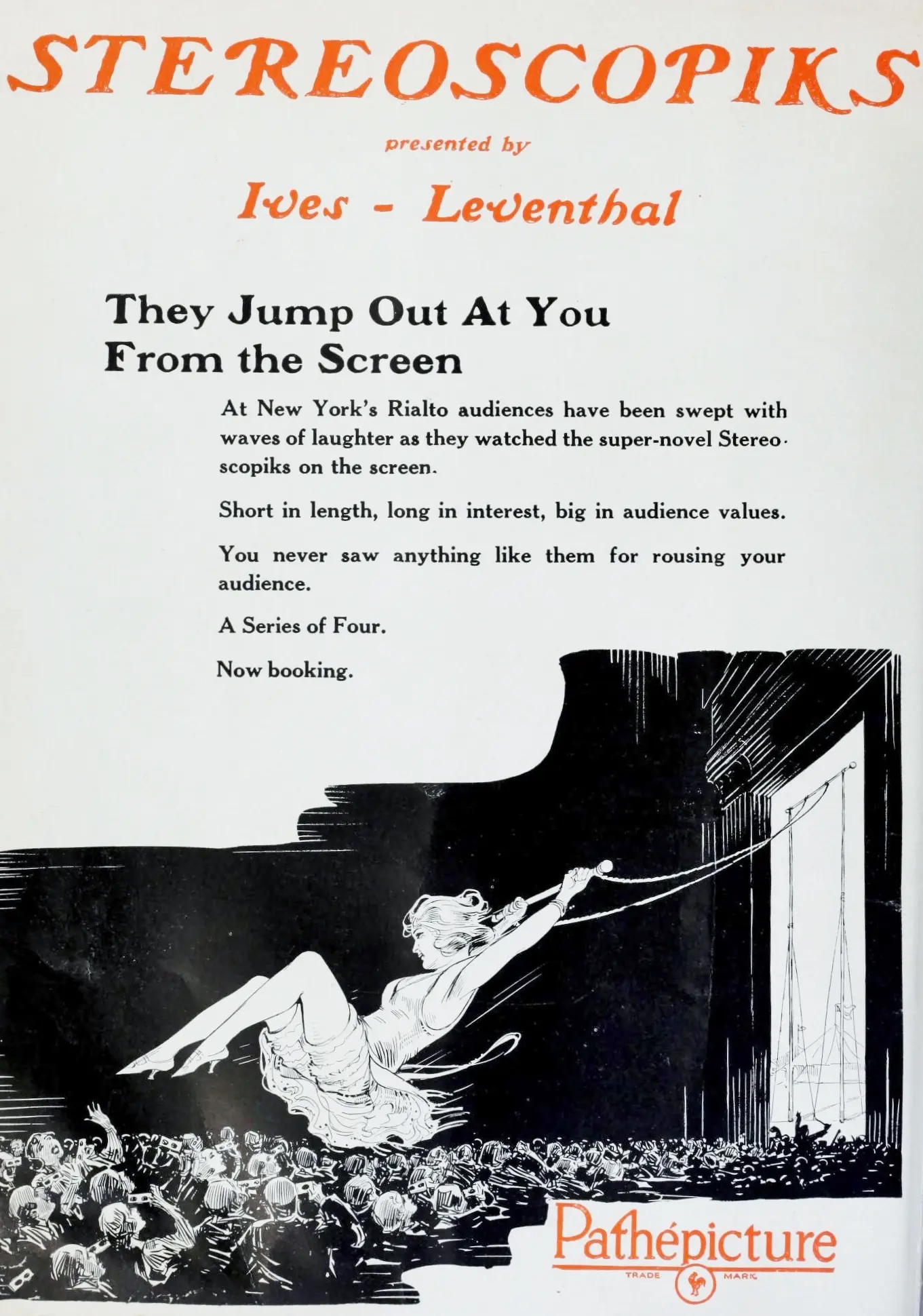
Luna-Cy! is a fascinating foray into the realm of early cinema, blending ingenuity with immersive storytelling. The film, released in the golden age of silent films, employs a technique known as 'third-dimension' that requires the audience to view it through a special set of red and green lenses. This innovative method transforms the two-dimensional screen into a seemingly three-dimensional space, a technique that was both revolutionary and somewhat ahead of its time.
The plot revolves around a series of amusement park rides and attractions, each designed to provide a thrilling and immersive experience. The roller coaster in particular is a standout, its tracks and turns appearing to come right off the screen, making the ride feel almost real. This effect is achieved through a combination of clever camera work and the third-dimension technique, creating a sense of depth and movement that is truly captivating.
Frederick Eugene Ives, a notable figure in early film technology, is credited with the development of this technique. His involvement adds a layer of historical significance to the film, as it represents a moment of technological advancement in the art of filmmaking. The narrative, while not as complex as some of his contemporaries, is nonetheless effective in creating a sense of wonder and excitement for the audience.
The use of amusement park rides and attractions as the central theme of the film is particularly appropriate. These rides, with their loops, drops, and twists, are designed to provide an adrenaline rush and a sense of adventure. In Luna-Cy!, the rides are not just depicted; they are almost experienced, making the viewing a thrilling adventure in itself. The film does a commendable job of conveying the excitement and fear that come with these rides, making the audience feel as if they are right there with the characters.
The film's effectiveness lies in its ability to create a sense of immediacy and presence. The third-dimension technique, when combined with the thrilling narrative, creates an experience that is both immersive and engaging. The roller coaster scenes, in particular, are a testament to the film's ingenuity, as the tracks and turns appear to move and shift in a way that is almost disorienting. This effect is heightened by the use of the red and green lenses, which enhance the sense of depth and movement.
Comparing Luna-Cy! to other early films, such as 'The Victory of Virtue' or 'The Summer Girl,' it becomes clear that this film stands out due to its innovative use of technology. While these films may have been notable for their narratives and performances, Luna-Cy! is unique in its ability to create a sense of presence and immediacy. It is a film that is not just watched, but experienced, and this is a testament to the skill and creativity of its creators.
In conclusion, Luna-Cy! is a significant film in the history of early cinema. Its innovative use of the 'third-dimension' technique, combined with its thrilling narrative and immersive experience, make it a standout film in its era. It is a testament to the ingenuity and creativity of early filmmakers and a must-see for anyone interested in the history of cinema.
For more insights into early film technology and narrative, you might also want to explore films such as 'The Summer Girl,' 'Call of the Mate,' or 'The Victory of Virtue.' Each of these films offers a unique glimpse into the art and science of early cinema, making them invaluable resources for film enthusiasts and historians alike.
Enjoy the ride and immerse yourself in the world of Luna-Cy! A film that is not just a spectacle but a journey into the past.

IMDb 6.3
1935
Community
Log in to comment.