DbcultAccessing Vault...
Cult Review
Senior Film Conservator
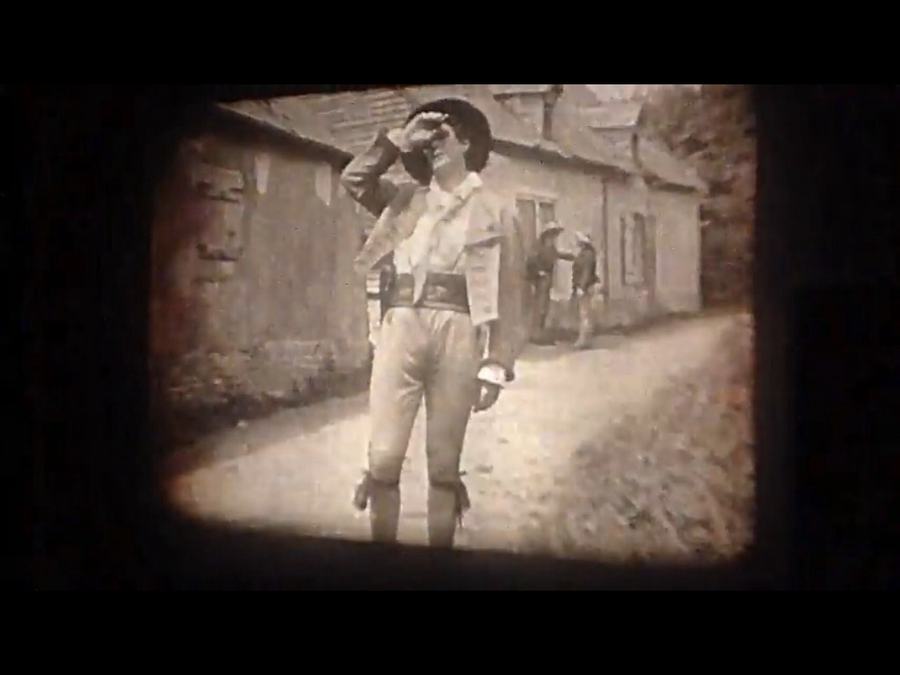
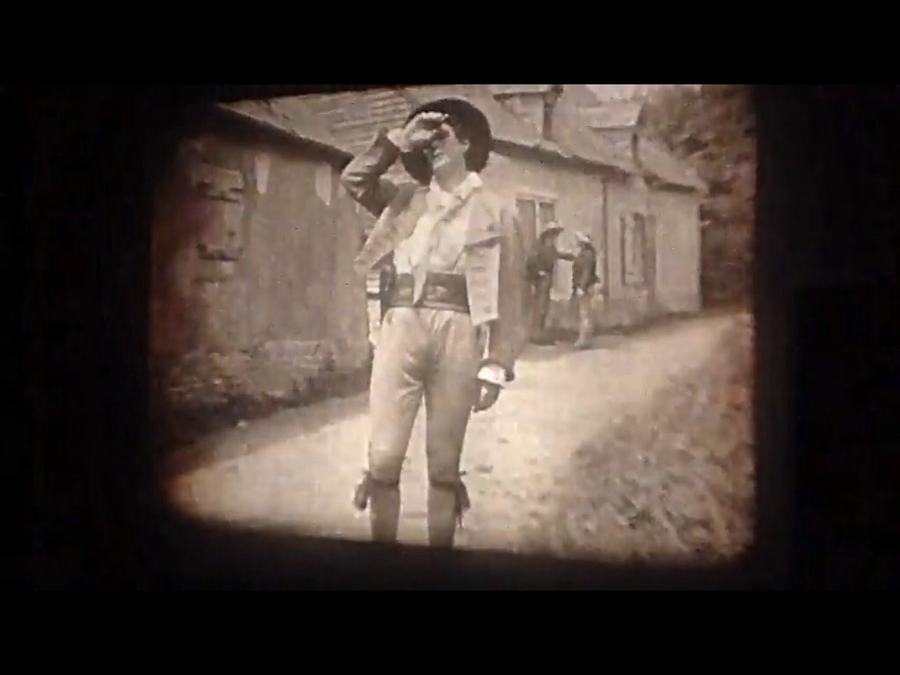
A chandelier of glass tears trembles above waltzing silhouettes; below, a gardener’s boy in borrowed velvet glances upward, measuring the social stratosphere that separates his nose from a pair of haughty, languid eyelids. That single upward glance—captured in 1908 by cameraman-cum-alchemist Cecil Mannering—ignites The Lady of Lyons, an early silent that dares to stage Bulwer-Lytton’s verbal fireworks without spoken word, without tint, without mercy.
From the first iris-in on a moon-lit balcony, the film flaunts its theatrical DNA. Painted backdrops of Lyons quiver like stage flats; footlights throw cobalt shadows across Pauline’s crinoline. Yet within these cramped confines, the narrative lunges, panther-like. A bouquet smuggled inside a lace doily becomes the Trojan horse of desire; a forged princedom, the bait; and a war, the crucible that reduces every gilded lie to slag.
Beauseant—equal parts Mephistopheles and spoiled stockbroker—slides through the tale with the oily grace of a villain who suspects he is in a comedy rather than a tragedy. His wager is delicious: turn a nobody into a prince, watch the girl who spurned him grovel, then yank the rug. The contract Claude signs, ink still wet, feels like a pact with the gaslight devil; the montage of transformation—shabby smock to ermine collar—unspools with fairy-tale velocity, yet the camera never lets us forget the seams: a borrowed glove too large, a shoe buckle that catches the light like a nervous tic.
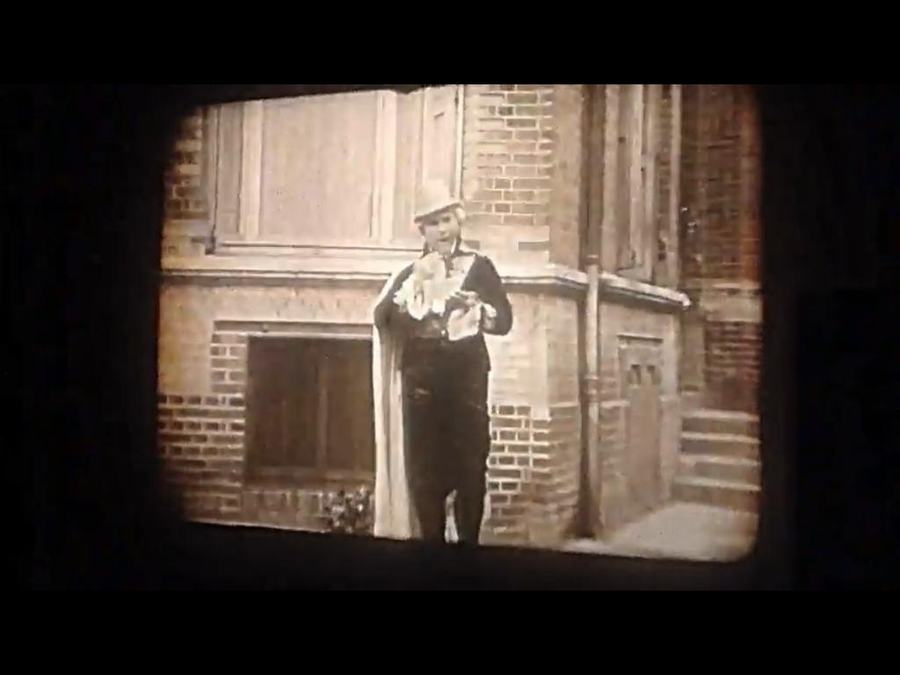
Pauline’s fall is photographed not in grand collapse but in minutiae: her fingertips grazing the rough weave of cottage curtains, the tremor of her chin when she realizes the “castle” is a two-room hovel smelling of peat and onions.
The wedding sequence—shot in a single, static long take that feels almost proto-Wellesian—overflows with ostentation: extras in Napoleonic collars, a flower girl hurling confetti like a fledgling storm. Then, smash-cut to the cottage interior: silence, a rooster’s querulous crow, Pauline’s veil repurposed as a dish-towel. The emotional whiplash is so brutal it borders on the comic, yet the actress (unbilled, like most of the cast) etches humiliation into her shoulder blades; she stands as though the corset itself were mortified.
Battlefields & Redemption
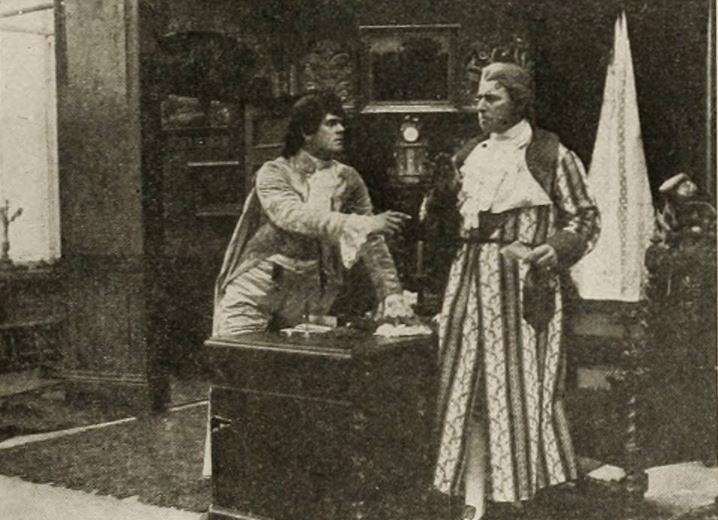
When Claude enlists, the film trades footlights for fog-shrouded battlefields painted on a continuous scroll, the camera slowly panning to suggest miles of carnage. Here the intertitles—usually florid—contract to a stark “Two Years Later.” The ellipsis is a gut-punch; we fill the blanks with mud, lice, letters never posted. His return, silhouetted against a flaming orange sunset (hand-tinted, one of the earliest surviving examples of applied color), feels less like triumph than resurrection. The ironies accumulate: the genuine prince is the pauper, the pauper the prince, and Pauline—now penniless—must finally weigh love against solvency.
The climactic interruption of Beauseant’s second wedding is staged with a brisk, almost Keystone influx of extras: soldiers clatter in, bayonets flash, the bride’s train snags on a pew. In the chaos, Pauline’s eyes seek Claude’s, and the film attains a hush so absolute you can hear the projector’s sprockets gnawing the nitrate.
Does the ending satisfy? Modern viewers, weaned on third-act ambivalence, may smirk at the tidy embrace. Yet within the moral cosmos of 1908, the restitution feels radical: not the restitution of rank but of proportion—pride humbled, love stripped to its essentials. The final tableau—lovers framed by a doorway, beyond which a real garden blooms—suggests that authenticity, not aristocracy, is the true aphrodisiac.
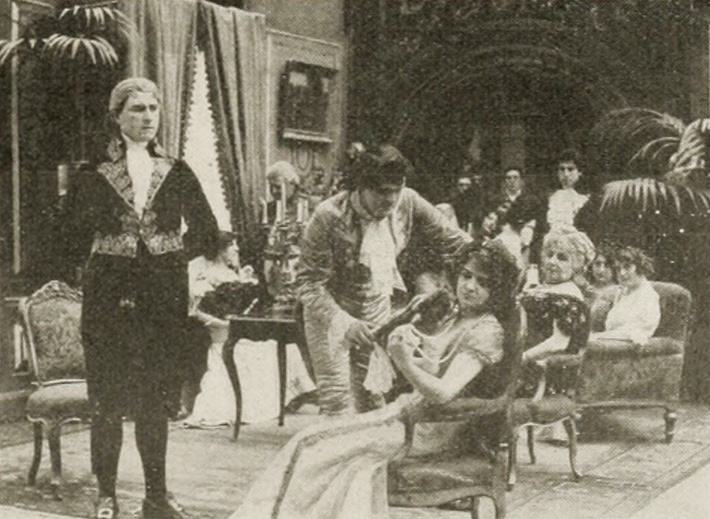
Mannering’s camera rarely moves, yet he choreographs depth via diagonal compositions: a receding corridor, a staircase spiraling into gloom. The tinting—amber for interiors, viridian for gardens, crimson for war—heightens emotional temperature without sliding into garishness. The surviving 35 mm print, housed in the BFI’s climate-controlled vaults, bears scuffs that flicker like fireflies; rather than distract, these wounds testify to the film’s passage through time, like scars on a duelist’s cheek.
Compare it to the same year’s Glacier National Park, all panoramic grandeur, and you appreciate how Lady of Lyons wrings epic feelings from parlors and potato patches.
Intertitles, set in oscillating fonts—Art-Nouveau tendrils for love scenes, stark Grotesque for declarations—function like a Greek chorus. One card, drenched in sea-blue ink, reads: “The Prince was a lie; the man remains.” Eight words that encapsulate an ethos.
Performance & Pathos
The actors declaim in the grand style, eyes rolling like marbles on a drum, yet micro-gestures sneak through: Claude’s thumb rubbing a smudge of garden soil from his palm before touching Pauline’s cheek; Pauline’s breath fogging a windowpane as she watches soldiers march. These flickers of truth, caught in the interstices of melodrama, grant the film its aching pulse.
Silent-film buffs who admire The Corbett-Fitzsimmons Fight for its raw documentary verve will find here an opposite pleasure: stylized artifice that reveals emotional verities.
And what of gender politics? Pauline’s arc pivots on humiliation-as-education, a trope modern critics rightly distrust. Yet the film grants her the final agency: she steps toward Claude, not as conquest but as collaborator in a shared penance. The closing iris-in on her hand—tanned, chafed, no longer languid—suggests labor has replaced leisure as the locus of identity.
Released months before The Count of Monte Cristo and leagues ahead of the primitive chase-films that would glut nickelodeons, The Lady of Lyons proves that 1908 could still muster narrative sophistication. Its DNA threads through later class-war romances—think Oliver Twist’s rose-lattice innocence corrupted, or Les Misérables’ Marius torn between revolution and amour.
To watch it today is to eavesdrop on the birth of cinematic heartbreak, to witness the moment when movies discovered that a gardener’s calloused palm could cradle the cosmos—if only the camera dared to linger.
Seek out the 2014 restoration on dual-format Blu-ray; the ethereal score by Gabriel Thibaudeau—piano sighing into celesta—lifts the final embrace onto a plane of aching tenderness. Dim the lamps, let the sepia wash over you, and remember: every cliché was once a revolution.
IMDb 6.3
1926
Community
Log in to comment.