DbcultAccessing Vault...
Cult Review
Senior Film Conservator
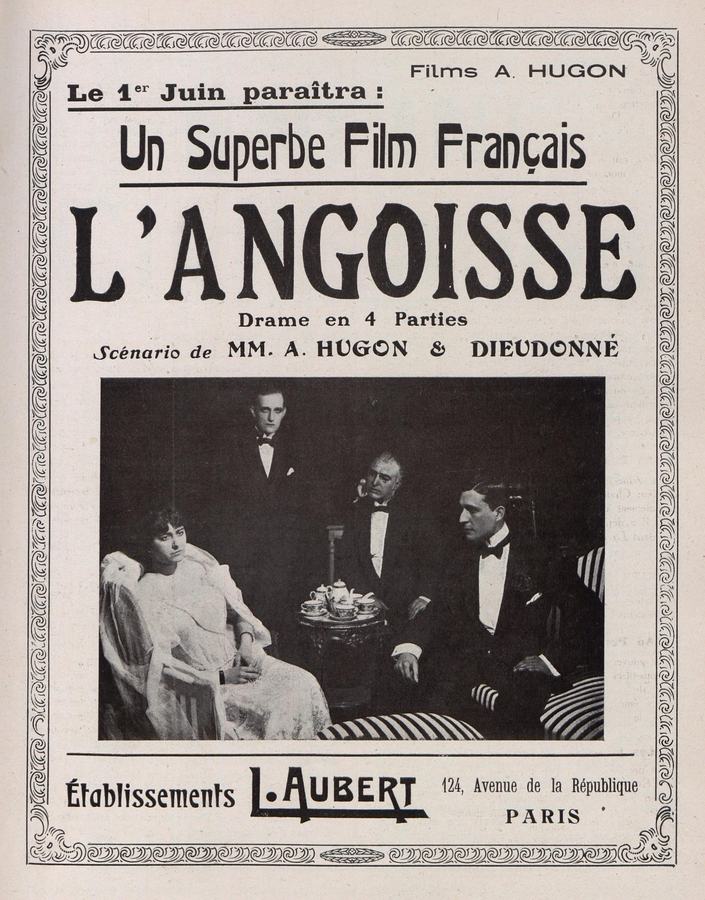
Ah, the silent era. A time when emotions were writ large across faces, conveyed through grand gestures, and amplified by the very absence of spoken dialogue. It's a period often dismissed by the casual viewer as quaint or simplistic, yet within its flickering frames lie some of cinema's most profound and visceral examinations of the human condition. And then there is a film like Angoisse, a title that, even a century later, reverberates with the promise of deep, unsettling psychological drama. This isn't just a film; it's an experience, a journey into the very heart of human despair, masterfully orchestrated by Albert Dieudonné and André Hugon.
From its very inception, Angoisse eschews the conventional melodramatic trappings for a more introspective, albeit equally intense, exploration of mental torment. The narrative centers on Jean-Luc, a character brought to life with astonishing nuance by Paul Guidé. Guidé’s performance is nothing short of a masterclass in silent film acting, conveying an entire spectrum of internal struggle with little more than a shift in his gaze, a tremor in his hand, or the subtle slump of his shoulders. Jean-Luc is introduced to us not as a villain or a hero in the traditional sense, but as a man burdened by an unseen weight, a secret that gnaws at his very core. This isn't the operatic, externalized suffering we might often associate with the period; instead, it's a slow, agonizing descent into a private hell, a psychological erosion that is both captivating and deeply disturbing to witness.
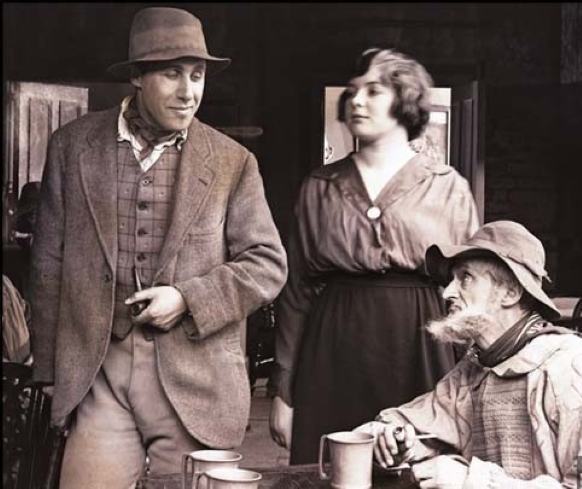
Guidé’s Jean-Luc exists in a perpetual state of unease. We are given tantalizing glimpses into his past – a tragic accident, a perceived wrongdoing – but the specifics remain tantalizingly vague, allowing the audience to project their own fears and interpretations onto his predicament. This narrative ambiguity is a stroke of genius, transforming what could have been a straightforward tale of guilt into a universal allegory for the crushing weight of conscience. His interactions with Elodie, his fiancée, portrayed by the luminous Marie-Louise Derval, are particularly heartbreaking. Derval imbues Elodie with a delicate strength, a woman caught between her unwavering love for Jean-Luc and the growing fear of losing him to an invisible enemy. Her expressive eyes convey a profound sadness, a desperate longing to understand and alleviate her beloved's suffering, even as he pushes her away. The silent language exchanged between them, a ballet of longing and despair, is more potent than any dialogue could ever hope to be.
The film’s brilliance lies in its ability to externalize Jean-Luc's internal chaos. The direction, a collaborative effort between Dieudonné and Hugon, employs a visual grammar that speaks volumes. Shadows cling to Jean-Luc like a second skin, distorting his features and mirroring the darkness within. The claustrophobic interiors, often dimly lit, emphasize his entrapment. Close-ups, used judiciously, magnify his anguish, allowing the viewer to pore over every subtle twitch, every strained muscle in his face. It’s a masterclass in visual storytelling, demonstrating a sophisticated understanding of cinematic language far beyond what one might expect from a film of its vintage. This meticulous attention to atmosphere and psychological detail elevates Angoisse beyond a simple melodrama, positioning it as an early progenitor of the psychological thriller genre.
Adding another layer of complexity to this already rich tapestry of despair is Albert Dieudonné himself, stepping in front of the camera to portray Armand, the film's insidious antagonist. Armand is not a brute, nor an overt villain; rather, he is a serpent in the garden, a manipulator who preys on Jean-Luc's vulnerability with chilling precision. Dieudonné’s portrayal is a study in understated menace. His smiles are too wide, his gestures too smooth, his eyes holding a calculating glint that belies his seemingly friendly demeanor. He represents the external forces that exacerbate internal turmoil, a catalyst for Jean-Luc's further descent. Armand's machinations are subtle, a whisper here, a knowing glance there, slowly tightening the noose around Jean-Luc's already fragile sanity. This kind of nuanced villainy, relying on psychological warfare rather than brute force, was remarkably progressive for its time and still resonates today. In a way, Armand’s quiet cruelty offers a stark contrast to the more overt villainy seen in contemporary works like The Firm of Girdlestone, where the antagonists’ intentions are often more transparently nefarious. Here, the danger is far more insidious, operating on the level of perception and psychological erosion.
The narrative's pacing is deliberate, allowing the tension to build organically. Each scene contributes to the suffocating atmosphere, each interaction pushing Jean-Luc closer to the precipice. The film avoids cheap thrills, opting instead for a slow, burning intensity that is far more impactful. The intertitles, rather than merely conveying dialogue, are often used poetically, offering glimpses into Jean-Luc's fractured mind, enhancing the sense of his internal struggle rather than simply explaining it. This thoughtful integration of text and image speaks volumes about Dieudonné and Hugon's directorial vision, treating the audience with intelligence and inviting them into Jean-Luc's subjective experience.
Beyond the individual performances and the meticulous direction, Angoisse thrives on its thematic depth. It is, at its heart, a profound meditation on guilt, paranoia, and the corrosive power of secrets. It explores how an unconfessed sin, or even the *perception* of one, can warp reality and dismantle a life from within. The film also touches upon the fragility of reputation and the ease with which a man can be undone by the whispers of others, a theme powerfully explored in other silent dramas of the era, such as The Ticket of Leave Man, which similarly dissected the societal condemnation and personal struggle of a man branded by his past. However, Angoisse pushes further into the psychological realm, making the internal torment as significant as, if not more significant than, the external judgment.
The relationship between Jean-Luc and Elodie serves as the film's emotional anchor. Her unwavering devotion, even in the face of his increasingly erratic behavior, offers a glimmer of hope, a potential path to redemption. Yet, Armand's insidious influence constantly threatens to extinguish this light, creating a thrilling tension that keeps the viewer on edge. Derval's portrayal of Elodie is crucial here; she is not a passive damsel in distress but an active participant in Jean-Luc's struggle, fighting for his soul with a quiet determination that is truly moving. Her journey mirrors his in a way, as she grapples with her own form of anguish – the pain of watching someone you love slip away, unable to reach them.
The climax of Angoisse is a breathtaking tour de force, a dramatic crescendo where all the threads of guilt, manipulation, and desperation converge. The confrontation between Jean-Luc, Elodie, and Armand is charged with an almost unbearable intensity, culminating in a revelation that is both shocking and cathartic. It’s a testament to the power of silent cinema that such a complex emotional and narrative resolution can be achieved without a single spoken word, relying solely on the actors' prodigious talent and the directors' masterful command of visual storytelling. The film's ability to sustain such a high level of emotional engagement throughout its runtime is truly remarkable, especially considering the nascent state of cinematic language at the time. While not a grand adventure on the scale of 20,000 Leagues Under the Sea, Angoisse offers its own kind of epic journey – a voyage into the uncharted territories of the human mind.
In an era where many films focused on straightforward action or broad comedy, Angoisse dared to delve into the murky waters of psychological drama. It’s a film that demands active engagement from its audience, inviting them to piece together the fragments of Jean-Luc's torment and empathize with his plight. The performances by Guidé, Derval, and Dieudonné are exceptionally strong, each contributing significantly to the film’s overall impact. Guidé, in particular, delivers a performance that transcends the limitations of the silent medium, creating a character whose suffering feels agonizingly real. His physical transformation throughout the film, from a respected artist to a haunted, broken man, is utterly convincing.
The legacy of Angoisse lies in its bold exploration of themes that would become central to cinema decades later. It’s a powerful reminder that the silent era was not merely a precursor to sound film but a vibrant, experimental period that produced works of profound artistic merit. The film’s ability to evoke such potent emotions through purely visual means is a testament to the universal language of cinema. It stands as a significant achievement in early French cinema, showcasing a sophisticated understanding of how to build suspense, develop character, and explore complex psychological states without relying on dialogue. While films like The Rack might explore the pressures of external circumstance, Angoisse meticulously dissects the internal mechanisms of self-destruction and the insidious nature of psychological manipulation. It’s a film that lingers long after the final frame, prompting introspection and a deeper appreciation for the silent art form.
For those willing to immerse themselves in its atmospheric depths, Angoisse offers a rich, rewarding experience. It’s a film that proves the power of suggestion, the eloquence of silence, and the enduring impact of a truly compelling psychological narrative. It reminds us that anguish, in its purest form, transcends language, finding its most potent expression in the unspoken agony of the human soul. This is not merely a historical curiosity; it is a vital, living piece of cinematic art that continues to resonate with its exploration of the darker corners of the human experience. It's a film that, like a haunting melody, stays with you, its echoes reverberating in the quiet spaces of your mind, compelling you to ponder the very nature of despair and resilience. A truly essential watch for anyone interested in the foundational works of psychological drama and the nuanced artistry of the silent screen.
The brilliance of Dieudonné and Hugon's collaboration is evident in every meticulously framed shot, every emotionally charged gesture. They understood that the power of cinema, particularly in its nascent form, lay in its ability to transcend literal representation and tap directly into the viewer's subconscious. The film doesn't just show us Jean-Luc's anguish; it makes us *feel* it, drawing us into his claustrophobic world of paranoia and self-doubt. This immersive quality is what truly sets Angoisse apart from many of its contemporaries. It's a film that doesn't just tell a story; it evokes a profound emotional state, a testament to the timeless power of well-crafted cinematic art. It’s a journey through the human spirit's most vulnerable states, rendered with a sensitivity and intensity that few films, even today, manage to achieve.
IMDb —
1921
Community
Log in to comment.