DbcultAccessing Vault...
Cult Review
Senior Film Conservator
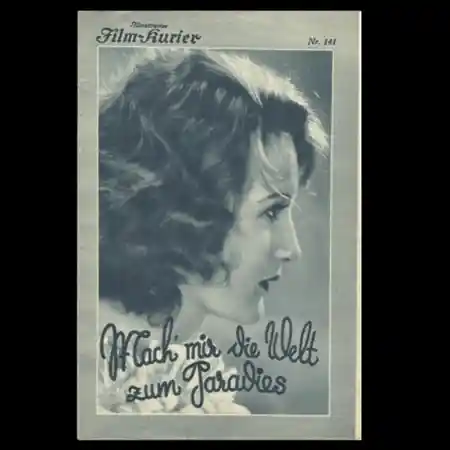
Alright, let’s talk about Mach' mir die Welt zum Paradies. If you’re someone who genuinely loves digging into film history, especially the stuff from the early 20th century, then yeah, give this a shot. It’s a quaint look at theatre dreams from a time long gone. But if you need fast pacing or big special effects, you’ll probably be checking your watch. Seriously. 🕰️
The film follows this young man, quite ambitious, who just wants to make it in the theatre world. He sees it all as this grand, almost magical journey. And you really feel that youthful enthusiasm through Rolf von Goth's performance.
There’s a scene early on where he’s just *staring* at a theatre marquee, and the camera just holds it. It’s a long shot, maybe a bit too long for today's tastes, but it kinda drills home how much this dream means to him. You can almost feel the dusty street and the gaslights. ✨
The acting style, as you’d expect from this era, is pretty expressive. Big gestures, a lot of intense gazes. Anita Dorris, playing perhaps his love interest or a fellow performer, has a particularly captivating way of just *looking* at things. It’s almost like she’s trying to communicate entire paragraphs with just her eyes. 👀
What struck me was how much the film tries to romanticize the stage. Not just the glamour, but the struggle. You see his attempts, his setbacks, and the quiet determination. It's not always smooth, you know?
There’s this one sequence, quite short actually, where the protagonist is just practicing lines in a tiny room. The light is so dim, and it’s just him, alone. It feels really *real* for a moment, not just some grand theatrical statement.
Sophie Pagay, in a smaller role as maybe a landlady or a mentor figure, brings this wonderful groundedness. She doesn't need big dramatic moments. Her presence just _feels_ authentic.
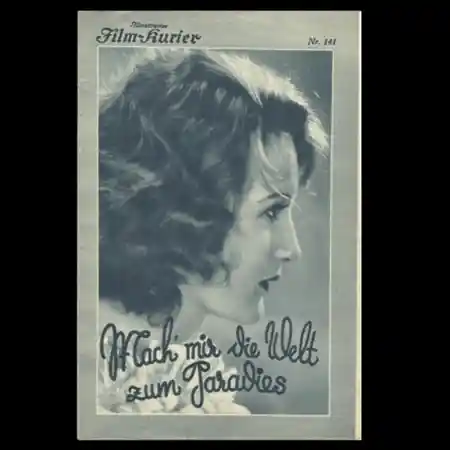
The film isn't trying to be some *big* philosophical movie about art. It’s more like a postcard from a specific time, showing a simpler ambition. The world felt bigger back then, maybe.
Sometimes, the scene transitions feel a little abrupt. Like someone just decided, "Okay, next chapter!" It adds to the feeling of it being a document of its time, rather than a polished modern production.
I found myself wondering about the actual theatres they filmed in. Were they real? Or just incredibly well-made sets for the time? That detail, just the architecture, was often more interesting than some of the longer monologues.
It’s a film that asks you to slow down. Really slow down. And if you let it, there's a certain charm to that pace. It allows you to actually *think* about what these characters are experiencing.
I wouldn’t recommend it for a casual Friday night movie. But for those quiet Sunday afternoons, maybe with a cup of tea, it finds its rhythm. It has a genuine heart, even if it feels a little rough around the edges.
Did you notice the hats? Everyone wears such great hats. 🎩 Especially the background extras. It’s a small thing, but it just adds so much to the period feel. Makes you almost want to go dig one out from an antique shop.
The ending isn’t some grand explosion of success or failure. It’s much more subtle. A quiet nod to the journey, perhaps. It feels like the director understood that life, even a dramatic one on stage, has its quiet moments too.
IMDb —
1920
Community
Log in to comment.