DbcultAccessing Vault...
4.6/10
Senior Film Conservator
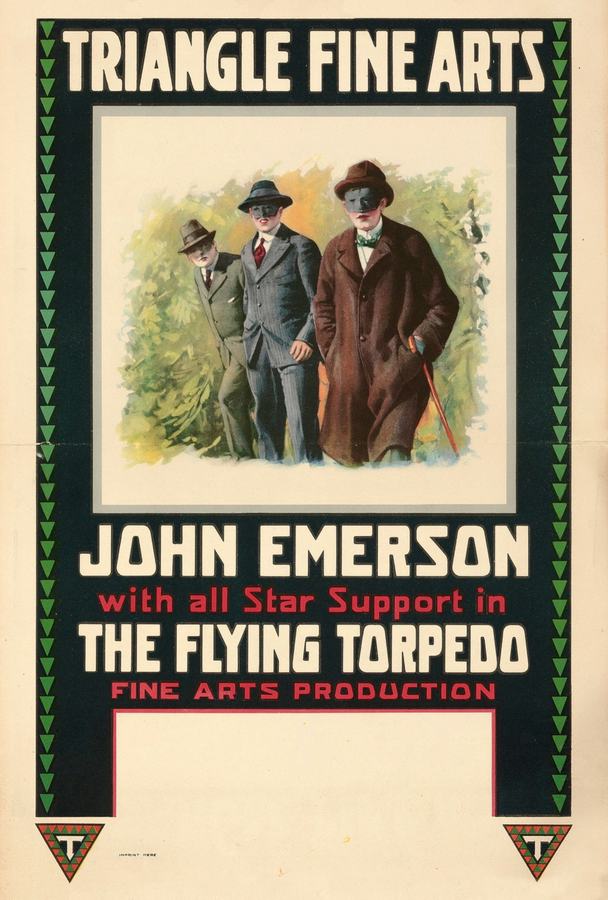
A definitive 4.6/10 rating for a film that redefined the boundaries of cult cinema. The Flying Torpedo remains a cornerstone of transgressive art.
In the annals of early silent cinema, few artifacts possess the eerie, prescient resonance of The Flying Torpedo. Released in 1916, a year when the world was already hemorrhaging from the industrial slaughter of the Great War, this John Emerson-directed and D.W. Griffith-supervised production dared to look five years into the future. It envisioned a 1921 where the United States, lulled into a false sense of security by its oceanic moats, faces an existential threat from a vague yet terrifying 'foreign alliance.' This isn't merely a film; it is a historical document of the 'Preparedness' movement, a cinematic manifestation of the anxieties that gripped a nation on the cusp of global hegemony.
The narrative engine is fueled by the partnership between Winthrop Clavering (played with a curious blend of intellectual fervor and physical urgency by W.E. Lawrence) and the venerable Bartholomew Thompson (Spottiswoode Aitken). Unlike the more conventional romantic leads found in contemporary works like The Love Trail, Clavering is presented as a writer—a creator of worlds who recognizes that the survival of the real world requires a leap of scientific imagination. Thompson, the quintessential 'mad genius' who is actually quite sane, provides the technical backbone. Their collaboration is a fascinating precursor to the military-industrial complex, where the storyteller identifies the need and the scientist provides the means.
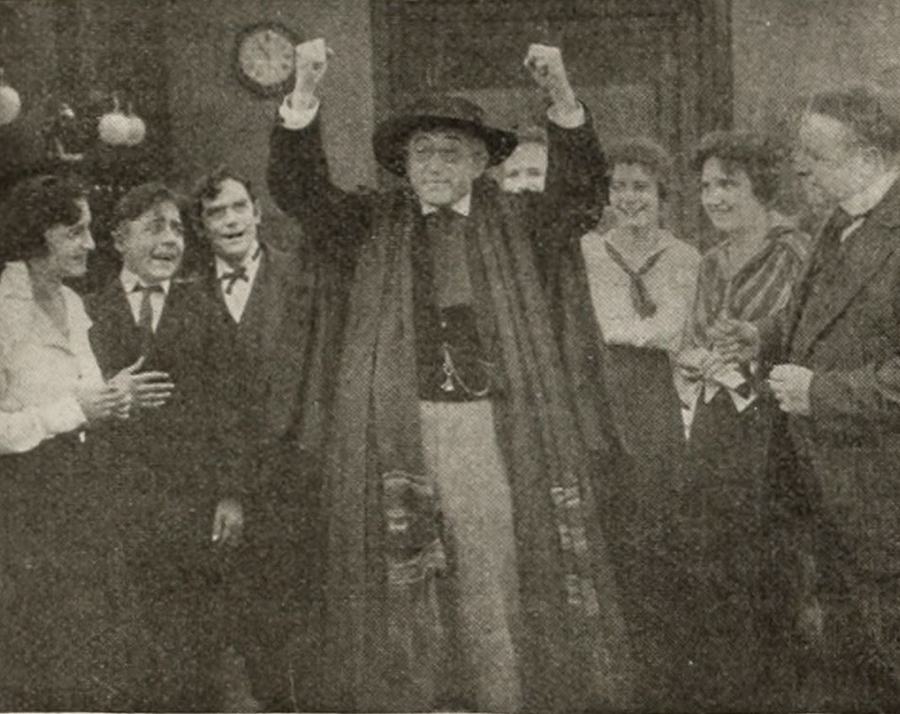
The $1,000,000 reward offered by the government serves as the MacGuffin, but the true stakes are far higher. The film masterfully builds tension through the domestic intrusion of foreign agents. These are not the bumbling villains of lesser serials like The Active Life of Dolly of the Dailies; they are cold, calculated, and deeply embedded within the social fabric. The presence of Erich von Stroheim in a minor, uncredited role as one of these agents adds a layer of historical irony, given his later career as the definitive cinematic 'Hun.'
What strikes the modern viewer most is the 'Flying Torpedo' itself. While we might chuckle at the rudimentary special effects, the conceptual leap is staggering. This is a weapon of remote destruction, a guided missile before the term existed. The film spends a significant amount of its runtime detailing the mechanics and the strategic implications of such a device. In an era where the cavalry charge was still a viable military tactic in the minds of many, The Flying Torpedo was looking toward the horizon of push-button warfare. The technical execution, supervised by Griffith, utilizes cross-cutting to heighten the suspense during the invasion sequences, a technique he was simultaneously perfecting in his more famous epics.
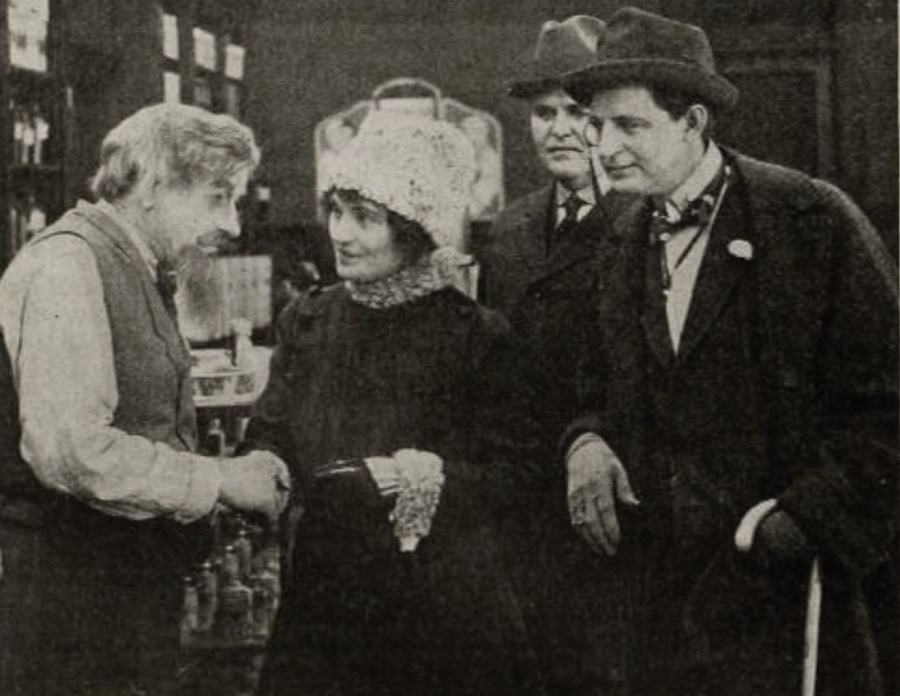
The cinematography by George W. Hill and Joseph H. August provides a stark, almost documentary-like quality to the California landscapes that stand in for the embattled American coast. The contrast between the pastoral domesticity of Thompson’s laboratory and the kinetic chaos of the enemy invasion is jarring and effective. Unlike the localized, personal dramas of A Woman's Power, this film operates on a macro-scale, attempting to visualize the fall of a civilization.
It would be remiss to ignore the blatant 'Yellow Peril' tropes that permeate the film. The 'foreign alliance' is thinly veiled, tapping into the racialized fears of the early 20th century. The invaders are depicted as a faceless, swarming mass, devoid of individual identity, which stands in sharp contrast to the highly individualized American heroes. This thematic thread is much more aggressive than the political intrigue found in An Enemy to the King. Here, the threat is not a monarch or a specific despot, but an entire race and culture portrayed as inherently predatory.
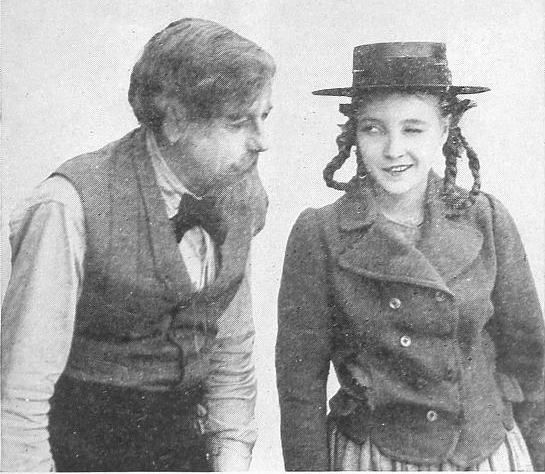
However, if one can look past the period-typical xenophobia, there is a sophisticated exploration of the cost of peace. The film argues that isolationism is a luxury that technology has rendered obsolete. The 'Flying Torpedo' is the only thing standing between the American way of life and total annihilation. This message was a direct contribution to the national debate on whether the U.S. should enter World War I. While films like Les Misérables focused on internal social injustice, The Flying Torpedo looked outward, warning that social justice is impossible without a secure border.
The acting style is surprisingly restrained for 1916. W.E. Lawrence avoids the melodramatic gesticulation that often mars silent cinema, grounding Clavering in a sense of intellectual purpose. Spottiswoode Aitken, as the scientist, brings a gravitas that elevates the film above mere propaganda. Bessie Love, in one of her early roles, provides the necessary emotional stakes, though her character is unfortunately relegated to the periphery as the technological spectacle takes center stage. This differs significantly from the character-driven nuances of The Secretary of Frivolous Affairs, where social dynamics are the primary focus.

The pacing is brisk, owing to the collaborative writing of Robert M. Baker, John Emerson, and D.W. Griffith. They understand that a speculative thriller needs to move. The transition from the slow-burn mystery of the stolen plans to the full-scale military engagement of the finale is handled with a professional grace that was still evolving in the industry. It lacks the episodic feel of The Road o' Strife, opting instead for a unified, escalating arc.
Watching The Flying Torpedo today is a haunting experience. We live in the world it predicted—a world of drone strikes, remote-controlled surveillance, and constant technological one-upmanship. The film’s final act, featuring the torpedoes raining down on the invading fleet, is both a triumph of early special effects and a chilling vision of the future of combat. It lacks the moral ambiguity of modern war films, but its sincerity is palpable.
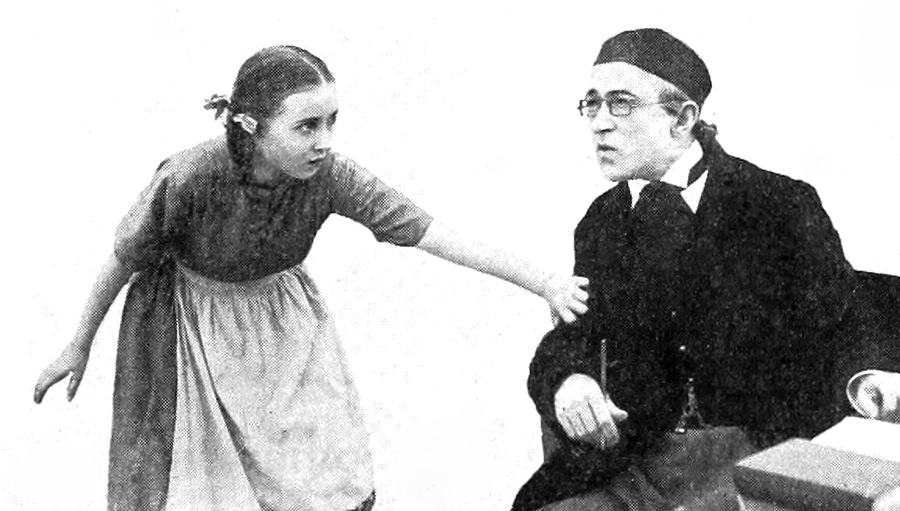
In comparison to the crime-focused narratives of The Ticket of Leave Man or the romantic tragedies like Three Weeks, The Flying Torpedo stands as a monolith of speculative fiction. It proved that cinema could be a medium for geopolitical discourse, a tool for shaping national policy, and a canvas for the most radical technological fantasies. While it may be a product of its time in its prejudices, it is a pioneer in its vision. It remains an essential watch for anyone interested in the intersection of film history and the evolution of the modern world.
Though John Emerson is the credited director, the fingerprints of D.W. Griffith are all over the production’s scale and rhythm. The use of the 'iris' shot to focus on specific details of the torpedo’s mechanism, and the sweeping long shots of the coastline, suggest a level of visual literacy that was the hallmark of the Fine Arts Film Company. The film manages to make a technical invention feel like a character in its own right, a feat not often seen until much later in the sci-fi genre. This level of technical ambition far outstrips the more traditional theatrical adaptations like Dr. Rameau or The Fatal Card.
Ultimately, The Flying Torpedo is a fascinating anomaly. It is a war film made before its nation was at war, a science fiction film made before the genre was defined, and a propaganda piece that genuinely believed in the salvific power of the inventor. It is a loud, rattling, explosive reminder that the fears of the past often look exactly like the realities of the present. For the silent film aficionado, it is a treasure; for the historian, it is a warning; and for the critic, it is a masterclass in early cinematic world-building.
IMDb 6.3
1936
Community
Log in to comment.