DbcultAccessing Vault...
Cult Review
Senior Film Conservator
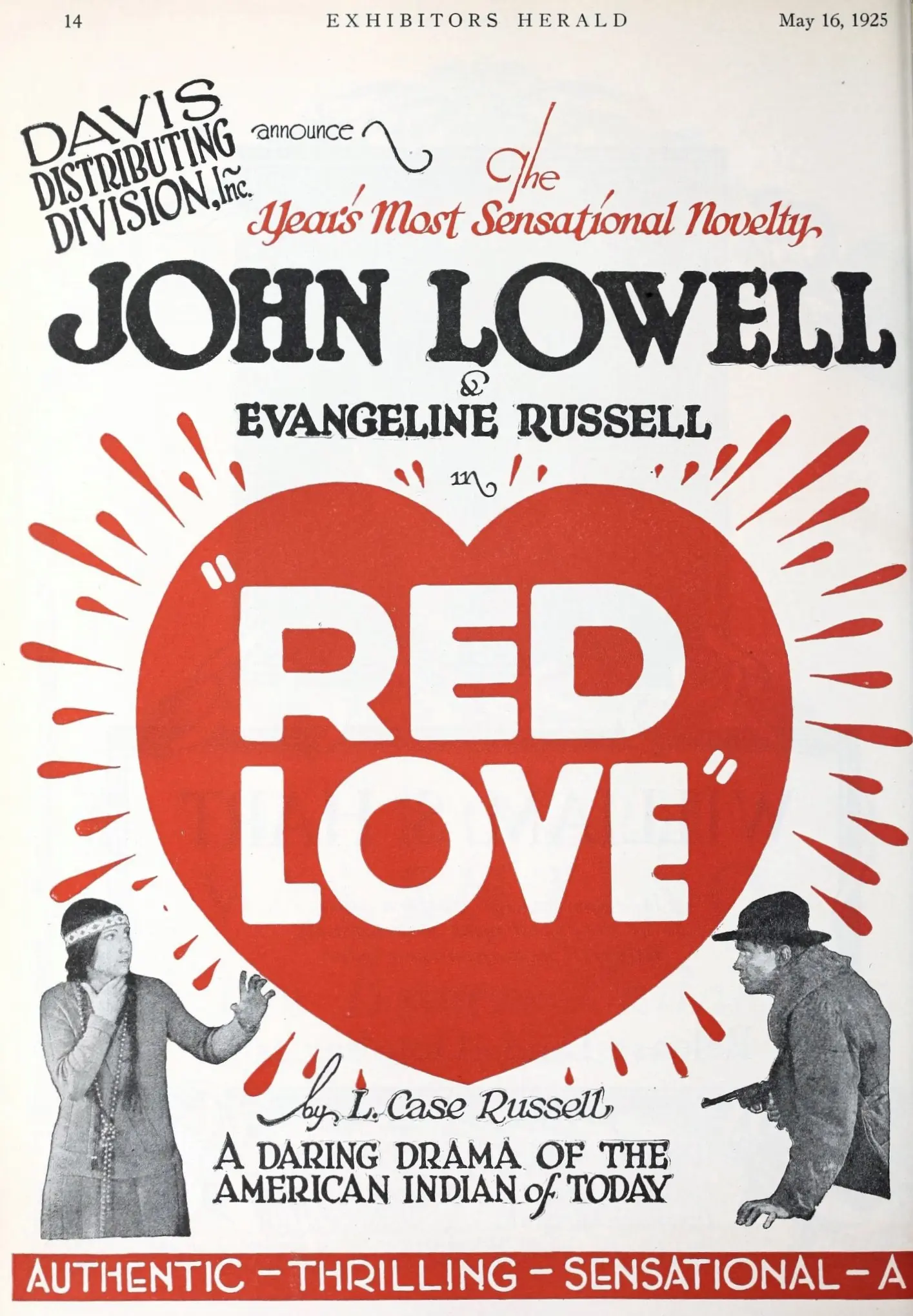
Is Red Love worth dusting off and experiencing in the modern era? Short answer: yes, but with significant caveats. This early cinematic endeavor, a silent-era Western with a surprisingly complex narrative core, offers a fascinating, if sometimes problematic, window into its time.
This film is best for cinephiles, historians, and those interested in the evolution of storytelling, particularly the portrayal of Indigenous characters in early American cinema. It is NOT for viewers seeking fast-paced action, modern sensibilities regarding race, or easily digestible narratives without historical context.
The story of Red Love, penned by the prolific Lillian Case Russell, is far more intricate than its simple plot synopsis might suggest. It grapples with themes of identity, justice, and cross-cultural romance, elements that, even in the silent era, resonated deeply with audiences. The film follows Thunder Cloud, a Sioux man caught between worlds – his tribal heritage and the education he received from the white world.
His initial act of perceived murder, followed by a life of principled thievery, immediately establishes him as a morally ambiguous but ultimately honorable character. This nuanced portrayal of an Indigenous protagonist, especially one who actively seeks to make restitution for his actions, was a bold choice for its time. It challenges the prevalent one-dimensional villainization often seen in early Westerns, hinting at a more complex understanding of justice beyond the law's letter.
The romance between Thunder Cloud and Starlight, the 'half-breed' daughter of a sheriff, adds another layer of societal transgression. Their relationship is not just inter-racial but also transcends the boundaries of law and order, beginning with an abduction that, in the context of the period, likely played as a passionate, if reckless, act of love rather than pure villainy. This narrative thread positions the film, perhaps inadvertently, as a commentary on the restrictive social norms of the era.
The introduction of Little Antelope, Thunder Cloud’s long-lost brother now serving the very system that seeks to capture him, provides a potent dramatic irony. It forces a confrontation not just between individuals but between conflicting loyalties and identities. This familial twist elevates the personal stakes, transforming a simple pursuit into a poignant exploration of fractured bonds and the arbitrary nature of allegiance.
Ultimately, the film's resolution, with the revelation of Mosher’s deception and Starlight’s unwavering commitment, attempts to deliver a message of hope and reconciliation. It posits that true love and justice can prevail even amidst prejudice and misunderstanding. It’s a classic melodrama, but one with a surprisingly modern undercurrent of social commentary.
Dexter McReynolds, as Thunder Cloud, carries the emotional weight of the film. In the silent era, acting was a highly physical art form, relying on exaggerated gestures, facial expressions, and body language to convey internal states. McReynolds likely navigated this demanding performance with a blend of stoicism and simmering intensity. One can imagine his early scenes, perhaps a close-up shot of his eyes reflecting a profound weariness and determination after believing he’s slain Mosher, effectively communicating his moral dilemma without a single spoken word. His portrayal would have been crucial in selling Thunder Cloud’s complex character – a man of honor forced into a life of perceived crime.
Evangeline Russell, as Starlight, would have brought a different kind of strength to the screen. Her character, a 'half-breed' teacher, embodies a bridge between worlds, and her decision to abandon her profession for Thunder Cloud speaks volumes about her conviction. A powerful moment might be a scene where Starlight, perhaps in a two-shot with her father, Sheriff La Verne (William Cavanaugh), silently defies his expectations, her gaze fixed on a distant horizon, hinting at her burgeoning independence and love for Thunder Cloud.
The direction of Red Love, while uncredited in the provided details, would have been pivotal in orchestrating these performances and the visual narrative. Early directors often focused on clear, declarative staging, ensuring that even complex plot points were understandable through visual cues. The Indian Fair abduction scene, for instance, would have required dynamic blocking and careful editing to convey both the urgency of Thunder Cloud's action and Starlight's initial shock, perhaps quickly transitioning to a subtle acceptance or even complicity. This sequence would have been a masterclass in silent film action and emotional storytelling.
"The true triumph of Red Love isn't its narrative simplicity, but its audacious attempt to inject moral ambiguity and cross-cultural empathy into a genre often content with black-and-white caricatures. It’s a film that asks us to look closer, even a century later."
Silent films relied heavily on visual composition and lighting to convey mood, setting, and character. For a Western like Red Love, the cinematography would have played a crucial role in establishing the vastness of the landscape and the isolation of its characters. Imagine sweeping long shots of Thunder Cloud on horseback, a lone figure against a towering, indifferent sky, emphasizing his fugitive status and internal struggle. The use of natural light, typical of the era, would have added a raw authenticity to the outdoor scenes.
Contrast this with the potentially more intimate, perhaps chiaroscuro-lit interiors, such as Thunder Cloud’s hideout. Here, shadows might have been used to create a sense of mystery and danger, or soft, diffused light to highlight moments of tenderness between Thunder Cloud and Starlight. The visual language would have been direct but impactful, using framing to emphasize power dynamics – perhaps a low-angle shot of Sheriff La Verne to convey his authority, or a high-angle shot of Thunder Cloud during his trial to emphasize his vulnerability.
A specific example of powerful visual storytelling could be the scene where Little Antelope recognizes Thunder Cloud as his brother. This moment, devoid of dialogue, would have relied entirely on the actors' expressions and the director's framing. Perhaps a series of quick cuts, first to Little Antelope's shocked face, then to Thunder Cloud's mournful recognition, culminating in a two-shot that emphasizes their shared heritage despite their opposing roles. It works. But it’s flawed.
The pacing of Red Love, like many films of its era, would likely feel deliberate, even slow, to a modern audience accustomed to rapid-fire editing. Silent films often allowed scenes to play out longer, giving audiences time to absorb the visual information and the actors' performances. This slower pace, however, can also foster a deeper engagement with the characters' emotional journeys, allowing moments of quiet reflection to land with greater impact. The build-up to the trial, for example, would have been a slow burn, heightening the tension and anticipation for the audience.
The tone of the film appears to oscillate between a gritty Western drama and a heartfelt romance, with strong melodramatic undertones. The initial pursuit and the danger surrounding Thunder Cloud provide the dramatic tension, while the evolving relationship with Starlight offers the emotional core. The revelation of Mosher’s deception injects a sense of poetic justice, shifting the tone from one of impending doom to ultimate vindication. This tonal balance, if handled effectively, would have prevented the film from becoming overly simplistic or preachy.
Thematic resonance is where Red Love truly distinguishes itself. It's not just a story of chase and capture; it's an exploration of identity, particularly for characters like Thunder Cloud and Starlight, who exist in the liminal spaces between cultures. The film subtly questions the nature of justice – is it found in the law books, or in the inherent honor of a man like Thunder Cloud who, despite being an outlaw, adheres to his own moral code? This is a surprisingly progressive stance for a film of the period, hinting at a critique of institutional racism and the often-flawed justice system.
Compared to other films of the era, such as The Rescue, which might have focused more on pure adventure or straightforward heroism, Red Love dares to delve into more uncomfortable social questions. It suggests that love can transcend societal barriers, and that truth will eventually surface, even when obscured by prejudice. This makes it more than just a historical artifact; it's a piece of cinema that, in its own way, pushed boundaries.
Red Love stands as a fascinating, if imperfect, piece of cinematic history. It's a film that, despite its age and the inherent limitations of the silent era, dared to explore complex moral landscapes and challenge conventional narratives surrounding Indigenous characters and inter-racial relationships. While its pacing and some of its period-specific sensibilities might test the patience of a casual viewer, its ambition and thematic depth make it a rewarding experience for those willing to engage with it on its own terms.
It's not a 'masterpiece' in the modern sense, nor is it 'visually stunning' by today's standards, but it is a thought-provoking and historically significant work. It offers a glimpse into the evolution of storytelling, demonstrating how early filmmakers grappled with weighty social issues through the nascent language of cinema. For anyone interested in the roots of American film and the often-overlooked narratives of marginalized communities on screen, Red Love is more than just a curiosity; it's a valuable, if challenging, watch. It deserves to be seen, discussed, and understood within its proper context, for it speaks volumes about the past and, surprisingly, even offers faint echoes for the present.
IMDb —
1929
Community
Log in to comment.