DbcultAccessing Vault...
6.8/10
Senior Film Conservator
A definitive 6.8/10 rating for a film that redefined the boundaries of cult cinema. Maciste in Hell remains a cornerstone of transgressive art.
In the annals of silent cinema, there exist films that transcend mere entertainment, elevating themselves to the realm of allegorical art. Maciste in Hell (maciste-in-hell), a phantasmagoric journey into the very heart of perdition, stands as a towering testament to this ambition. Released in 1925, this Italian epic doesn't just tell a story; it plunges its audience, alongside its Herculean protagonist, into a meticulously crafted netherworld, challenging the very essence of human morality. It’s a film that demands to be seen not just for its visual audaciousness, but for its profound, albeit wordless, philosophical wrestling with good, evil, and the resilience of the human spirit. The sheer audacity of its premise – taking cinema’s first muscleman and casting him into the fiery pits of damnation – is enough to pique any discerning cinephile's interest, but it's the execution that truly secures its place as a silent film masterpiece.
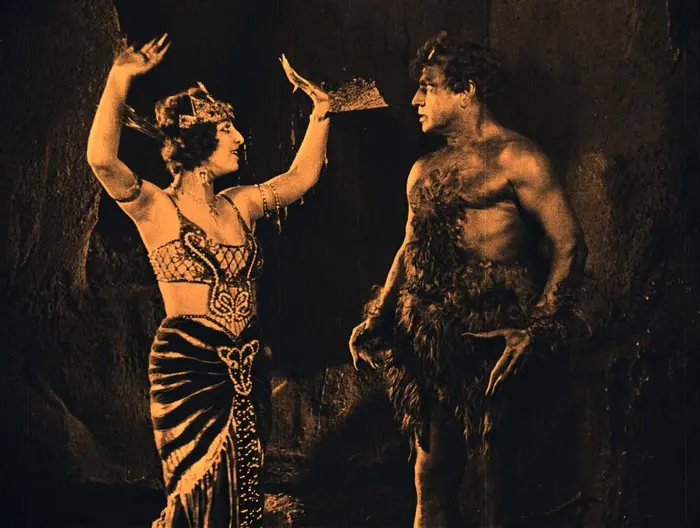
The narrative, conceived by Riccardo Artuffo and Stefano Pittaluga, with a clear spiritual lineage to Dante Alighieri’s infernal visions, wastes no time in its audacious premise. Maciste, the benevolent strongman, finds himself snatched from his earthly existence by a malevolent devil, brilliantly portrayed by Franz Sala. This isn't a gradual descent; it's an abrupt, dizzying plunge into a realm where the laws of man and nature are utterly inverted. The underworld presented here is not merely a backdrop; it is a character unto itself, pulsating with grotesque life, engineered to break the will of its inhabitants. One cannot help but draw parallels to the existential dread found in later, more overt horror films, yet Maciste in Hell achieves its terror through an almost operatic visual language. The journey is less about physical peril and more about the psychological gauntlet Maciste must endure, a stark contrast to the more straightforward action of contemporaries like The Lone Star Ranger, which focused on external conflicts. Here, the battlefield is the soul.
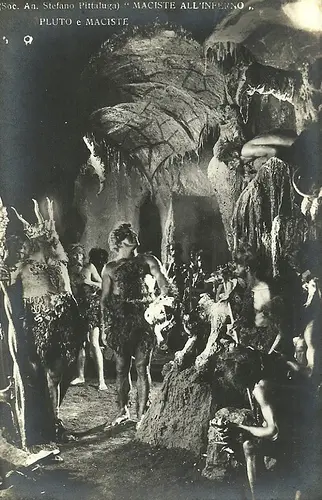
Bartolomeo Pagano, in his iconic role as Maciste, embodies an unwavering moral compass amidst the chaos. His physical prowess, though formidable, takes a backseat to his spiritual fortitude. The devil's ultimate goal is not merely to imprison Maciste, but to corrupt him, to tarnish his inherent goodness. This is where the film truly shines, exploring the limits of human resilience when confronted with absolute depravity. Maciste faces temptations in the form of alluring sirens, grotesque demons, and the specter of earthly vices, each designed to chip away at his resolve. His stoic expressions, his moments of visible anguish, and his ultimate refusal to succumb to the infernal machinations are portrayed with a subtlety that belies the bombastic setting. It's a performance that speaks volumes without uttering a single word, a testament to Pagano's expressive power and the director's ability to convey complex inner turmoil through visual storytelling. This internal struggle for purity against a tide of corruption is a theme that resonates deeply, echoing the moral quandaries presented in films like The Yellow Traffic, though Maciste’s battle is far more allegorical and cosmic in scope.
The visual design of Maciste in Hell is nothing short of groundbreaking for its era. The filmmakers, unburdened by the constraints of sound, leaned heavily into expressionistic set design, innovative special effects, and dramatic lighting to create a truly otherworldly environment. The infernal landscapes are a marvel of early cinematic artistry: cavernous depths, fiery vistas, and architectural monstrosities that seem to groan under the weight of eternal despair. Demons with bat-like wings, tortured souls writhing in agony, and the very air shimmering with malevolence – every frame is meticulously composed to immerse the viewer in Maciste's terrifying ordeal. The scale of these sets and the ambition of their execution rival the grandeur seen in historical epics of the time, such as Lest We Forget, but here, the spectacle is entirely fantastical, drawing inspiration from classical mythology and religious iconography. The use of superimpositions and forced perspective creates illusions that would still impress today, demonstrating a profound understanding of the nascent cinematic language. It’s a masterclass in visual storytelling, where the scenery itself becomes a character, constantly pressing down on Maciste, testing his limits.
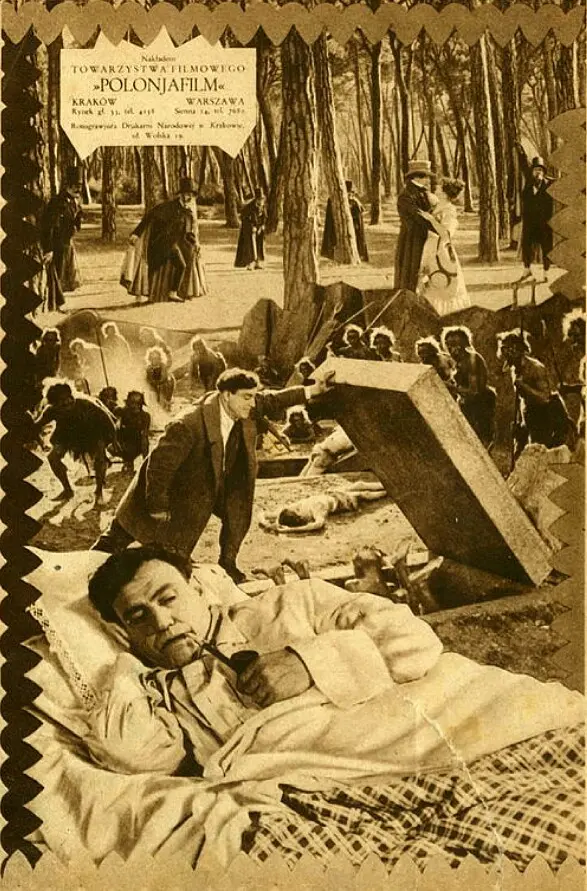
The visual palette, even in its monochromatic glory, suggests a vibrant, terrifying spectrum. One can almost feel the heat of the inferno, the chill of desperation, and the oppressive weight of eternal damnation. The ingenuity in creating these elaborate illusions with the limited technology of the 1920s is truly commendable. It's a vivid reminder that imagination, when coupled with technical skill, can conjure worlds more compelling than any CGI spectacle. The film’s aesthetic choices are bold, often unsettling, and consistently captivating, creating a unique atmosphere that sets it apart from many of its contemporaries. For instance, while The Battle of the Ancre and the Advance of the Tanks showcased a different kind of monumental scale through documentary realism, Maciste in Hell achieves its grandeur through pure, unadulterated fantasy and artistic abstraction. The contrast highlights the diverse applications of cinematic scale and ambition in the silent era.
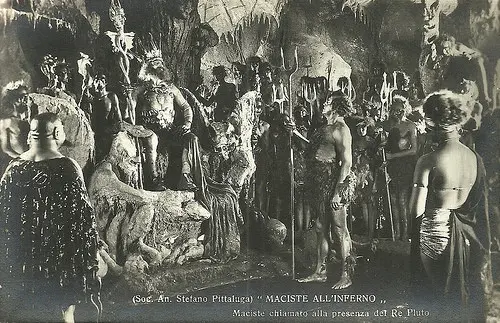
At its core, Maciste in Hell is a profound meditation on morality. The devil, a cunning adversary, understands that brute force will not break Maciste. Instead, he orchestrates a series of psychological and spiritual trials, aiming to corrupt the strongman from within. This is where the film’s allegorical power truly comes to the fore. Maciste is not just fighting demons; he is battling the insidious whispers of doubt, the allure of forbidden pleasure, and the despair of seemingly endless torment. The film explores universal themes of temptation, sin, and redemption without ever resorting to didacticism. Instead, it allows the audience to witness Maciste's struggle, to feel his anguish, and to admire his unwavering commitment to his principles. This internal conflict is far more compelling than any external battle, showcasing a nuanced understanding of human nature rarely seen in genre films of the period. It’s a film that asks profound questions about what it means to be good, even when goodness seems to offer no reward, and evil promises fleeting solace. This echoes the moral dilemmas faced by characters in films like Foolish Lives, but with a heightened sense of the supernatural and eternal consequences.
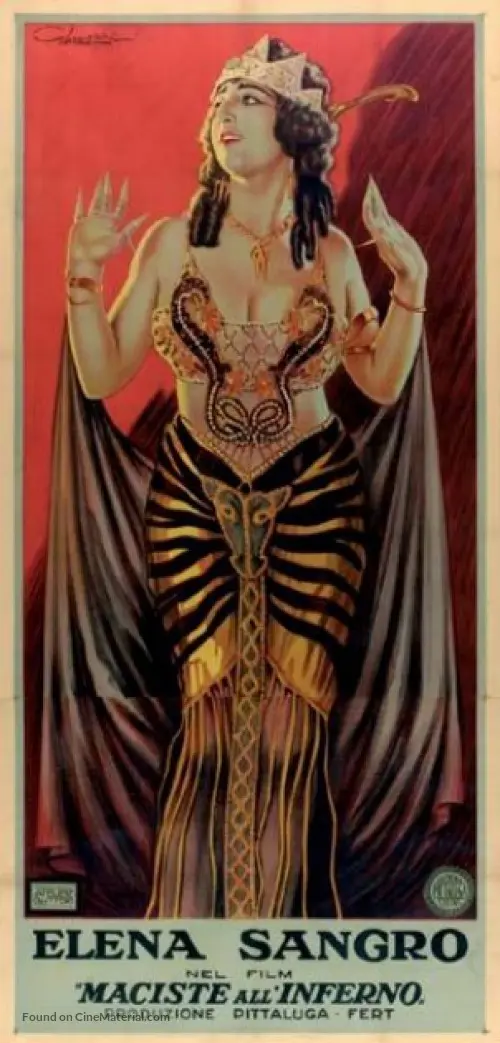
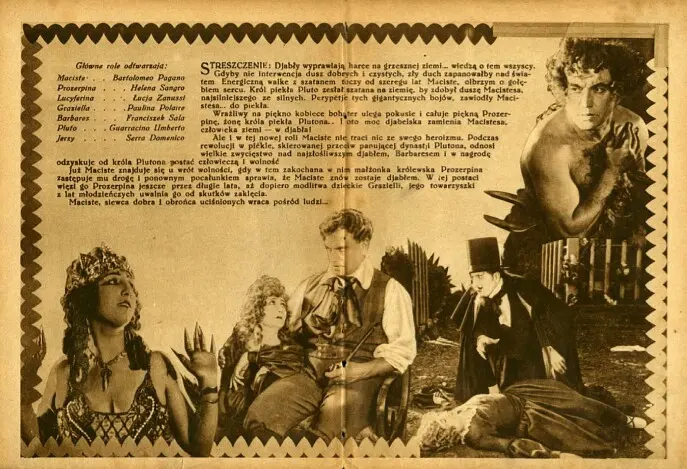
The various forms of temptation, from the seductive wiles of infernal temptresses to the promise of dominion, are masterfully depicted. Lucia Zanussi and Elena Sangro, alongside Pauline Polaire, contribute to this infernal allure, portraying figures designed to ensnare Maciste's senses and corrupt his spirit. The film subtly suggests that the greatest dangers are often those that appeal to our deepest desires, rather than those that simply threaten us with pain. Maciste's resistance is not born of ignorance, but of a conscious, painful choice to uphold his intrinsic virtue. This makes his eventual triumph all the more impactful. The narrative also delves into the concept of free will, even in the face of overwhelming diabolical influence, a theme that resonates powerfully and gives the film a timeless quality. It’s a stark reminder that even in the most dire circumstances, the choice between right and wrong remains fundamentally ours. This enduring theme of personal resilience and choice in the face of daunting adversity connects with the spirit of survival and determination found in films such as Miss Crusoe, though Maciste's 'island' is one of spiritual rather than physical isolation.
While Bartolomeo Pagano carries the film with his formidable presence, the supporting cast contributes significantly to the film’s rich tapestry. Franz Sala's portrayal of the devil is captivatingly sinister, a figure of malevolent charm and insidious power. His expressions, though exaggerated for silent film conventions, convey a chilling intelligence and a palpable sense of ancient evil. Domenico Serra, Andrea Miano, and Umberto Guarracino, among others like Sergio Amidei, Felice Minotti, and Mario Saio, fill out the infernal court and the ranks of the damned, each contributing to the terrifying atmosphere of hell. Their reactions, their suffering, and their grotesque visages serve to amplify Maciste's isolation and the gravity of his struggle. The sheer number of extras and the detailed makeup work are impressive, creating a truly populated and terrifying underworld. The collective performance of this ensemble casts a long, dark shadow, making Maciste's light shine even brighter by contrast. It's a testament to the power of ensemble acting, even in a film dominated by a single iconic figure, similar to how a diverse cast can elevate a narrative in a film like Dangerous Days, where the various characters contribute to the overall tension and atmosphere.
Maciste in Hell is more than just a relic of the silent era; it is a vibrant, daring piece of cinematic art that continues to resonate. Its influence can be seen in countless fantasy and horror films that followed, particularly in its ambitious world-building and its willingness to delve into the darker aspects of the human condition. The film stands as a pioneering example of how to use the specific strengths of silent cinema – its reliance on visual storytelling, evocative imagery, and grand scale – to create a truly immersive experience. It's a film that challenges its audience, inviting them to ponder profound moral questions while simultaneously dazzling them with its visual spectacle. For those willing to look beyond the absence of dialogue, a rich, complex, and utterly unforgettable journey awaits. It’s a vital piece of film history that deserves to be rediscovered and celebrated for its artistic courage and enduring thematic relevance.
In an era when cinema was still finding its voice, Maciste in Hell shouted its intentions from the rooftops of hell itself. It’s a testament to the power of imagination, the resilience of the human spirit, and the enduring allure of a well-told story, even when that story takes us to the most terrifying of places. The writers, Riccardo Artuffo and Stefano Pittaluga, along with the uncredited but undeniable influence of Dante Alighieri, crafted a narrative that is both epic and deeply personal. It reminds us that the battle between good and evil isn't always fought with swords and shields, but often within the quiet chambers of the human heart, making it a timeless allegory that continues to provoke thought and inspire awe. This film, with its bold vision and powerful execution, solidifies Maciste's place not just as a strongman, but as a moral exemplar in the pantheon of cinematic heroes, a figure whose journey into damnation ultimately reinforces the enduring power of virtue. It's a film that leaves an indelible mark, urging viewers to reflect on their own moral compasses in a world that, much like Maciste's hell, often presents its own unique temptations and trials. It’s a profound experience, one that stays with you long after the final, haunting frames fade to black.

IMDb —
1918
Community
Log in to comment.