DbcultAccessing Vault...
Cult Review
Senior Film Conservator
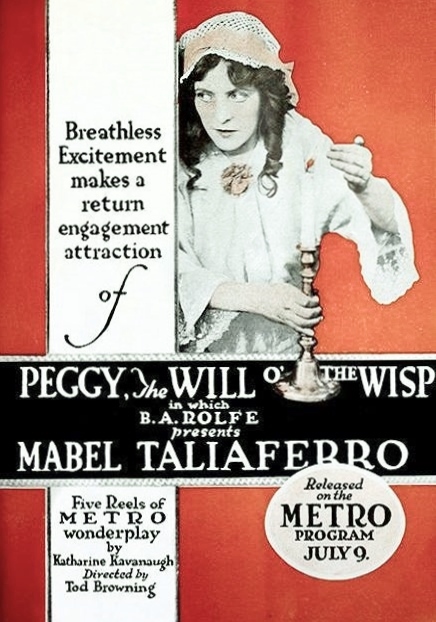
In the annals of early cinema, where flickering shadows often danced out tales of grand romance and daring escapades, Peggy, the Will O' the Wisp emerges as a particularly enchanting artifact. Released in 1917, this silent film, penned by Katharine Kavanaugh, offers more than just a simple love story; it presents a spirited exploration of justice, social inequity, and the burgeoning agency of a female protagonist in a world often determined to constrain her. It’s a narrative that, while rooted in its time, resonates with timeless themes of rebellion against oppression and the lengths one will go for love and principle.
The film plunges us into an idyllic, yet economically strained, Irish countryside, where the spirited Peggy Desmond (Mabel Taliaferro) finds her heart inextricably linked to Captain Neil Dacey (John J. Williams). Their idyllic romance, however, is shadowed by the machinations of Terence O'Malley (Nathaniel Sack), the ambitious nephew of the wealthy and rather unscrupulous Squire O'Malley (Tom O'Malley). The Squire, a character embodying the often-unjust power wielded by the landed gentry, sees an opportunity to further his family's influence by proposing a marriage between Peggy and Terence, offering to absolve the Desmonds of their considerable debts. This proposition, a stark reminder of the financial precarity that often dictated marital choices in that era, is met with Peggy’s resolute refusal, a pivotal moment that underscores her unwavering spirit and moral fortitude.
It is Captain Dacey’s casual mention of Rory O'More, the legendary 'Will o' the Wisp' – an Irish Robin Hood figure revered for his acts of benevolent banditry – that ignites the spark of rebellion within Peggy. This moment is crucial, as it provides not just a narrative device, but a thematic anchor. Peggy, choosing to become an active agent in her own destiny and the welfare of her community, adopts the persona of a highwayman. Her first target? None other than the avaricious Squire O'Malley. The ensuing robbery, far from being a mere act of larceny, is an act of poetic justice, as the ill-gotten gains are swiftly transferred to one of the Squire's impoverished tenants. This sequence immediately establishes Peggy not as a criminal, but as a folk hero, a champion of the downtrodden, much like the legendary figures whose stories often inspired hope in times of hardship. This thematic thread of a disguised protagonist seeking justice echoes through cinematic history, finding parallels in the swashbuckling adventures seen in films like The Three Musketeers, where masked heroes challenge corrupt authority, or even the more contemporary explorations of vigilante justice.
The irony intensifies as Captain Dacey, charged with upholding the law, is tasked with apprehending this mysterious bandit. The cat-and-mouse game that ensues, with Dacey unknowingly pursuing his beloved, adds a delightful layer of dramatic tension and comedic charm. Peggy, in her guise, manages to outwit and even disarm Dacey, a clever reversal of traditional gender roles that highlights her intelligence and resourcefulness. This playful subversion of expectations, where the hero is outmaneuvered by his incognito sweetheart, provides a refreshing dynamic often absent in more straightforward romantic dramas of the period. The film cleverly uses these interactions to build anticipation, keeping the audience on edge, much like the intricate pursuit narratives found in thrillers such as The Spider and the Fly or the perilous journeys depicted in Danger Trail, though here imbued with a romantic undercurrent.
The narrative takes a darker, more dramatic turn with the sudden death of Squire O'Malley. The discovery of Captain Dacey’s gun near the corpse immediately implicates him, leading to his swift arrest and incarceration. This development plunges Peggy into a desperate struggle, transforming her from a playful rebel into a determined advocate for justice. The injustice of Neil’s predicament mirrors the themes explored in legal dramas like For the Defense, where the protagonist must navigate a system poised to condemn them. The sense of confinement and looming threat of false accusation also resonates with the somber atmosphere of films such as The Prison Without Walls, highlighting the fragility of freedom when faced with circumstantial evidence and malicious intent.
Peggy’s love for Neil, coupled with her innate sense of justice, compels her to act. Once more, she assumes the mantle of the highwayman, but this time, her mission is far graver. She confronts Terence O'Malley, whose ambition and villainy are subtly hinted at throughout the film, forcing a confession of the murder at gunpoint. This dramatic confrontation is the climax of Peggy’s journey, showcasing her bravery and resourcefulness under immense pressure. It also reveals the true depths of Terence’s character, a man driven by the 'sins of ambition' that often form the core conflict in narratives like Sins of Ambition. The scene is a powerful testament to Peggy's unwavering commitment to her beloved, a striking image of a woman taking drastic measures to secure justice, reminiscent of the strong female leads found in films like The Goddess, who navigate complex moral landscapes with unwavering resolve.

With Terence’s forced confession, Neil is exonerated and released. However, the mystery of the 'Will o' the Wisp' still lingers. It is here that Neil's own deductive skills come into play. He pieces together the clues, perhaps recalling the distinct mannerisms of his mysterious assailant, or recognizing the deep, self-sacrificing love that would drive such actions. His eventual unmasking of Peggy as the daring bandit is a moment of profound revelation, not just for the characters, but for the audience, confirming the ingenuity and courage that lay beneath Peggy’s demure exterior. This act of astute deduction, of piecing together disparate facts to uncover a hidden truth, is a common trope in detective narratives, akin to the unraveling of mysteries in episodes like Beatrice Fairfax Episode 14: The Hidden Menace.
The film culminates in a heartwarming resolution: Peggy, true to a promise made in jest, agrees to marry Neil, the man who succeeded in unmasking the 'Will o' the Wisp.' This ending, while fulfilling the romantic expectations of the era, also subtly redefines the traditional notion of a hero. Here, the hero is not just the one who fights, but the one who understands, who sees beyond the superficial and recognizes the true heart of courage. It’s a beautifully crafted conclusion that celebrates both love and intellect, placing a premium on mutual respect and understanding rather than mere physical prowess.
Mabel Taliaferro, as Peggy, delivers a performance that transcends the limitations of silent film acting. Her expressive face and nuanced gestures convey a wide range of emotions, from girlish charm to fierce determination. She embodies the spirit of the 'Will o' the Wisp' with a captivating blend of vulnerability and strength, making Peggy a deeply relatable and admirable character. John J. Williams, as Captain Neil Dacey, provides a strong, honorable counterpart, his portrayal conveying both his duty-bound nature and his deep affection for Peggy. Nathaniel Sack’s Terence O'Malley is suitably villainous, a character whose smirking ambition effectively drives much of the conflict. The supporting cast, including Clara Blandick and William J. Gross, further enriches the narrative tapestry, grounding the fantastical elements in a believable Irish setting.
Katharine Kavanaugh's screenplay is a masterclass in concise, yet impactful, storytelling. The plot unfolds with a brisk pace, maintaining suspense and emotional resonance throughout. The use of the 'Will o' the Wisp' folklore is particularly effective, adding a layer of cultural authenticity and romanticism to the tale. Visually, silent films often relied on strong compositions and evocative lighting, and Peggy, the Will O' the Wisp is no exception. While specific cinematographic details might be lost to time, the narrative structure suggests a keen understanding of how to visually convey character development and plot progression, utilizing the visual medium to its fullest extent. The film’s ability to weave together elements of romance, mystery, and social commentary into a cohesive and entertaining whole speaks volumes about the talent behind its creation.
What truly elevates Peggy, the Will O' the Wisp beyond a mere period piece is its exploration of enduring themes. The struggle against economic disparity, the fight for justice in the face of corruption, and the assertion of individual agency against societal expectations are all powerfully rendered. Peggy's choice to become a highwayman is not born of malice, but of a deep-seated desire for fairness, a moral compass that points towards a more equitable world. Her actions challenge the rigid social hierarchies of her time, making her a proto-feminist icon of sorts, daring to take matters into her own hands when the established order fails.
The film also subtly touches upon the complexities of moral dilemmas, as Peggy grapples with her 'her temptation' to break the law for a higher good, a theme explored in films like Her Temptation, though with different stakes. Her dual identity, a common narrative device, is handled with grace and conviction, making her transformations believable and compelling. This motif of disguise and mistaken identity is a timeless storytelling tool, famously utilized in films such as La Belle Russe, where characters navigate complex social landscapes under assumed guises, often leading to dramatic and unforeseen consequences.
In conclusion, Peggy, the Will O' the Wisp is a testament to the vibrant storytelling of the silent film era. It is a film that balances romance with adventure, social commentary with personal sacrifice, all wrapped in the charming veneer of Irish folklore. For those with an appreciation for classic cinema, for tales of brave heroines, and for narratives that champion justice, Peggy’s flickering light continues to shine brightly, guiding us through a captivating journey of love, courage, and the enduring power of a woman’s will. Its intricate plot, compelling characters, and resonant themes ensure its place as a gem worthy of rediscovery, a cinematic whisper from the past that still speaks volumes today.
IMDb 6.1
1937
Community
Log in to comment.