DbcultAccessing Vault...
Cult Review
Senior Film Conservator
The celluloid reeks of linseed. From the first flicker you realise Artist’s Muddle refuses to behave like a polite museum piece; it behaves like turpentine spilled on parquet—volatile, staining, impossible to ignore. Shot in the autumn of 1922, premiered in a cramped Soho basement to a room reeking of Turkish tobacco, and then buried under distribution squabbles, this phantasmagoria now re-emerges in a 4K tinted restoration that lets the umber bruises breathe. I watched it twice within twelve hours, the second time with the sound off, just to let the chiaroscuro invade my corneas. The experience is closer to séance than screening.
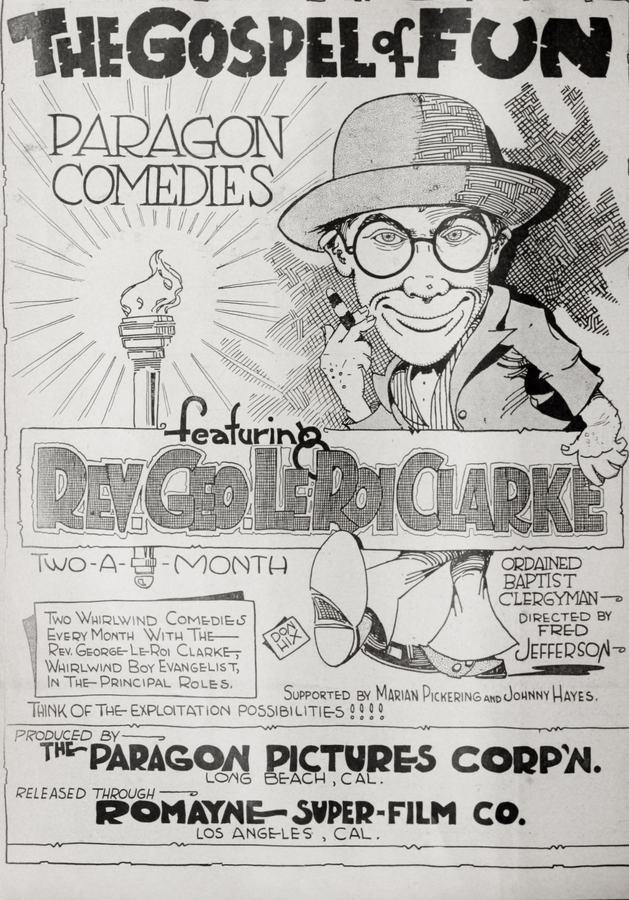
George LeRoi Clarke, credited only as The Man With the Silver Easel, possesses the hollowed cheeks of a poet who’s dined on nothing but coffee and recrimination. His body language oscillates between marionette and marauder: elbows jut like badly hinged easel legs, fingers flutter as if scattering pigment into the ether. Dialogue is sparse; instead we get exhalations—cigarette smoke, whiskey breath, the occasional guttural laugh that feels dredged from oil-clogged tubes. Clarke reportedly starved himself for the role, and the gauntness translates into a kind of saintly depravity, equal parts Male and Female’s imperial decadence and the raw desperation of Heart of Juanita.
The plot, if one insists on linear sinew, follows the painter’s commission to immortalise an aristocratic daughter engaged to a steel magnate. Yet the moment charcoal kisses paper, the commission mutates into obsession. The heiress, played by sylph-like contralto Mireille Darnell, never speaks above a murmur; her silence becomes a vacuum the artist fills with projections—virgin, siren, obol for Charon. Their sessions turn ritualistic: she disrobes behind a Japanese screen, he counts heartbeats between strokes, the metronome replaced by rain gutters. The camera, operated by German émigré cinematographer Otto Varn, circles them like a vulture, occasionally dissolving to super-impositions where half-finished eyes blink over stock-market tickers. Capital and coitus, canvas and carnality—commerce eats beauty, beauty eats back.
Colour in this film is not chromatic; it’s psychological. The restoration team analysed the original nitrate’s stencil tint, revealing a deliberate schema: tobacco-amber for masculine spaces (pubs, studios, boardrooms), arsenic-green for feminine domesticity (boudoirs, parlours, tea rooms), and bruise-violet for liminal thresholds—hallways, carriage interiors, the footbridge where the final betrayal transpires. When the heiress’s fiancé, a walrus-moustached plutocrat straight out of A Wall Street Tragedy, purchases the unfinished portrait at a midnight auction, the palette mutates into lurid coral, the shade of inflamed flesh. Money, the film implies, is just another pigment—less permanent than ultramarine, more staining than iodine.
This approach to mise-en-scène situates Artist’s Muddle within the post-Great-War malaise that birthed everything from Bauhaus functionalism to Fitzgerald’s flirtations with nihilism. Yet unlike Hesper of the Mountains’s pastoral romanticism, the film wallows in urban soot. London becomes an accomplice: fog drifts through frames like a sneaky rent-hike, cobblestones glisten with what might be either rain or diluted varnish. Every exterior was shot on location during the actual pea-soup fogs of November 1922; the crew wore gas masks between takes, Clarke’s voice already shredded from turpine exposure.
Because the film was released during the awkward adolescence of cinema—post-silent, pre-full-talkie—its exhibitors tacked on a synchronised score of generic waltzes. The restoration jettisons that crutch, offering instead a minimalist electro-acoustic re-score by Icelandic collective Grisúlna: bowed electric guitars, dampened timpani, the occasional field recording of pencil scratching paper. The effect is hypnotic dissonance, like Munch’s The Scream rendered in ASMR. Silence pools between notes, allowing ambient clatter—cathedral bells, horse hooves, the hiss of gas lamps—to bleed through, reminding viewers that history itself is a palimpsest of noises.
This aural austerity amplifies the film’s obsession with erasure. Every creative act in Artist’s Muddle is matched by a destructive counter-gesture: the artist sketches a nude only to burn the sheet; the heiress gifts him a diamond-studded palette knife which he uses to slash a finished canvas; patrons applaud while varnish drips onto the floorboards like honeyed blood. The film predicts the commodification of art decades before Basquiat’s skulls sold for nine-figure sums. When the painter finally exhibits a blank frame titled Portrait of My Patrons, the gallery erupts—half in applause at the audacity, half in rage at the swindle. The camera lingers on their apoplectic faces, then cuts to Clarke’s hollow gaze: genius as charlatan, charlatan as mirror.
Criticism often lobs the term male gaze at pre-code cinema like a custard pie, yet Artist’s Muddle complicates that impulse. Yes, the camera ogles Darnell’s porcelain clavicles, but it also interrogates the economics behind that ogle. In one bravura sequence, the heiress flips the dynamic: she hires a life-drawing tutor, forcing the painter to pose nude while she—fully clothed—sketches his flaccid penis with sanguine Conté. The power inversion is savage, hilarious, and brief; the next cut shows the artist alone in his garret, frantically repainting her image to reassert dominance. The film suggests that patriarchy is itself a mediocre draftsman—always reworking, never satisfied.
Compare this to Woman, Woman! where the female lead’s rebellion is ultimately co-opted by matrimony. Here, no such safety net exists. The heiress vanishes mid-film, leaving behind only a silk glove soaked in cobalt. Her disappearance propels the painter’s final breakdown, yet the narrative refuses to solve the mystery: abduction? suicide? elopement with a chauffeur? The absence becomes the true subject, a lacuna the artist tries to fill with ever-thicker layers of paint, achieving only an opaque crust that cracks like parched earth. Absence as presence: a cubist conundrum rendered in celluloid.
Viewed through 2023 lenses, the film vibrates with uncanny contemporaneity. Influencer culture? Check: the painter’s obsession with likes (in the form of aristocratic endorsements) parallels our metrics of retweets and reach. Gig economy precarity? Absolutely: he sleeps in the studio he can’t afford, trading sketches for coal, for bread, for opium. Even NFTs get presaged when a patron demands the original brush used on the heiress’s portrait, valuing the tool over the art. One expects the next intertitle to read: “Imagine if Walter Benjamin had a Wi-Fi connection.”
And yet the film’s heart remains stubbornly modernist in its conviction that form must estrange, that beauty without discomfort is mere décor. Clarke’s performance channels the same chthonic energy that animates Sodoms Ende’s apocalyptic excess, but he tempers it with a vulnerability reminiscent of Rilke’s Malte Laurids Brigge. Every time he raises the brush, his fingers tremble as if conducting séance. The result is not the swaggering machismo of The Master Mind but something more porous: masculinity riddled with holes, leaking turpentine and tears.
Most films about artists opt for transcendence: death for the sake of art, or art as balm for mortality. Not here. In the climactic twenty-minute sequence, the painter invites patrons to a derelict warehouse. He unveils what appears to be a gigantic mirror, but as Varn’s camera dollies back we realise it’s a pane of glass smeared with translucent pigment. Behind it, the missing heiress stands naked, her skin painted to merge with the smears—living canvas, breathing pigment. Patrons gasp, cameras flash (an anachronistic nod to proto-paparazzi), then the pane shatters. Shards rain, cutting cheeks, slicing silken lapels. The artist kneels, collects a dagger-like fragment, and drags it across his own throat—not in romantic flourish but bureaucratic finality, like signing a contract in arterial ink.
The film ends not on his corpse but on a close-up of the fragmented glass: each shard reflects a different slice of the room, multiplying patrons into infinity, a kaleidoscope of complicity. Fade to ivory. No coda, no moral, no swelling strings. Just the reek of linseed that seeps even into the digital ether of the Blu-ray.
Is Artist’s Muddle flawed? Assuredly. The middle act sags under the weight of Symbolist tableaux that flirt with parody. Secondary characters—a Marx-citing poet, a morphine-addicted critic—enter, declaim, vanish. Yet those flaws feel integral, like craquelure on an Old Master, proof of age rather than blemish. Compared to the tidy narrative arcs of A Pair of Silk Stockings or the reactionary moralism of Obmanutaya Yeva, this film chooses mess over message, rupture over reassurance.
So seek it out. Stream it legally if your arthouse portal carries it; import the Region-B locked Blu-ray if you must; project it on a bedsheet in your cramped flat and invite friends who still argue about the ontology of NFTs. Let the turpentine stink of its vision strip varnish from your own complacencies. Just don’t expect closure. Artist’s Muddle is not a film you watch; it’s a film you survive—painted, scraped, repainted, until your own reflection ghosts through, half-finished, forever wet.
IMDb 6.5
1923
Community
Log in to comment.