DbcultAccessing Vault...
Cult Review
Senior Film Conservator
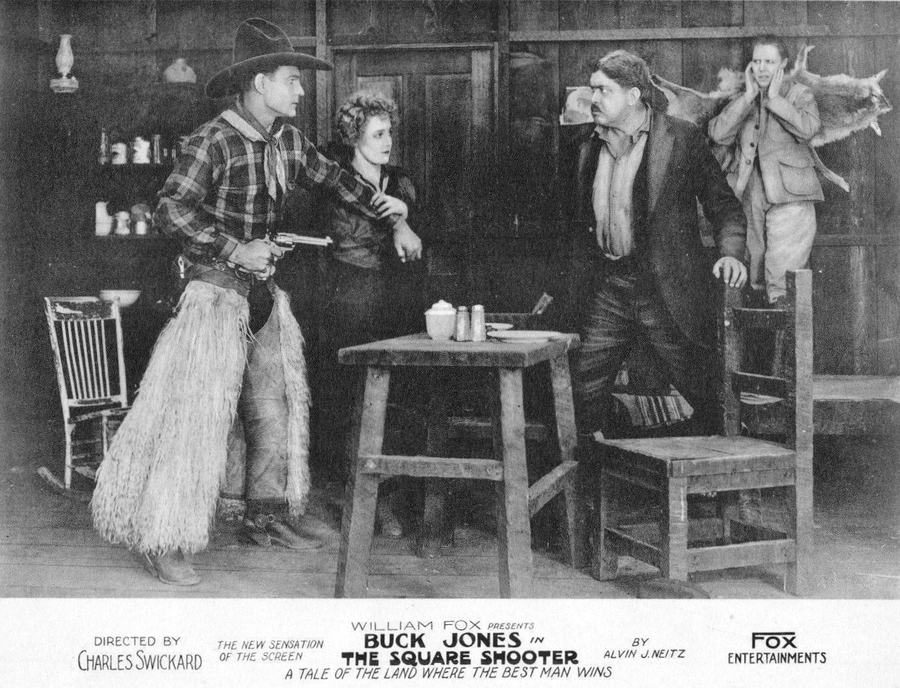
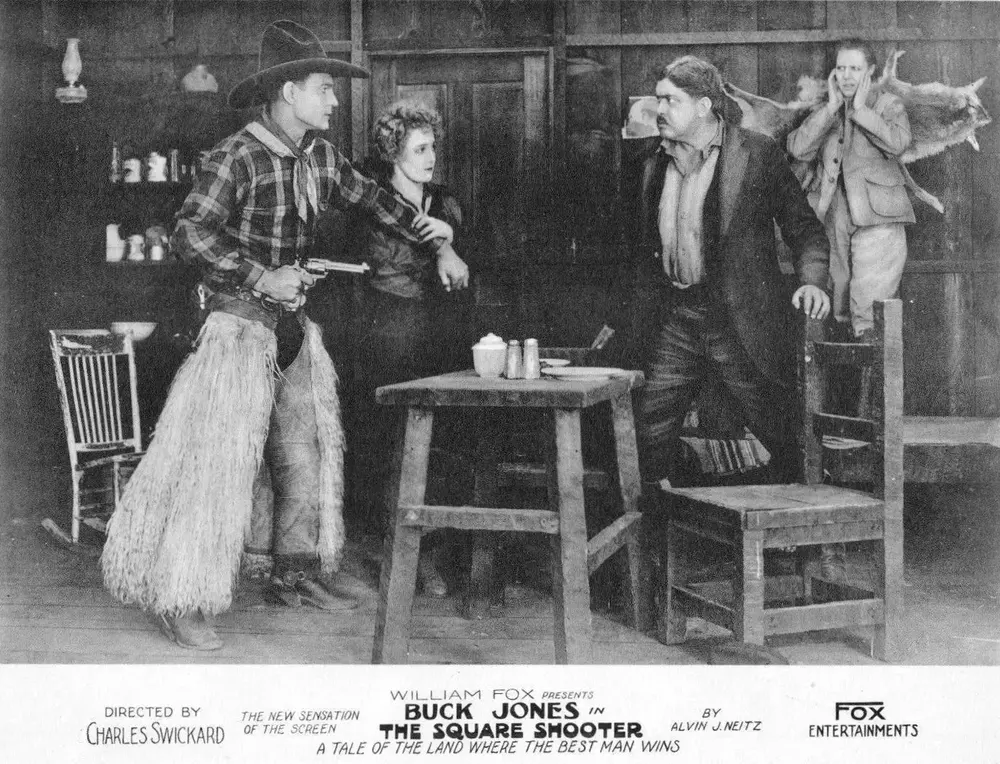
Picture the moment when a silhouette re-enters its own legend: Chick Crandall, co-proprietor of the mythic Flying A, sidles through sagebrush dusk wearing another man’s name like cologne. The gambit feels less like strategy and more like penance—five lost years hang off his frame, yet the camera savors every creak of leather as if sound itself had texture. Square Shooter, a 1922 six-reeler now scraped from near-oblivion, distills that penance into 56 minutes of nitrate poetry, proving that even in the teensiest of budgets the Western could still be a canvas for moral chiaroscuro.
Director Denison Clift—better remembered for seafaring melodramas—here treats the open range like an ocean of dust where brands are Jolly Rogers and every hoof-beat a wave against the fragile hull of conscience. The plot, skeletal on ledger paper, pulses because identity itself is the contested territory: not acres, not steers, but the mutable self. Crandall’s impersonation of Harold Montague is less a gimmick than existential rehearsal—he must inhabit the feckless dude he might have become had greed elbowed honor aside.
Cinematographer Edward Linden (uncredited yet identifiable by his love of back-lit dust clouds) shoots high noon like a white-hot interrogation lamp. Note the sequence where rustlers bunch stolen cattle inside a box-canyon: foreground mesquite in razor-sharp silhouette, background heat-ripples smearing the herd into ghost-cattle—property evaporating before our eyes. Silent-era Westerns often fumbled scale, but here the cramped 1.33 frame becomes advantage; every stolen steer is personal, every close-up of branding iron a searing moral signature.
The film’s tinting strategy flips convention. Day interiors glow standard amber, yet night exteriors are bathed in sulphuric yellow rather than the clichéd blue. The subconscious message: underhanded deeds scorch brightest beneath false daylight. When Curtis—snake-eyed Ernest Shields—signs a forged bill of sale, the ledger page momentarily saturates to arterial orange, as though ink itself were freshly oxygenated blood.
Buck Jones—usually the affable grin under a ten-gallon—here dials inward, letting hesitation twitch at the corner of his mouth. Watch the reveal scene: he lifts the dude’s city boots onto a corral rail with tentative reverence, testing the weight of privilege before kicking them off in disgust. It’s a wordless soliloquy on class shame, worthy of Cohen’s Luck’s urban pathos transplanted to sagebrush.
Patsy De Forest’s Barbara Hampton sidesteps the era’s standard-issue spunk; her terror when the ranch hands torch her fence feels lived-in, shoulders folding like wet paper. Later, when she recognizes the drifter “Montague” by the way he fingers a broken bridle, desire sparks without a single subtitle—her pupils eclipse irises, a silent thunderclap.
And then there’s Lon Poff as the docile ranch accountant—a peripheral face until you clock how his spectacles mirror the branding-iron’s shape, implying that ledgers burn as indelibly as hides. Silent cinema rewards those who chase peripheral glyphs.
Post-war inflation haunts every frame. Curtis’s rustling is not lone-wolf malfeasance; it’s vertical integration via theft, a shadow-mirror of the conglomerates swallowing family outfits nationwide. When he ships rebranded beeves to the same railhead that once legitimized Crandall’s dynasty, the film whispers that capitalism itself can mutate into outlawry without changing the shipping labels.
Contrast this with The Absentee, where land-grab wears judicial ermine; Square Shooter prefers the directness of hot iron. Both indict the system, yet Clift’s film lands harder because it offers no legal cavalry—only personal accountability under an empty sky.
Editors in ’22 usually carved on action; here intercutting builds moral momentum. A 42-second triptych—(1) Curtis counting stolen cash, (2) Barbara clutching eviction notice, (3) Crandall sharpening a branding-iron—culminates in a smash-cut to a thunderclap, as though nature itself files indictment. The montage predates Soviet agitprop chic, yet feels organic to Western fatalism.
No original score survives; archival screenings often staple generic barn-dance jigs. Do yourself a favor: pair it with low-register strings and a single snare brushed with sand. Every time Curtis appears, introduce a faint pump-organ chord sliding microtonally flat—cowboy Ligeti. The absence of authentic cue sheet becomes invitation to re-compose ethics sonically.
The Flying A is matriarchal soil gone fallow; Barbara’s exiled cabin once housed midwives who delivered half the county. Curtis’s arson erases that lineage, yet the film refuses fridging cliché—Barbara’s resilience steers the final act. When she strides into the ranch-house claiming equal partnership, the camera lowers to child-height, transforming her into colossus. Compare to Sheba’s femme-fatale retribution; Square Shooter opts for egalitarian restoration.
Mexican vaqueros appear fleetingly, faces half-turned from lens, their names omitted in intertitles. The erasure undercuts the film’s moral absolutism; theft is condemned, yet labor exploitation remains ambient. Modern restorations should subtitle their unspoken dialect—only then will the ethics fully square.
The last known 35 mm print perished in the 1967 Fox vault fire. What circulates is a 16 mm Show-At-Home dupe, water-damaged around the edges, creating accidental vignette that focuses gaze toward center-stage morality. Don’t dismiss the rot—the scorch marks resemble cattle brands, history branding itself upon celluloid.
If Vengeance and the Girl externalizes revenge through landscape chase, Square Shooter internalizes it within epidermal disguise. Both end in matrimonial contract, yet only Square Shooter treats marriage as merger of debts and assets—an economic audit of the heart.
Meanwhile Der müde Theodor drifts toward pastoral resignation; Crandall’s homecoming rejects fatigue, insisting that identity fatigue can be re-branded under new dawn.
Square Shooter may clock under an hour, yet its after-image stretches like a desert mirage. It argues that integrity isn’t trait but performance—daily donned like spurs—and that ownership sans stewardship is grand larceny wearing Sunday spats. Clift’s film will not wow you with crane shots or sepia nudity; instead it quietly insists that to reclaim your name you must first risk losing it in the dust. Under the blister-yellow sky, that tautology still sizzles.
IMDb 5.3
1927
Community
Log in to comment.