DbcultAccessing Vault...
Cult Review
Senior Film Conservator
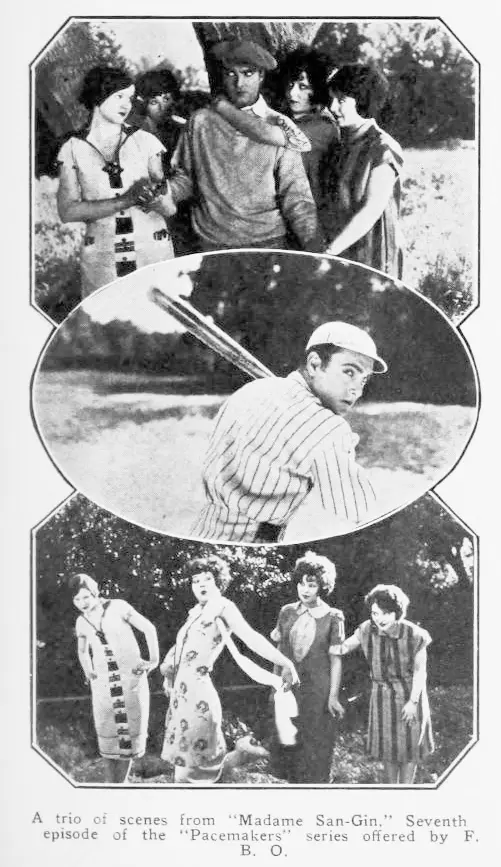
Is Madam Sans Gin worth your time nearly a century after its release? Short answer: yes, but primarily as a fascinating artifact of 1920s gender politics and slapstick evolution. This film is for those who appreciate the 'working girl' archetype and the energetic chaos of the FBO shorts, while it is decidedly not for viewers who require the polished narrative logic of modern cinema.
This film works because Alberta Vaughn possesses a screen presence that transcends the limitations of the silent medium, turning a standard switchboard operator into a powerhouse of agency. This film fails because the heavy reliance on H.C. Witwer’s specific brand of 1920s slang in the title cards can feel impenetrable to a modern audience. You should watch it if you want to see the missing link between early vaudeville humor and the sophisticated screwball comedies of the 1930s.
Alberta Vaughn was the undisputed queen of the short-form comedy in the mid-20s, and Madam Sans Gin is a prime example of why she commanded such a following. Unlike many of her contemporaries who played the 'damsel,' Vaughn’s Gladys Murgatroyd is cynical, observant, and frequently the smartest person in the room. In the opening sequence, where she handles a flurry of calls while simultaneously dismissing a persistent suitor, her timing is impeccable. It is a masterclass in economy of movement.
Compare her performance here to her work in The Golf Bug. In that film, she is more of a reactive element to the sport-centric gags. In Madam Sans Gin, she drives the plot. She isn't just a participant in the chaos; she is the eye of the storm. Her ability to convey a complex thought—like the realization that a guest is lying—with just a slight tilt of her head is something modern actors often struggle to replicate.
The chemistry between Vaughn and the duo of Al Cooke and Kit Guard provides the film's structural backbone. Cooke and Guard were the 'salt of the earth' comedians of the era, and their rough-and-tumble physicality serves as the perfect foil to Vaughn’s refined, sharp-edged wit. When they enter the hotel lobby, their presence immediately lowers the 'class' of the room, creating a visual tension that director Paul Gangelin exploits for every possible laugh.
H.C. Witwer, the writer behind the 'Telephone Girl' series, was famous for his use of contemporary slang. In 1925, this made the films feel urgent and 'street-wise.' Today, it requires a bit of mental translation. Phrases like 'the cat's pajamas' are easy enough, but Witwer’s deeper puns, particularly the play on 'Madam Sans-Gêne' (meaning 'without embarrassment') into 'Madam Sans Gin,' require an understanding of both French theater and Prohibition-era culture.
This linguistic density is both a pro and a con. It gives the film a unique texture that differentiates it from the more universal, visual-only humor of Chaplin or Keaton. However, it also slows the pacing. There are moments where a long title card interrupts a perfectly good physical gag, breaking the rhythm of the scene. It’s a flaw that we also see in Pardon Me, another short from the same era that struggled to balance dialogue-heavy jokes with visual action.
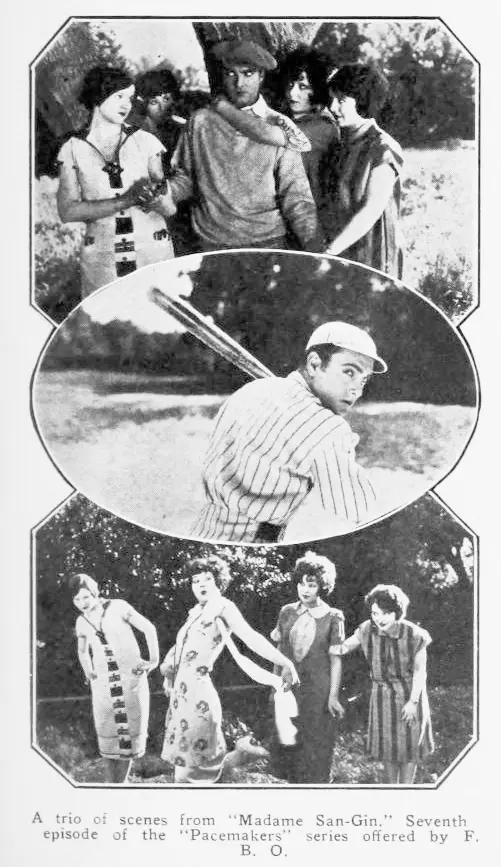
One specific scene involving a misunderstood dinner invitation highlights this struggle. The title card explains the joke in detail, but the actors' faces have already told the story. It is a classic case of the 'tell, don't show' trap that early sound-era films would eventually fall into, though here it is confined to text. Despite this, the sheer energy of the performances usually carries the viewer through the more verbose segments.
Yes, for fans of classic comedy and social history. Madam Sans Gin offers a rare glimpse into the 'flapper' era's view of the working woman. It isn't just about the jokes; it's about the subversion of the class system through the lens of a service-industry worker. If you enjoy seeing the 'little guy' (or girl) win through wit rather than luck, this is a rewarding 20-minute investment.
For those who find silent films tedious, this won't be the one to change your mind. It lacks the grand scale of a Lloyd or Keaton feature. But as a character study wrapped in a comedy of errors, it holds up surprisingly well. The film is a punchy, cynical, and ultimately charming piece of entertainment.
The cinematography in Madam Sans Gin is functional rather than revolutionary, but it displays a clear understanding of space. The switchboard set is designed to feel claustrophobic, emphasizing Gladys's entrapment in her job. This stands in stark contrast to the wide, airy shots of the hotel ballroom. This visual storytelling tells us more about Gladys’s world than any title card could.
The pacing is frantic. Like The Canvas Kisser, another Cooke and Guard vehicle, the film relies on a 'snowball' effect. A small mistake leads to a larger one, which leads to a riot. The climax, involving a spilled tray of drinks and a case of mistaken identity, is choreographed with the precision of a dance. It’s messy, loud (in spirit), and genuinely funny. It works. But it’s flawed.
"Madam Sans Gin is a reminder that before the Hays Code and the polish of the studio system, silent shorts were the wild west of social commentary."
Pros:
- Exceptional lead performance by Alberta Vaughn.
- Sharp satirical edge regarding class distinctions.
- Fast-paced physical comedy from Cooke and Guard.
- Authentic 1920s hotel atmosphere.
Cons:
- Dated title card humor can be confusing.
- Limited production values compared to contemporary features like Marriage in Transit.
- The ending feels somewhat rushed and abrupt.
Madam Sans Gin is a vibrant, if slightly dusty, gem of the silent era. It succeeds because it doesn't try to be a grand epic; it is content to be a sharp, 20-minute jab at the social order. Alberta Vaughn remains one of the most underrated stars of her time, and this film is a testament to her ability to carry a production on her shoulders. While it doesn't reach the heights of the era's masterpieces, it is a vital piece of the puzzle for anyone wanting to understand the history of American comedy. It’s a bit of a mess, but it’s a glorious, human mess.
IMDb 4.5
1931
Community
Log in to comment.