DbcultAccessing Vault...
Cult Review
Senior Film Conservator
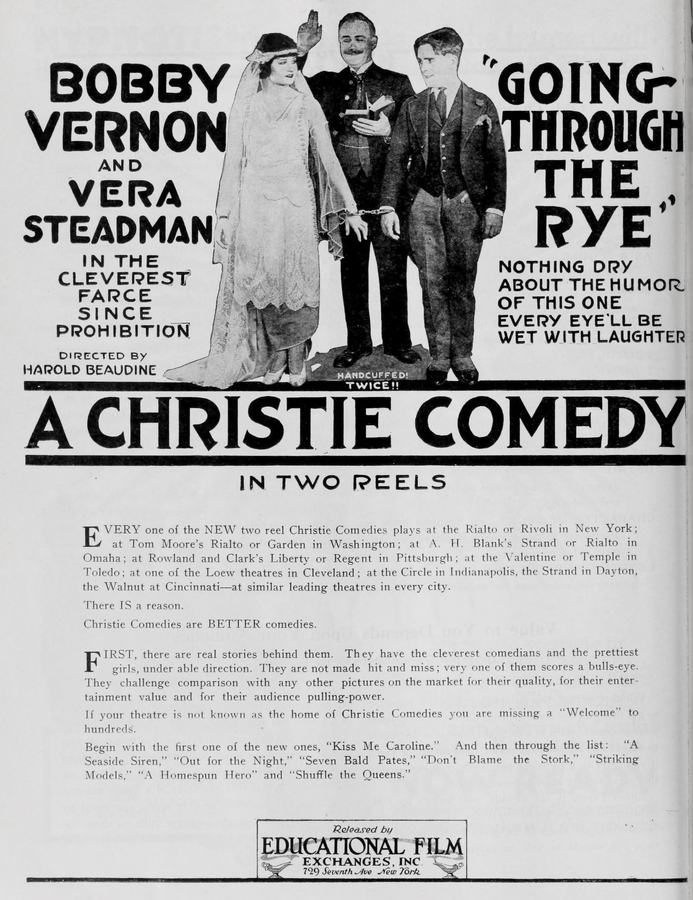
Picture a brittle 78-rpm record spinning in the dark: the needle drops, and the crackle that follows is the sound of trust fracturing. Goin' Thro' the Rye—that deceptively pastoral title—belongs to a 1923 one-reel cyclone where matrimony collides with malice inside a scant twelve minutes. The film survives only in fragmentary prints, yet what remains is a distillation of every primal fear that stalks the aisle: that the person handing you the ring today might tomorrow slip handcuffs around your wrists.
Director Scott Darling and scenarist Frank Roland Conklin do not waste a single intertitle. Within the first thirty seconds we have absorbed the geography: a rural church whose clapboards gleam like freshly pulled teeth, a bridal party arranged like marzipan figurines, and Bobby Vernon’s groom—call him Harold—beaming with the unearned confidence of a man who believes the universe has signed off on his happiness. Enter Gino Corrado as Clarence, the best man whose patent-leather hair catches the sun like a raven’s wing. One handshake too firm, one smile too lingering, and the audience senses the oncoming tilt without a word spoken.
The poisoned gift arrives swaddled in tissue: a squat bottle of “imported cordial,” its label illegible to us but whose amber contents swirl like liquid topaz. Darling holds the insert shot just long enough for the groom’s pupils to dilate—not with suspicion, but with the reflexive appetite of a man raised on barn-dance corn liquor. A quick cut to Clarence’s profile, cheekbone sharpened by the angle, tells us this is sacrament turned weapon. The flask passes from palm to palm with the solemnity of a relay baton, and the wedding march mutates into a funeral dirge underscored by ragtime piano.
What follows is a masterclass in silent-film ellipsis. We never see Harold actually drink; instead, the camera glides to the vestibule where a child bridesmaid drops her basket of petals, the crimson scatter mimicking future disgrace. By the time the groom reappears, his gait has acquired that buoyant diagonal—shoulders tilting one way, feet the other—that every viewer since 1895 recognizes as cinematic shorthand for “this man is lit.” The arrest itself is staged off-frame: a cut to black, a title card—“The Law, tipped off by an anonymous friend, intervened.” The euphemism stings precisely because it is polite.
Meanwhile, Vera Steadman’s heroine—Mildred—spends the night inside a daguerreotype of Victorian hysteria. Lace curtains billow like expired lungs; relatives hustle her into a rocking chair that might as well be a throne of thorns. The intertitle reads: “Shame is a second veil heavier than tulle.” Conklin’s line could headline a treatise on 1920s gender politics; Steadman underplays, letting her eyes ricochet between the floorboards and the grandfather clock, calculating how many minutes until rescue curdles into resignation. The performance is so modern it feels anachronistic, as though she has already binge-watched 2020s anti-heroines and decided to out-quiet them all.
Clarence’s courtship of the bereft bride proceeds with the patience of a spider re-spinning a web. He arrives bearing hothouse roses whose heads droop under their own weight—an unsubtle mirror of her wilted reputation. In a tavern scene lit by a single kerosene lamp, he plucks a newspaper from a bystander, points to the classifieds: “Widows and jilted brides—quick weddings, discretion assured.” The joke lands like a kidney punch; the extra laughs, unaware he is extras in his own downfall. The film slyly notes that economic desperation and social annihilation travel arm-in-arm, a motif Darling will re-use two years later in What Happened to Rosa, where upward mobility also demands a corpse—or at least a disappeared fiancé.
But Goin' Thro' the Rye is not content to be a morality tale. Its final reel detonates into slapstick anarchy that would make Keaton blink. Harold, having bribed a guard with a harmonica rendition of “Auld Lang Syne,” escapes in a Model T that backfires like a Gatling gun. The chase cross-cuts between the fugitive groom kicking up dust on dirt roads and the second wedding assembling in the same chapel, now draped in funereal black crepe—an inverted visual pun. When the car crashes through the stained-glass window, shards burst outward in a sun-caught kaleidoscope, baptizing the congregation in rainbow shrapnel. The moment is both spectacle and symbolism: purity shattered, yet refracted into prismatic possibility.
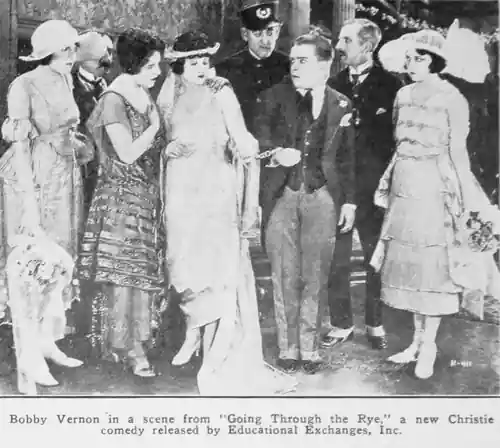
The ensuing fistfight owes less to boxing manuals than to baroque sculpture: bodies twist into contrapposto, faces caught in rictus, Clarence’s perfectly pomaded hair unraveled into a Mephistophelian halo. Harold’s punch lands off-camera; we see only the ripple effect—Mildred’s gloved hand flying to her mouth, the priest’s bible snapping shut like a guillotine. When the dust settles, the bride steps forward, removes her veil, and places it over the bleeding mouth of her would-be savior. No intertitle articulates her choice; the gesture itself is a manifesto. The film ends on an iris shot that closes not on the reunited lovers but on the discarded flask, now catching light like a discarded star.
Surviving prints bear the scars of nitrate entropy: scratches that look like lightning forks, emulsion bubbles like smallpox. Yet these imperfections amplify the story’s fever-dream quality. The rye field of the title—never shown—exists only as a sulfur-yellow tint that washes night scenes, turning faces into gold-leaf icons. Day interiors glow in a sickly sea-blue (#0E7490) that bruises the actors’ cheekbones, while the arrest sequence burns orange (#C2410C) as though the film itself has drunk the incriminating liquor. The palette is so deliberate one suspects the lab technician of auteurist ambitions.
Bobby Vernon, a veteran of two-reel rom-coms, plays Harold with the elastic physicality of a man who has learned that dignity is optional when survival is on the line. Watch the way his shoulders ascend toward his ears the instant he recognizes the officers—an involuntary shrug that says “so the universe reneges again.” Opposite him, Gino Corrado exudes the oleaginous charm of a lounge lizard who has read Dante for the insults. His smile is a hinge that opens only far enough to reveal teeth. Vera Steadman, caught between them, performs a minimalist miracle: she ages five years in the space of a single fade-out, her eyes acquiring the opaque glaze of someone who has memorized the sound of her own reputation shredding.
Most extant screenings rely on a compiled score pieced together from 1910s Edison cylinders—“Maple Leaf Rag,” “Silver Threads Among the Gold.” The anachronism works: the jaunty tunes collide with on-screen treachery like a child banging on a piano during a funeral. When the escaped groom barrels toward the chapel, the pianist traditionally launches into “Ride of the Valkyries,” the tinny acoustics turning Wagner into a nickelodeon joke. The result is a Brechtian alienation effect decades ahead of Brecht: we are reminded that every wedding is performed to someone else’s soundtrack, every betrayal scored by a library disc.
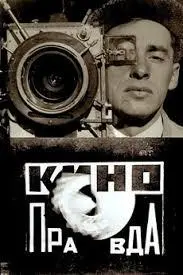
Place Goin' Thro' the Rye beside Come Through (1919) and you see a shared obsession with the sabotage of masculine friendship; swap in Rose of the Alley (1920) and notice how both films punish female sexuality yet grant the heroine the final tableau. The DNA even stretches to continental cousins: the Soviet agit-prop comedy Zapugannii burzhui (1925) borrows the flask-as-ticking-time-bomb device, though it replaces bourgeois nuptials with proletarian bureaucracy. Meanwhile, the Australian pastoral farce The Hayseeds' Melbourne Cup (1918) reverses the stakes: there the booze saves the day, not ruins it, proving that national temperament dictates whether alcohol is sacrament or satan.
Released at the cusp of national Prohibition, the film weaponizes alcohol as both plot device and moral Rorschach. To the groom, the flask is communion; to the police, evidence; to the bride, a social death sentence. Notice how the camera sexualizes the bottle itself—neck elongated, label curved like a garter—turning it into a surrogate phallus that Clarence wields against his rival. The censors of the day, blinkered by bathtub-gin hysteria, missed the darker implication: the state, not the liquor, performs the ultimate seduction, colluding with private envy to criminalize pleasure. In that sense, Goin' Thro' the Rye anticipates the carceral voyeurism of later social-problem pictures like The Fugitive (1925) where the prison yard is merely an extension of the marital bed, both spaces policed by invisible patriarchs.
For decades, the film slumbered in the Library of Congress paper-print collection, mis-catalogued under the generic “Wedding Comedy Frag.” In 1987, a grad student noticed the edge-code date mismatch, peeled apart the acetate, and found the tell-tale shot of the monogrammed flask—“C.M.” etched in art-nouveau whorls—thereby reuniting the reel with its proper title. The discovery mirrors the plot itself: an anonymous tip, a delayed revelation, a restoration of identity. Even the digital transfer carries scars: a water stain blooms across the final iris, shaped uncannily like a bridal bouquet. Some archivists claim it’s mold; others insist it’s providence. Either way, the blemish reminds us that every surviving silent film is itself a jilted bride, waiting at the altar of history for someone to object before the final vows decay.
We live in an era where weddings are binge-content farms and betrayal is algorithmic—yet here is a 100-year-old whisper that still stings. Goin' Thro' the Rye endures because it understands that the most lethal weapon is not the bottle but the friend who hands it to you. In twelve minutes it sketches the entire arc of trust, from cradle to grave to resurrection, without a single spoken word. That is not nostalgia; that is sorcery. Watch it at 3 a.m. with headphones and cheap whiskey, and try not to side-eye your oldest confidant when the flask appears. If you flinch, congratulations: the film still works, the rye field still reaps what friendship sows.
IMDb —
1924
Community
Log in to comment.