DbcultAccessing Vault...
6.3/10
Senior Film Conservator
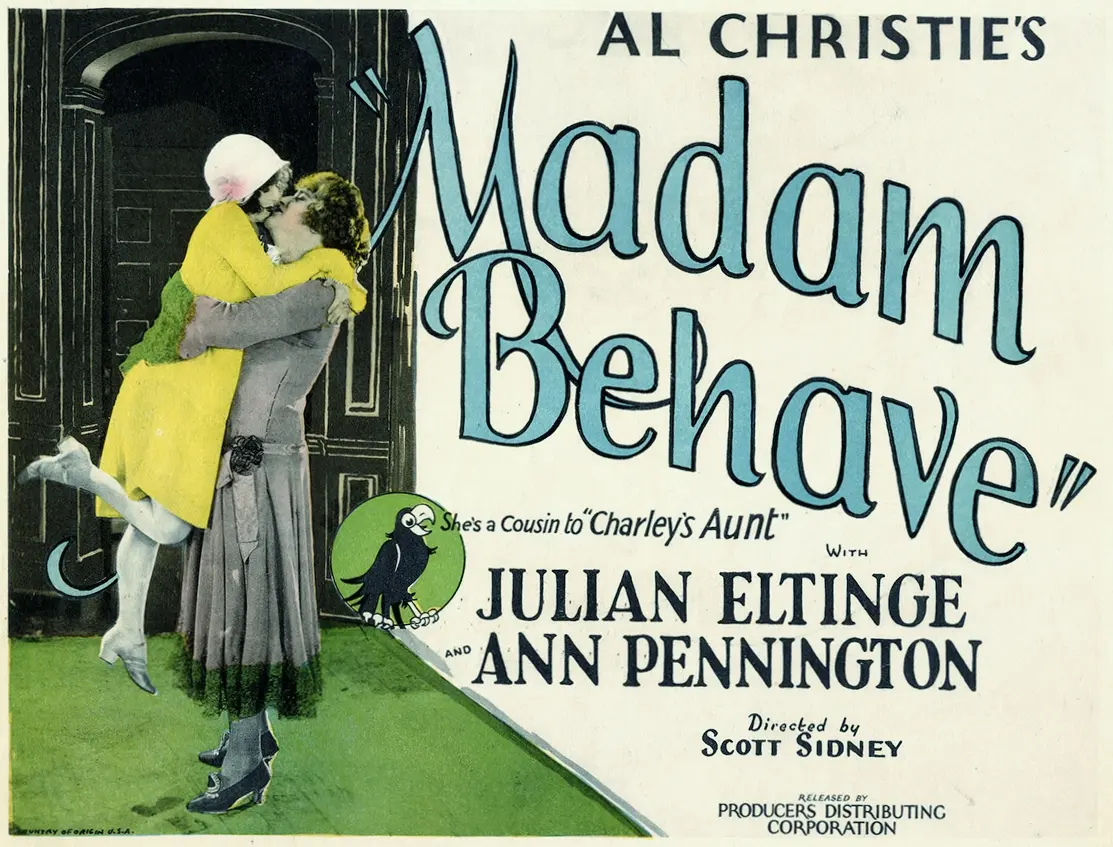
A definitive 6.3/10 rating for a film that redefined the boundaries of cult cinema. Madame Behave remains a cornerstone of transgressive art.
The silent era of cinema was renowned for its penchant for farce and comedic misadventures, and Madame Behave stands as a testament to this tradition. This 1925 film, directed by F. McGrew Willis and adapted from Jean Arlette's Madame Lucy, presents a riotous tale of mistaken identities, cross-dressing, and the societal fluidity of the time.
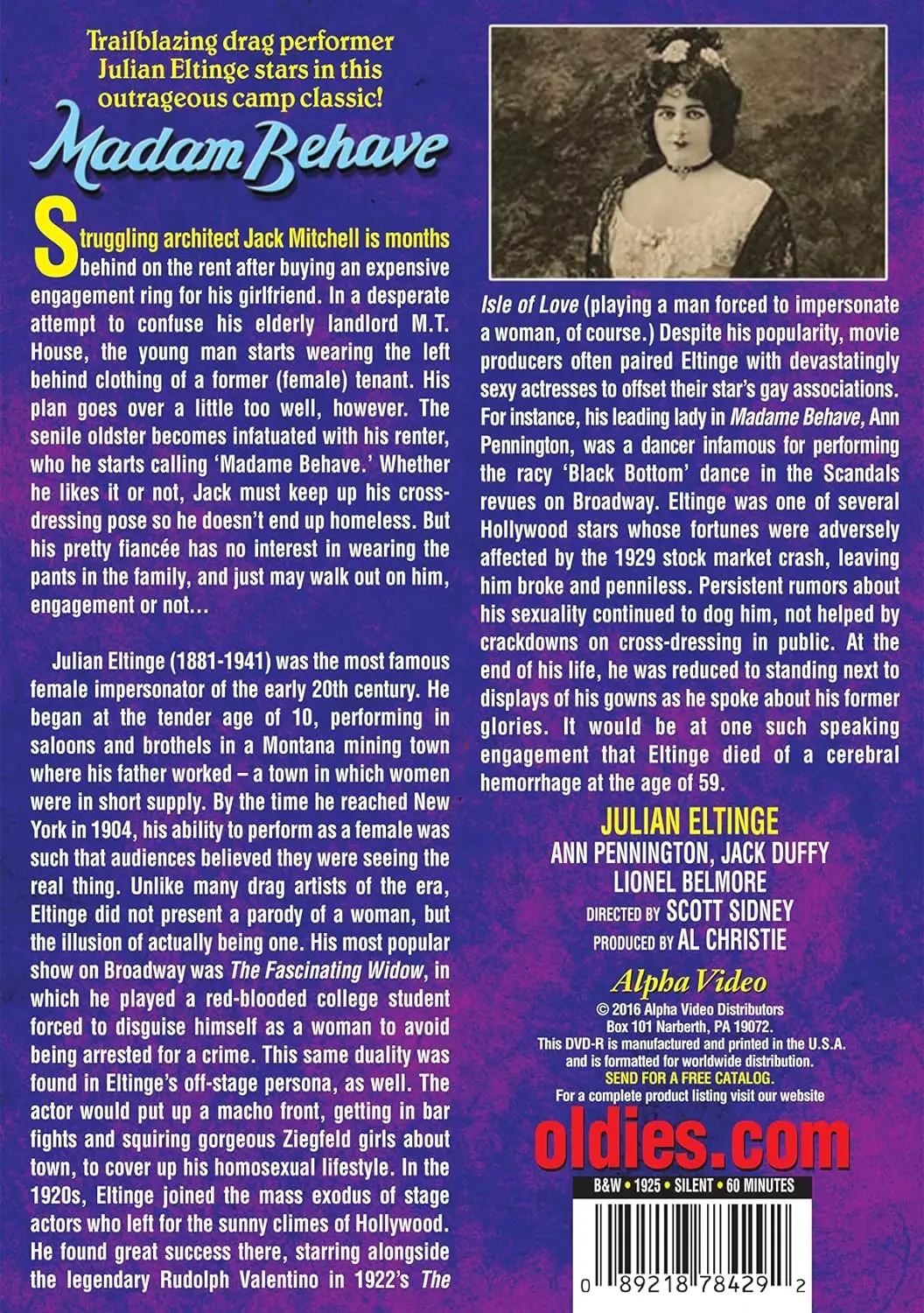
At the heart of this cinematic confection lies Jack Mitchell, a well-meaning but hapless chap played by Jack Duffy, who finds himself entangled in a web of deception when he agrees to don the guise of 'Madame Brown,' a purportedly enigmatic witness crucial to a friend's lawsuit. As 'Madame Brown,' Jack effortlessly captivates the amorous attentions of two jaded libertines, played by Lionel Belmore and Tom Wilson, and a sultry Broadway showgirl, Ann Pennington, thereby precipitating a series of increasingly absurd misadventures.

The film's comedic efficacy is largely contingent upon the success of its lead performance, and Jack Duffy rises admirably to the challenge. His portrayal of Jack Mitchell/'Madame Brown' is replete with a charming androgyny, effortlessly oscillating between masculine and feminine personas. This performance is complemented by a talented supporting cast, including Yola d'Avril, David James, and Julian Eltinge, who add to the film's riotous complications.
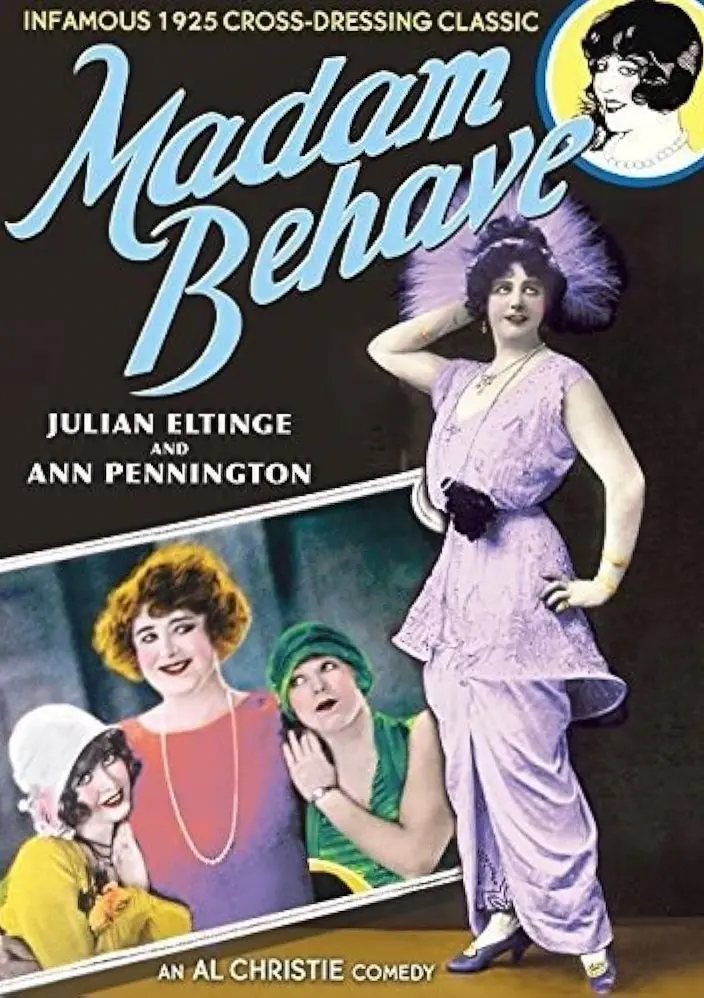
One of the most striking aspects of Madame Behave is its exploration of the performative aspects of human interaction. Jack Mitchell's disguise as 'Madame Brown' serves as a metaphor for the societal fluidity of identity, highlighting the ways in which individuals perform and negotiate their roles within society. This theme is echoed in the film's use of costume and makeup, which serve as tools for Jack's transformation and enable him to navigate the complexities of the social world.
In terms of its cinematic style, Madame Behave is characterized by a distinctly vaudevillian aesthetic, replete with rapid-fire editing and exaggerated comedic set pieces. This style is reminiscent of other silent era comedies, such as Der König ihres Herzens and Alsace, which similarly employed farcical elements to explore themes of identity and social performance.
Upon closer inspection, Madame Behave reveals itself to be a film of surprising complexity, one that deftly subverts traditional notions of masculinity and femininity. In this regard, it is instructive to compare Madame Behave with other films of the era that similarly explored themes of cross-dressing and identity, such as Shuffle the Queens and The Kiss. While these films differ in terms of their narrative specifics, they collectively attest to the silent era's fascination with the fluidity of human identity.
From a technical standpoint, Madame Behave is a noteworthy achievement, boasting a crisp and well-paced editing style that effectively captures the frenetic energy of the film's comedic set pieces. The cinematography, too, is noteworthy, employing a range of innovative camera techniques to bring the film's colorful characters and settings to life.
In conclusion, Madame Behave is a sidesplitting film that showcases the comedic talents of Jack Duffy and a talented supporting cast. Its exploration of the performative aspects of human interaction and the societal fluidity of identity make it a fascinating and thought-provoking work, one that continues to resonate with audiences today. While it may not be as well-known as some of its contemporaries, such as On with the Show or The Song of Songs, Madame Behave is a hidden gem of the silent era, one that is well worth rediscovery.
Ultimately, Madame Behave is a film that will appeal to fans of silent era comedy, particularly those with a penchant for farce and cross-dressing. Its riotous complications, colorful characters, and innovative cinematography make it a must-see for anyone interested in the early days of cinema. So, if you're in the mood for a hilarious and thought-provoking film, be sure to check out Madame Behave – a true gem of the silent era.
IMDb —
1935
Community
Log in to comment.