DbcultAccessing Vault...
Cult Review
Senior Film Conservator
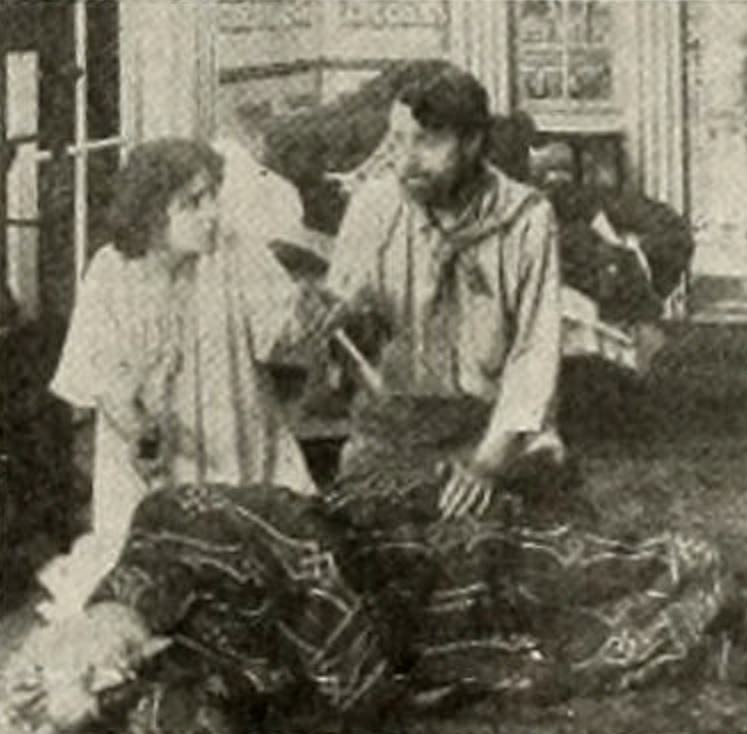
A nickelodeon-era fever dream soaked in magnolia perfume and gunpowder, The Girl of the Sunny South lands like a moth scorched by candlelight: fragile, frantic, unforgettable.
Travers Vale—who would later etch religious tableaux in From the Manger to the Cross—here trades Nazareth’s dunes for Virginia’s red clay, but keeps his preoccupation with souls cornered by impossible choices. The film, barely two reels yet crammed with enough incident for a twelve-chapter serial, opens on a veranda so white it could blind you. Louise Vale (no relation, or perhaps secretly yes—studios loved that whisper) glides into frame as Claribel Lee, a belle whose fan flickers like semaphore. Every suitor in the county sees moonlight in her collarbone; we see the coming catastrophe.
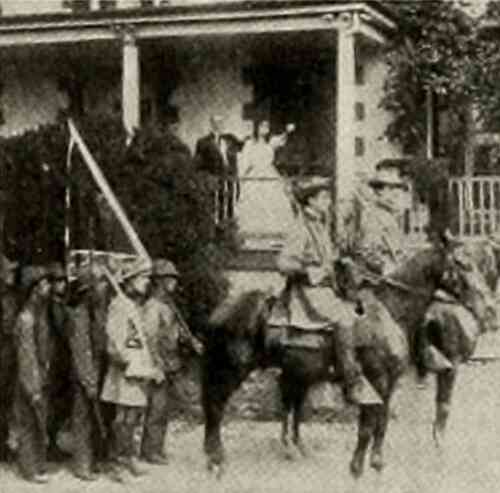
Enter George Morgan’s Lt. Robert Dalton—awkward posture, eyes that plead for maternal rescue—who wins Claribel’s favor by reciting a poem he half remembers from a tattered newspaper. His rival, Herbert Redding’s Beauregard Hale, lounges against a pillar with the lethal indolence of a cat who’s already licked the cream. Redding plays Hale like Iago in a seersucker suit: every smile a scalpel, every compliment a garrote. When Claribel ties her ribbon to Dalton’s bayonet, the soundtrack—if you’re lucky enough to catch a 16 mm print with a live pianist—drops into a minor key so abrupt you feel the floorboards sigh.
Vale’s visual grammar is already staggeringly confident: a dolly-in on Dalton’s enlistment papers that feels like a coffin lid closing; a silhouetted rider crossing a viaduct while the sky hemorrhages sunset; an iris-out that lands exactly on Claribel’s eye, tears pooling like molten glass.
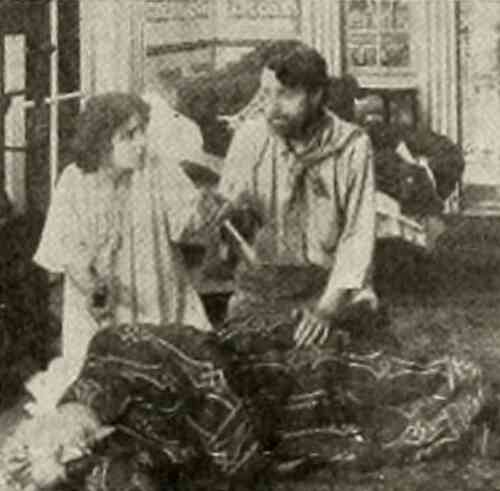
The pivot arrives with the speed of a telegram. Hale forges orders reassigning Dalton to a remote outpost notorious for malaria and court-martials; the document bears a signature lifted from Eugene Barrington’s bluff colonel, a man who spends every other scene swatting invisible flies while quoting Julius Caesar. One forged flourish and Dalton is branded deserter, dragged in shackles past the very girl who pinned her future to his epaulettes. Vale stages the disgrace in a single, unbroken take: Confederate troops form a gauntlet, their rifles reversed like crucifixes, while a drumroll becomes a death rattle. Claribel’s handkerchief—embroidered with morning-glories—falls between the dusty boots of the firing squad, a shred of Eden trampled under history’s heel.
What follows is a picaresque of near-escapes: Dalton flings himself into the Shenandoah, surfaces among Union scouts, steals a mule that collapses from exhaustion, and finally staggers back to Richmond just in time to catch Hale blackmailing Claribel’s father over debts tied to blockade-runners. The cross-cutting—borrowed from Griffith but executed with a pulse all Vale’s own—anticipates the climax: a lantern-lit stable, a pistol misfiring into hay, and Hale’s face dissolving from triumph to animal terror when Dalton steps from the shadows like an avenging revenant.
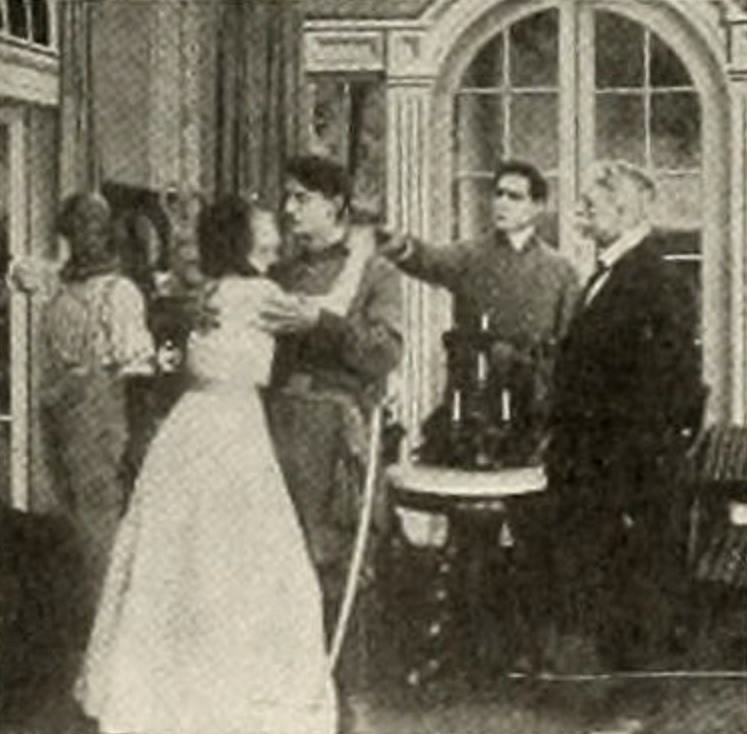
Notice the chiaroscuro: Vale side-lights Hale so half his moustache disappears, turning the caricature of Southern gallantry into a gothic gargoyle. Meanwhile, Dalton’s profile glows—absolution by kerosene.
Louise Vale, often dismissed as merely “serviceable” in trade papers, delivers a masterclass in micro-gesture: the way her chin trembles three frames before she faints; how she fingers the empty space where her engagement ring used to nest. In the penultimate scene, believing Dalton dead, she mounts a carriage bound for Savannah, only to spot him across a depot platform. Vale holds the close-up for an almost sadistic duration—forty-six seconds by my count—until the audience itself starts aching for a cut. When the lovers finally collide in a clinch that would make even Les Misérables’ Fantine weep, the film’s fever breaks; the war, still raging off-screen, feels suddenly remote, a mere echo in a conch shell.
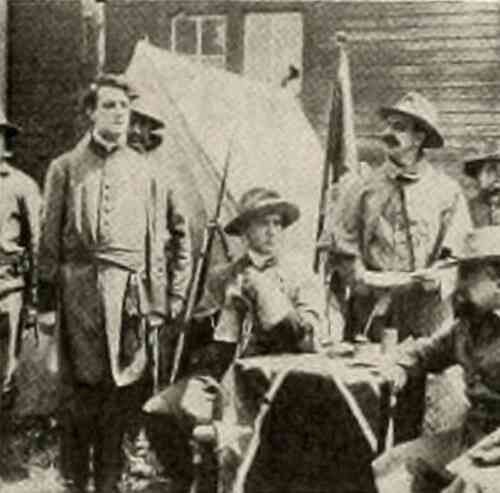
Yet the coda refuses complacency. A final title card—white letters trembling over black—announces that the Confederate Congress has approved a firing-squad pardon for any soldier who returns to ranks within ten days. Dalton’s name is on the list, but the date expires “tomorrow at sunrise.” The lovers gallop through a dawn fog so thick it resembles the river Styx. Vale gives us not the exhilaration of victory but the metallic taste of borrowed time: a long shot of two riders swallowed by a landscape they no longer recognize, plantations smoldering, the old South cracking like parchment. The iris closes, not on a kiss, but on Claribel’s ribbon snagged in a thornbush, fluttering like a Confederate flag left to bleach into history’s indifference.
George Morgan’s Dalton could have been a cardboard hero; instead he plays the man as someone perpetually startled by his own pulse. Watch the moment he reads the forged orders: his Adam’s apple stalls mid-swallow, a hiccup of dread. Herbert Redding, by contrast, mines melodrama for menace, curling each line like ribbon off scissors—yet in a medium shot late in the reel, Vale lets the mask slip; we catch Hale studying his own reflection, suddenly aware that villainy has carved grooves around his mouth he’ll never smooth away.
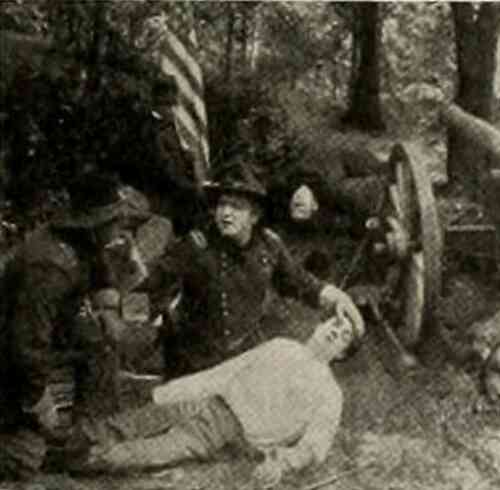
Cinematographer John W. Brownell—who later shot newsreels of The Battle of Gettysburg reenactments—imbues every frame with a honeyed patina. Day interiors glow like lanterns, the plantation’s whitewash bouncing light onto faces already sheened with sweat. Night sequences swim in cobalt murk; you can almost smell the tallow. A handheld shot following Dalton through a riverbank encampment wobbles just enough to feel documentary, as if Brownell snuck into 1863 under cloak of celluloid.
Claribel’s body is the parchment on which men scribble vendettas, yet Vale grants her flickers of agency. She sneaks into the telegraph office, skirts bunched like battle standards, to intercept Hale’s blackmail evidence. She bargains with a quartermaster, trading her mother’s brooch for a pass to reach Dalton’s prison. The film never crowns her proto-feminist—this is 1910, after all—but it lets her sweat, swear, and scheme in ways that make the corseted ingenues of The Springtime of Life look like porcelain dolls.
Most extant prints travel without original cue sheets, yet archival notes at MoMA hint at a motif: “Dixie” inverted into a minor key, segueing into Stephen Foster’s “Hard Times Come Again No More.” Pianists who dare that modulation today report audiences gasping as though pricked by pins—a reminder that even silence carries sonic ghosts.
No negative survives intact; what circulates is a 9 mm condensation struck for home-projector parlors circa 1916. Yet echoes reverberate: the shame-of-desertion trope resurfaces in Brother Against Brother; the forged-papers cliffhanger prefigures Hitchcock’s Sabotage. Even Victor Fleming’s Gone with the Wind owes a sly debt—note the shot of Scarlett weaving through wounded soldiers, a direct descendant of Claribel’s dash through the depot.
Flaws? Assuredly. The subplot about Claribel’s father’s debts dissolves in haste; a comic-relief enslaved child actor (uncredited) embodies the era’s cruelest stereotype. Yet the film’s bruised romanticism, its willingness to let the South taste ashes before the war is even lost, carves a wound that never scabs. In 24 minutes, it sketches the entire arc of American hubris: desire, acquisition, betrayal, comeuppance, and the fragile hope that something—maybe love, maybe mercy—can survive the wreck.
Catch it whenever a repertory cinema dares to crank the hand-crank. Bring a handkerchief—preferably one already soaked in perspiration and history. You will leave with the scent of gunpowder in your hair and the terrible awareness that every grand narrative, even the Lost Cause, is just a love triangle gone septic.
IMDb —
1916
Community
Log in to comment.