DbcultAccessing Vault...
6.7/10
Senior Film Conservator
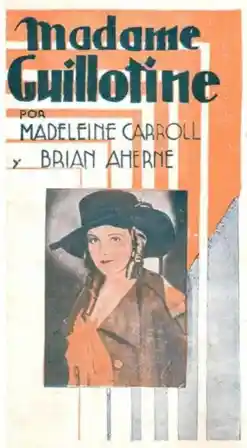
A definitive 6.7/10 rating for a film that redefined the boundaries of cult cinema. Madame Guillotine remains a cornerstone of transgressive art.
"Madame Guillotine" from 1931 is one of those old films you stumble upon and wonder how it ever played. If you’re a serious student of early sound cinema, or just *really* into French Revolution period pieces, you might find something here. Everyone else? Probably give it a wide berth, unless you enjoy a good chuckle at melodramatic acting and sometime questionable historical accuracy.
The plot, well, it's about a revolutionary guy who falls for an aristocratic woman. Pretty classic forbidden love stuff, right? But here, it feels a bit… thin. Like a play that needed a few more rewrites before hitting the stage.
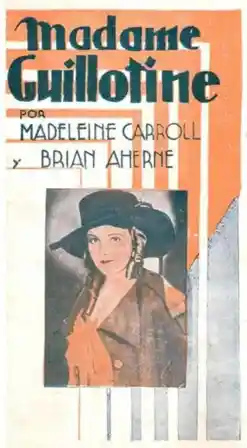
Madeleine Carroll plays the aristocrat, and she's got that undeniable presence, even this early in her career. You can see why she became a star. But her character's transformation, from haughty noble to devoted wife, feels a little too fast. One minute she's all "peasants are gross," the next she's pledging eternal love. 🤷♀️
Brian Aherne, as the revolutionary, tries hard. He really does. There are moments when his intensity breaks through the rather stiff delivery common in early talkies. But then a scene will end with him making a face that just doesn't quite land. You know, like he’s *trying* to convey deep emotion, but it just looks like he forgot his lines for a second.
The sets are pretty minimal. Lots of painted backdrops, which is expected for the era. But sometimes the lighting makes them look almost laughably flat. There’s one scene in a prison cell that’s just… a wall. And a window. You almost expect a stagehand to walk through.
What sticks out is how much talking there is. It's a talkie, sure, but it feels like they hadn't quite figured out how to use dialogue *and* visuals together yet. So much exposition. Characters just stand around and explain things to each other. It’s like listening to a historical podcast, but with costumes.
There's a crowd scene during a tribunal, and it's surprisingly effective. For a brief moment, you feel the tension. The fear. Then it cuts to a close-up of a main character looking concerned, and the spell breaks a bit.
The pacing is… deliberate. Sometimes too deliberate. A conversation that could take 30 seconds stretches to three minutes. You can almost feel the movie trying to convince you this moment matters. And you’re just sitting there, waiting for the guillotine to actually, you know, drop. 🕰️
Speaking of the guillotine, it’s mostly implied. Which, fine, it’s 1931. But the constant *threat* of it, woven through the whole story, is what gives the film what little suspense it has. It’s more about the shadow it casts.
One little detail I noticed: the wigs. Some of the men’s powdered wigs look a bit… askew. Like they were slapped on right before the take. It’s a tiny thing, but it pulls you out a bit.
The film feels like a snapshot of a particular time in cinema. When the novelty of sound was still wearing off, and directors were figuring out what to do with it. It’s less a film, more an artifact.
It’s not a *bad* movie, not exactly. It just hasn’t aged well. It’s got that charm of old things, but also all the creaks and groans. Don't go in expecting anything modern.
If you like to see how cinema evolved, or if you're a completist for Madeleine Carroll, then maybe. Otherwise, there are plenty of other historical dramas to sink your teeth into. Like, almost anything else.
IMDb 6.5
1923
Community
Log in to comment.